












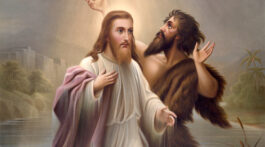



“Warning! Security threat detected!” Few messages strike more dread in the heart of a computer user. A virus can work invisibly, stealing or destroying crucial data. The damage increases over time, and may eventually crash the entire system.
The event log in Genesis reveals exactly what happened— how, after such a promising launch, creation reverted to a planet covered in water—back to the chaos before creation. The event log records each catastrophic step.
The first 2 chapters of Genesis describe an ordered world, with God over all, and Humankind as stewards over all life here. Genesis 3 introduces another level, telling us the serpent is more cunning, shrewd, prudent than the other animals. Apparently there is a hierarchy among the animals, with the serpent at the top.
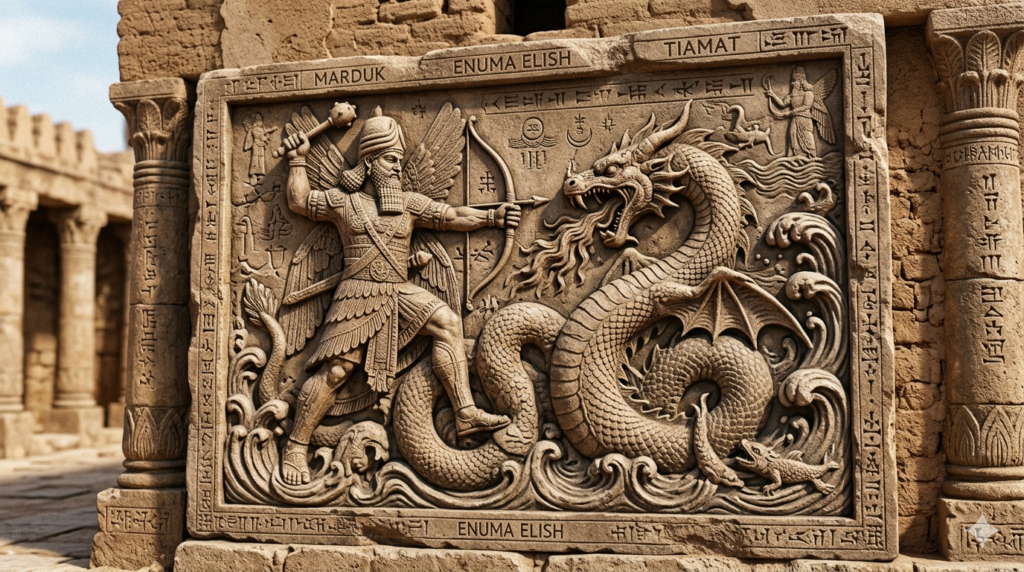
Ancient readers sensed danger immediately. Creation stories they knew often portrayed a hero fighting a serpent—an agent of disorder and chaos. Seeing the serpent as above the other animals only heightened their alarm.
The interchange between the woman—she is not yet named—and the serpent is so familiar, many skip over it. I did, too, until the audacity of the serpent’s claim dawned on me: “God knows that on the day you eat from it your eyes will be opened, and you will become like God, knowing good and evil.”
Do you see it? For many years I didn’t. The serpent tells the woman that he knows something she does not—how can that be, if she has dominion over him? And those same words indicate that he knows what God knows!
Agent of disorder indeed. If what he says is true, the order so carefully established in the first two chapters collapses.* He claims that he — an animal — stands on equal footing with the Creator. And humankind does as well.
Once humankind accepted this lie as truth, eating the fruit became mere formality. The virus had already begun its work.
By the time God comes to the garden in the cool of the evening, disorder has already begun unraveling the system. Before the virus, the man and the woman were both “Adam”—the two were one. When God asks the man if he had eaten of the forbidden fruit, the man blames “the woman you gave me.” The oneness had already vanished. It’s every one for himself.
The woman blames the serpent—who God had created. We call what follows a curse, or penalty. In fact it’s a diagnosis.
God addresses the parties in reverse order. First, He tells the serpent that he will crawl on his belly, but that’s not the worst part. There will be perpetual hostility between the woman and the serpent, and the snake will get the worst of it. While the snake will injure the heel of one of her descendants, that descendant will crush the serpent’s head.
Next God addresses the woman. She will experience pain in childbirth and will be in conflict with her husband—which we’ve seen already.
Finally, God addresses the man. Before the virus began its work, humankind ate the fruits of trees. Now, the man must labor to have enough to eat. And the earth will not cooperate. It will bring forth thorns and thistles to complicate his task.
God had commissioned humanity with two tasks: to be stewards over creation, and to be fruitful and multiply. Having accepted the virus of disorder, both tasks will be more difficult. The woman, whose unique role is giving birth, will find that painful. And the man will find dominion frustrating. Those are not penalties imposed, but consequences revealed.
Only at this point does the woman receive a different name. Adam names her Eve. And as we saw with the animals, naming something indicates dominion. The war between the sexes has truly begun.
The virus of disorder has just begun its work. The next entries in the event log make for grim reading.
If you’d like Ed to speak at your church, contact him at
BibleJourneys@Yahoomail.com
Put “Speaking Inquiry” in the subject line.
* I have not encountered this idea— that the serpent’s claim essentially collapses the order estabilshed in Gen 2-3—anywhere else.