















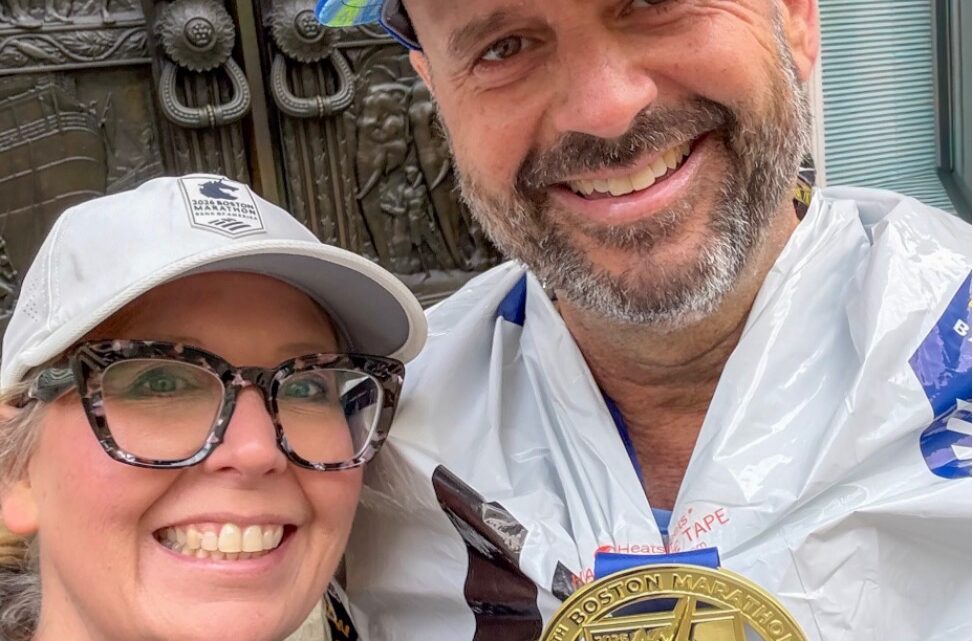
The early morning air in Boston carried a different weight on April 20, 2026. The common bond of marathon running had brought together a gathering of unique people from every U.S. state and 130 countries. And for Craig Carr, the starting line of the Boston Marathon was more than another run—it was the testing ground of a discipline built one mile at a time over many years.
Carr is no stranger to running. Known for his daily running streak, for more than seven years his routine has become part of his life—and his faith. But Boston required something more. It called him to take years of steady discipline and apply it on one of the world’s biggest stages.
A different kind of preparation
“Daily running and endurance training are conflicting objectives,” Carr explains. His daily run, which is connected to his devotional life, builds a strong foundation. But the demands of marathon training typically include rest days following long training runs—something his routine does not allow. “My typical rest day is an easy five miles at about a 116/min heart rate,” he says.
Still, it’s not just about physical training. It’s about consistency over time. The daily discipline is what normalizes both the good days and the not-as-good days, to be able to take things as they come, building resiliency, Carr says.
That mindset shaped how he approached race day. But there was an additional element of preparation required to qualify for Boston: Carr had to get faster.
The daily routine needed to include some occasional speed work that pushed the cardio threshold and fitness level higher while growing in endurance. Over a period of three years, this included running a marathon of 4:21:59 (9:58/mile pace) in 2022, to eventually qualifying in 2025 for Boston with a 3:23:51 (7:46/mile pace). This improvement of almost an hour required another shift in mindset to build up speed as well as endurance.
Faith in every step
For Carr, running is deeply connected to his spiritual life. That association became even more evident on race day in Boston. “Throughout the race, various praise songs and scriptures would come to mind,” he says. That morning, one passage stood out in a powerful way: Isa. 40:31. “But those who wait on the Lord shall renew their strength; they shall mount up with wings like eagles, they shall run and not be weary, they shall walk and not faint.”
“This set my mind on the Lord’s strength, on eagle’s wings, of running without weariness; how appropriate for a marathon!”
Carr exclaimed.
As the race moved into the second half, he began to feel the benefit of his daily routine. “During the race, particularly the second half, there were moments when I could sense the investment in the daily routine was offering its return.” That consistency showed up in his ingrained rhythm of movement and steady pacing.
The battle at mile 21
Every marathoner reaches a point where the challenge becomes more than physical. For Carr, that moment came at Heartbreak Hill, around mile 21. The uphill climb comes at a time that often coincides with a similar mile mark known as The Wall, in which the body begins to shut down from fatigue. The result is both physical strain and mental challenge.
“It is certainly physical exhaustion, but even more so a mental battle to keep going, keep moving, keep racing,” Carr says. “Hearing the crowd that lined the streets and cheering others along in their struggle uplifted my own spirits.”
Carr sees a clear connection here to everyday life.
“The mental stamina needed toward the end of a marathon is like trying to make complex decisions or have a tough conversation with someone when you are very tired, stressed—and want to just be done.” In those moments, mindset matters most. “Fighting the negative self-talk and the ‘inner quitter’ becomes extremely important in the final miles.”
The finish line
The difference between Carr’s daily runs and the marathon became most clear in the final miles. “The daily is most often a smooth, cruising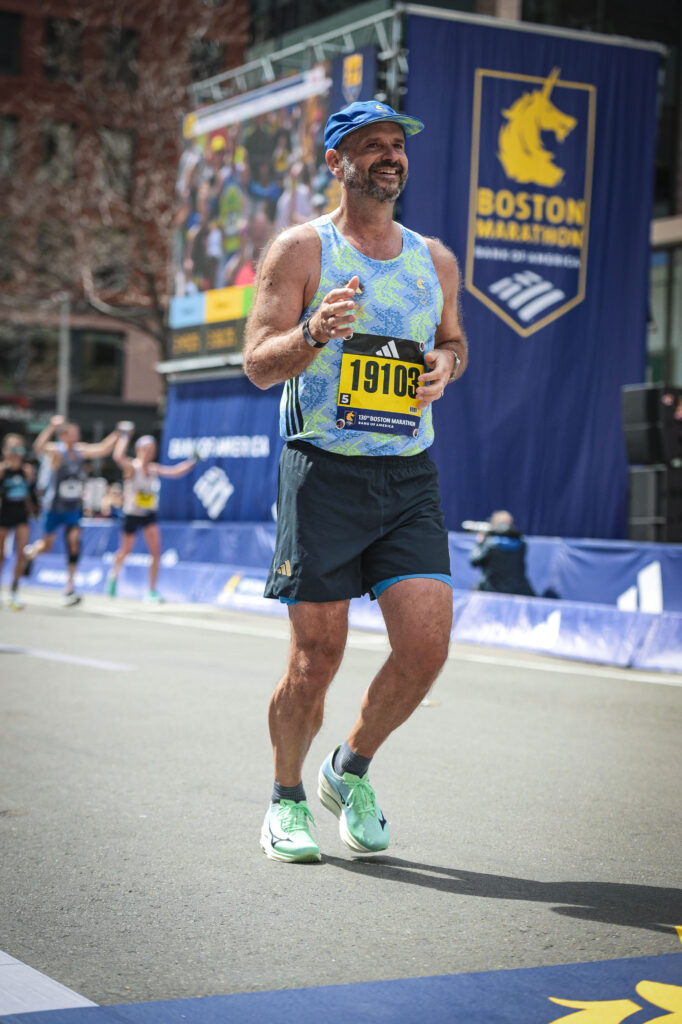 speed—with lower heart rate—of distances of five to six miles,” he explains. But race day demanded far more. “When running more than four times that far, it’s those final miles before the finish line that are difficult to simulate adequately. But the daily discipline, in all types of weather and challenges of schedule, and various levels of fatigue, builds a foundation of consistency that provides the edge for pushing the limit a little farther and a little faster.”
Crossing the finish line brought a powerful mix of emotions—a unique combination of exhaustion and elation, of relief and joy, of agony and accomplishment. And all around him, other runners shared the moment. The expressions of fellow runners offered glimpses of their story through smiles, high fives, tears and shouts.
More than a race
Carr states that Boston brought lessons that went beyond training. Unlike his quiet morning runs, the marathon environment was filled with travel, crowds and the energy of a global event—energy that can also bring added pressure. The excitement and nerves of race day can easily become overwhelming, adding unnecessary strain if not managed carefully.
For Carr, the solution was simple: to rely on the familiar rhythms of his daily routine, allowing him to arrive at the starting line energized rather than depleted.
The experience also revealed something deeper.
“Boston reminded me that there are runners from all over the world, many who lead such vastly different lives, yet once on the course we are united in purpose to cross the finish line.” That shared purpose created a lasting impression. “It is an experience I will always treasure.”
Running the greater race
For Carr, the Boston Marathon ultimately points to something greater described in Heb. 12:1–2: “Therefore we also, since we are surrounded by so great a cloud of witnesses… let us run with endurance the race that is set before us, looking unto Jesus, the Author and Finisher of our faith.”
From that broader, eternal perspective, the lesson is clear—each of us has been called to run a race.
“It’s an individualized journey that God has mapped out for us for His glory,” Carr concludes. “And no one runs alone.
There have been many who have forged the way before us, and there are many fellow runners beside and behind us who need our encouragement. Whether climbing Heartbreak Hill or walking through a valley of discouragement, giving and receiving encouragement reminds us of the shared journey and uplifts our own spirits. By keeping our eyes on Jesus, we share a common goal of running our best race with joy and gaining the prize He has already obtained on our behalf. Let us follow in His footsteps every day.”
Hugh Davis is MAUC communication director and Craig Carr is MAUC ministerial and evangelism director.
