















Sabbath School Lesson for May 2-8, 2026
Introduction of Lesson 6, Prayer Warriors
Memory Text: “I love the Lord, because He has heard my voice and my supplications. Because He has inclined His ear to me, therefore I will call upon Him as long as I live.” Psalm 116:1, 2 NKJV
Our human relationships, whether it be friends or family members, require some kind of communication to thrive or even to survive. Likewise, with God, we need to not only be reading the Bible, His word to us, but we need prayer, our speaking to God. If our prayer life isn’t all it should be, we are in danger of losing touch with God and wandering away from fulfilling His plans for us, plans to prosper and grow our faith.
As the psalmist wrote in Psalm 116, God does hear and answer our prayers, and when that happens we naturally feel a desire to keep the communication flowing. Like many prayer warriors in the Bible we find that prayer allows our relationship with God to flourish, making us more likely to bring other souls to a knowledge of the gospel.
There are many prayer warriors in the Bible, such as Daniel, Enoch, and Moses. We are blessed to have several examples of their prayers and the answers they received. These worthy individuals inspire us to pray with more fervency (persistence) and more often (frequency).
This week, we will explore:
- Sunday: Faithful Daniel
- Monday: The Posture of Prayer
- Tuesday: Enoch Walked and Talked
- Wednesday: Moses, Godly Leader
- Thursday: Moses Intercedes for a Nation
Sunday: Faithful Daniel
Two prayers of Daniel are particularly noteworthy, and they both involved life and death issues. The first one is recorded in Daniel 2. The three Hebrew youths were in danger of losing their lives, along with all the wise men, if they could not tell and interpret a dream of the king. Their prayers for deliverance from the king’s wrath were rewarded by Daniel receiving a dream that had the important interpretation, saving them all from certain death. Daniel’s prayer in this chapter is marked for its high praise and thanksgiving for the way God resolved the issue.
Daniel 6 later reveals other features of Daniel’s prayer life that are instructive for us today. Despite the evil plot of his peers to outlaw Daniel’s prayers, he bravely went ahead and prayed in the same manner that he had done all his life. This propelled him to being thrown into a lion’s den to be eaten by hungry lions, but Daniel was not deterred from his consistent, persistent manner of talking to God.
With the same quality and pace of his previous prayers, Daniel prayed despite the dire threat to his life. He had, by this time, such a strong connection with God that he was given the chance to show us that prayer is more important than life itself.
Verses for reflection and discussion:
Daniel 2:20-23
- What elements of prayer life are showcased in this prayer?
Daniel 6:10, 11
- Why was it important for Daniel to pray the same as he had before?
- Why was it, once again, important for Daniel to thank God during such a trying time when his life was threatened?
- When might it be necessary to disobey one’s government and break its law?
Monday: The Posture of Prayer
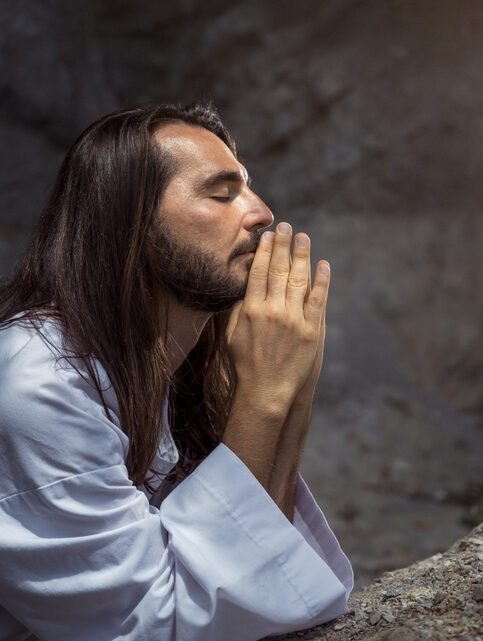
Many wonder how important it is to kneel when we pray, as kneeling is mentioned as the humble posture used by Daniel, Stephen, Paul, and even Jesus. If prayer is talking to God anywhere, at any time, like “opening of the heart to God as to a friend” Steps to Christ, p. 93, then perhaps our heart condition matters more than the physical posture we assume as we pray.
The Bible also records people who stood to pray, for example: Jehoshaphat, Hannah, and Job. David is even said to be sitting during a prayer (2 Samuel 7:18). Then there were some prayer warriors who prostrated themselves by lying face down in total submission before God.
Whatever posture you assume to pray, make sure your inner feelings reflect submission and surrender to God. Do all possible to be free of distractions and interruptions, so God has your full attention and focus, which is why some fold their hands and close their eyes. Turn your thoughts to His power and majesty, and especially His love. That is what matters most to God.
Verses for reflection and discussion:
Daniel 6:10, Luke 22:41, Acts 7:60, and 9:40
- Why is kneeling in prayer often done, especially at the most vulnerable, critical times of our lives?
1 Samuel 1:26 and Luke 18:11, 13
- Why is a standing position also acceptable, as seen in the prayers of Hannah, Samuel’s mother, and the prayers in Christ’s parable of the Pharisee and the tax collector?
- What are some reasons a person may not be able to kneel to pray, or even to stand, and why does that not hinder God hearing us?
1 Thessalonians 5:17, Colossians 4:2, and Romans 12:12
- What matters more to God than the posture of our prayers?
Tuesday: Enoch Walked and Talked
While Adam’s descendants were still living till they were many hundreds of years old, Enoch was a lonely exception, taken by God at the relatively young age of 365 years. While only a brief mention of the circumstances of his life are given in Genesis 5:22-24, we marvel at the close relationship he must have had with God at a time when evil was growing rapidly in the world. After all, Noah was a grandson of Methuselah, Enoch’s father, and we all know how wicked the world was for Noah’s generation.
God cared so much for Enoch that He decided to end his suffering on this sinful earth by removing him from it without seeing death. His prayers were precious to God and must have included silent prayers and those spoken out loud. Enoch was in constant communion with His Father, having enormous faith for such a time as he lived. See Hebrews 11:5.
Verses for reflection and discussion:
Genesis 5:22-24
- What are the few details we know about Enoch’s life?
Hebrews 11:5
- What does Jewish tradition tell us about the strange disappearance of Enoch from this earth?
- What caused God to “take him”?
Wednesday: Moses, Godly Leader
Moses is truly a revered leader of the Israelites, making him a type, or foreshadowing, of Christ. The secret of Moses’ success in delivering his people was that he was in such a close, abiding relationship with God that they had almost constant communication through his many prayers for intercession and guidance.
At one point, Moses even asked to see God’s glory, and God found a way to reveal Himself in such a manner that no other man has been able to experience. Find this story of how Moses was able to see God in Exodus 33.
Their close relationship was evident in the prayers Moses prayed for his brother Aaron and sister Miriam. Despite their unseemly behavior and treatment of their brother, Moses prayed earnestly to God for their welfare. Only through his close relationship with a forgiving God was Moses able to intercede for others in such a tender, loving, self-sacrificing way.
Verses for reflection and discussion:
Exodus 33:15-23
- Why do you think Moses wanted to see God?
- Why was God willing to reveal Himself in such a unique way?
Exodus 20:18-21
- Why was Moses able to be so close to God and the people weren’t?
Matthew 5:44 and Colossians 3:13
- Why should we pray for and forgive our enemies?
Thursday: Moses Intercedes for a Nation
Two major times when Moses interceded for his people was when they sinned by building and worshiping a golden calf (Exodus 32:31, 32), and after the unfaithful spies came back from Canaan with a bad report about the promised land (Deuteronomy 9:25). The consequences of these unfortunate actions would have been much greater if Moses hadn’t pleaded so fervently on behalf of the Hebrews.
The reasons why Moses was such a great prayer warrior was because of his great love for God and appreciation of His divine character. With an unwavering, bold faith, Moses was able to accept God’s answers to prayer, even when they weren’t quite what he wanted or expected. Like Moses, we should pray with conviction and persistence, no matter the outcome of our troubles. All of us can likewise benefit from intercessory prayers for and from those we love.
Verses for reflection and discussion:
Exodus 32:31, 32 and Deuteronomy 9:25, 10:10
- Why do these two examples of Moses’ intercessory prayers stand out from so many other times Moses prayed for his people?
- Who needs your intercessory prayers and how can you make them the most effective?
Exodus 33:13 and 34:6
- Why should we pray to know God better, and how does He show us His character, like He did for Moses?
Friday: Final Thoughts
Being a prayer warrior means to be steadfast and faithful in praying every day, like Daniel. Like Enoch, we can be in constant communion with God through prayer. We can lead others to God by interceding for them, like Moses.
Ellen G. White describes prayer beautifully, when she says that through prayer we should turn our thoughts to God, “as naturally as the flower turns to the sun…You cannot burden Him…no perplexity is too difficult for Him to unravel.” Steps to Christ, p. 99, 100
Thankfully, through prayer, we may all have as close a relationship with God as the prayer giants we read about in the Bible.
Next Week: Practical Prayer
To read the Sabbath School Lesson Quarterly and see more resources for its study, go to

No Comment