












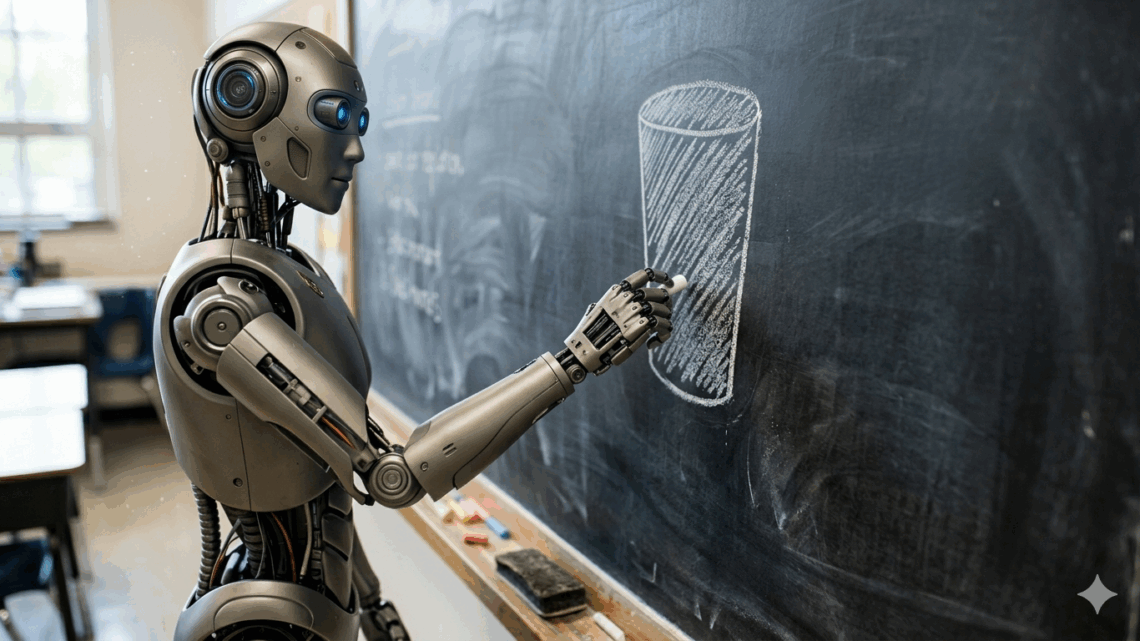
Teaching computer literacy at a community college, on the first day of class I always asked the same question: what do computers always and only do, without exception?
The answer: they follow instructions. That’s it, that’s all they do. If perfection means perfect obedience, computers have it. A computer is perfectly obedient. And we all know that nothing ever goes wrong with computers.
Okay, okay, we’ve all had trouble with computers. But that’s because human beings program those computers—fallible and frail human beings.
And, surprisingly, we now know that humans are, at least to some extent, programmed. We have discovered that every one of our cells contains DNA, which Microsoft founder Bill Gates has described as “far, far more advanced than any software we’ve ever created”.
If the software that produces every living thing came from God, why didn’t He install some safeguard so that we would always follow His righteous instructions? So that we would always and only obey Him? Some code that would keep us from making catastrophic choices? It seems like it would have saved everyone a great deal of trouble.
When it comes to robots, Isaac Asimov reasoned that any civilization sophisticated enough to build one would be sophisticated enough to equip it with safety features — fundamental instructions so deeply embedded that the robot could not disobey. His Three Laws of Robotics were the result. The first: a robot may not injure a human being. It sounds airtight. This brings us right back to the same unanswered question: if mere humans put safety features on their tools, why didn’t an all-knowing God build them into us?
If perfect obedience is the goal, computers have achieved it. Robots have achieved it. But God wants something more. And so do we.
A robot can say “I love you” if we instruct it to. But that is not love — that is output. Love is voluntary, an act of a free will. And free will equally enables love, hate, and indifference. A being that cannot choose evil cannot choose good either. It can only execute.
What it cannot do is love, or create, or surprise you, or lay down its life for a friend. You cannot engineer love into existence. You can only make room for it. And making room for it means accepting the risk of everything that free will brings with it.
There is also this: forced enthusiasm is nauseating. If you have spent any time with teenagers, you know what I mean. We do not like it from each other — especially from our own children. And God would like it least of all from us.
When it comes to teenagers, or children in general, if you over-control them — and I have worked with children and families for longer than I want to admit — one of two things happens. They eventually leave you for someone who will control them even more thoroughly, or they rebel. Real love requires real risk. Every parent experiences this.
God knew it too. Lucifer was endowed beyond measure — the model of perfection, full of wisdom, a guardian cherub, blameless from the day he was created. And God gave him genuine freedom, which meant genuine risk.
When Lucifer turned, he did not become a new kind of being. He became what I would call a failed being — a creature ravaged by what he had chosen, deformed by the absence of what he had abandoned.
For God, then, the question was not simply how to handle one rebellious angel. It was how to preserve a universe where love remains possible, where trust is freely given rather than compelled. You cannot maintain that by force. Compel it, and you destroy the very thing you were protecting.
So God made us with the capacity to love him back. Which means he made us with the capacity to turn away. That is the dilemma at the center of everything — the one He is still working out, through history, through us, through the long patience of redemption.
Perfect obedience is easy to achieve. You just have to stop being a person.
What God wants from us is harder and better than that. He wants trust. He wants love. He wants the thing that cannot be programmed — the thing that costs something precisely because it is freely given.
Which brings us to a definition of sin that most of us were never taught. And it changes everything.
If you’d like Ed to speak at your church, contact him at
BibleJourneys@Yahoomail.com
Put “Speaking Inquiry” in the subject line.
No Comment