
















This post is condensed from a presentation I gave during a spiritual retreat in February 2024.
One spiritual discipline that has been meaningful in my life is the practice of expressing gratitude—to God, family, friends, colleagues, even strangers. Cicero, a Roman orator and philosopher who died in 43 BC, is credited with saying:
“There is no quality I would rather have, and be thought to have, than gratitude. For it is not only the greatest virtue, but it is the mother of all the rest.”
Blessings and challenges
I’m very blessed to have grown up in a loving Christian family. My parents had family worship time every day with my two older brothers and me. We went to Adventist church school all the way through.
I’ve always believed God exists and that He loves me. I’ve always believed the Bible is true. I’ve always prayed. I’ve been on prayer teams and done prayer walking, experienced anointing services. I’ve helped set up prayer room experiences for camp meeting. It’s a huge part of my spiritual life.
But about eight years ago my prayers took a dramatic shift. I used to have a lengthy list of specific things I prayed for each day of the week. But one book changed that.
“One Thousand Gifts”
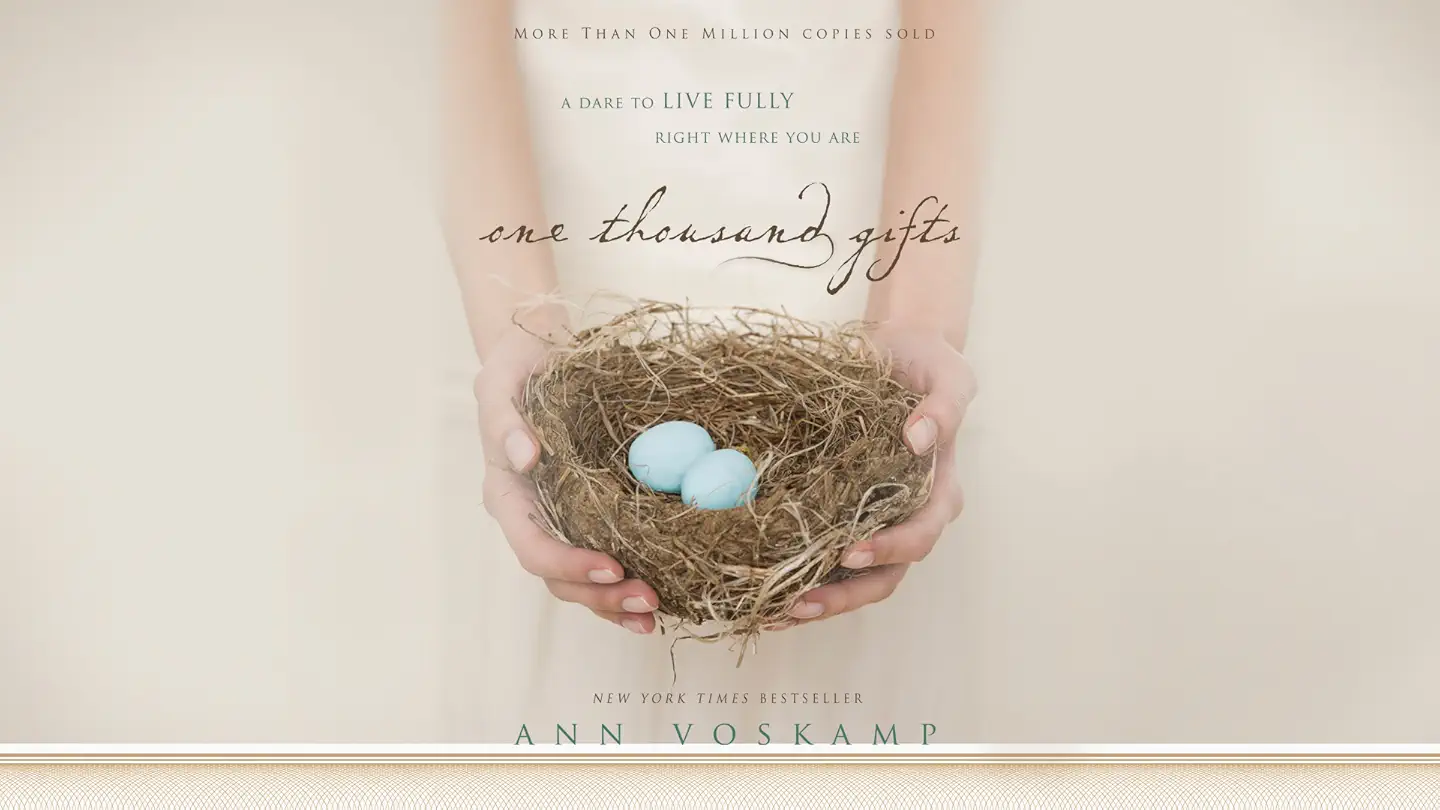 This book by Ann Voskamp taught me about a new level of thankfulness. It’s not just for November. The eucharist is for every single day of my life. It helped me realize, in fact, that giving thanks and honor to God is the reason for my existence.
And it’s not because God needs to hear my thanks and praise and adoration of Him. It’s because I need to give it. When I’m consciously thanking God and expressing praise and intentionally slowing down and looking for His beauty and grace all around me …I cannot —at the same time —be complaining about things, or criticizing others, or feeling envious of others, or finding fault with how God is directing life here on this planet. It’s one or the other. And God knows I will be much happier if I’m giving thanks.
And God also knows that He is the only one worthy of that level of praise and He is the only one we can safely adore and worship. Humans will always worship someone or something. Here are three points that I’ve learned to deeply appreciate:
#1 Since God is the only one we can worship without being destroyed by them, He is actually being gracious in instructing us to worship Him and thank Him.
In her book Ministry of Healing, Ellen White says:
“When you open your eyes in the morning, thank God that He has kept you through the night. Thank Him for His peace in your heart. Morning, noon and night, let gratitude as a sweet perfume ascend to heaven.”(p. 253)
“It is for our own benefit to keep every gift of God fresh in our memory. By this means faith is strengthened to claim and to receive more and more. There is greater encouragement for us in the least blessing we ourselves receive from God than in all the accounts we can read of the faith and experiences of others. (p. 100)
#2 Having a thankful heart keeps my priorities straight. It takes away anxious thoughts and gives me peace.
Plenty of studies show the physical benefits of practicing gratitude:
- Causes the brain to release feel-good chemical dopamine and serotonin.
- The result is reduced stress, reduced depression and reduced anxiety.
- People who practice expressing gratitude also report feeling happier and more optimistic.
- They report fewer physical symptoms and they exercise more often.
#3 Praise and thanksgiving keep me in the presence of God, where there is fullness of joy and pleasures forever more. The book The God Chasers, by Tommy Tenney, still fascinates me because he shares personal experiences of being in the presence of God, experiencing worship and praise and thanksgiving on a very deep level. He talks about the crucial importance of seeking God’s face, His presence, above God’s hand—meaning His material blessings.
Heb. 12:28 says, “Therefore let us be grateful for receiving a kingdom that cannot be shaken, and this let us offer to God acceptable worship, with reverence and awe.”
I’m learning how good it is to view prayer as a time to receive from the Lord and as a time to “yield a sweet savour unto God.”
How I’ve grown
 My weekly prayer journals that I started many many years ago still contain a few occasional requests of God…but now it’s at least 90% thanks and praise.
I do also have a few personally written prayers that came to me very quickly and just flowed out as I was sitting in silence before God. I treasure those and revisit them often, along with favorite scripture verses.
One verse I have wrestled with over the years is I Thess 5: 16-18: “pray continually…give thanks in all circumstances.”
Of course we know we can’t live life continually on our knees in active prayer, but I’ve come to see having an attitude of gratitude as a way of being constantly in prayer. Gratitude always turns what we have into “enough.” It helps us “Be still and know that I am [He is] God.” Ps 46:10
Being still before God always gives me something to be grateful for.
“Giving thanks in all circumstances” often reminds me of a story I read about Corrie ten Boom and her sister Betsy in a Nazi concentration camp during WWII. Betsy insisted they thank God for the bed bugs in their filthy and overcrowded barracks. Corrie resisted, but her sister said they must give thanks IN all circumstances, not FOR all circumstances. So they made a habit of thanking God in that wretched place.
Were they thankful to be imprisoned? No. Did God expect them to be thankful to be imprisoned? I don’t think so. God allows things in life that are not His express will. He allows people to make poor choices and take sinful paths. But this is an example of being able to find something in every situation for which to give thanks. Saying that God is in control means that eventually everything is going to work out according to His plan.
Later, of course, they learned that the bed bugs had kept the night guards from forcing themselves into the women’s beds in their particular barracks, since they were known to be infected.
Another book that has really impacted me is “Hearing God’s Voice” by —Richard and Henry Blackaby. I’ve read that one twice, a couple of years apart, because it’s so deep in some areas and I’m still not sure I’ve gotten to the bottom of it. I’m still learning to differentiate between the voices (thoughts) in my head.
There’s More
#1 I have a pretty active brain that can be all over the place and I’m constantly asking a lot of questions and also asking, Is this thought from God? Or is my brain just making up stories? Since we don’t really understand the complexity of the human brain it’s hard, because we know God wants to communicate with us. And we know the Holy Spirit is living within us as Jesus promised in John 14:17. “The Holy Spirit will live with you and be in you.”
#2 Jesus says “My sheep know my voice and follow me.” So the challenging process of quieting my mind to hear —and know—the voice of Jesus is ongoing for me. I know there’s more…
I read the words of scripture every morning. I memorize them. In that way I’m choosing to fill my mind every day with Jesus’ words. But I know there’s still more. I read stories in the Bible of great prophets who hear God’s voice and prayer giants like George Muller and I’m always inspired to quiet my mind, continue seeking God’s face, and listening for His voice. There’s more…
#3 There’s more because everything starts with the mind. Our thoughts create our attitudes. And I believe that our attitudes and perceptions are in fact more important than what’s actually happening in our lives. How we frame things is our reality.
Disaster or opportunity?
 During the Covid shut-down and isolation this became really clear to me. Many people were panicking and having high levels of anxiety about the future, while other people were calm…not stressed out, focusing on the promises of God and trusting Him for the future. Similar situation for everyone, but it was an example of how some people framed it as disastrous while others framed it in terms of opportunities.
Covid helped me focus more on the deepest dimensions of discipleship in my life— scripture daily in my mind, praying without ceasing, and choosing to give thanks and celebrate.
“Arrange your thoughts toward the light.” —Carmen Jacob
Yet even in the dark times there is always something to celebrate. God made sure of that by giving us a weekly Sabbath. Celebrating Sabbath is a whole other spiritual discipline that’s worth exploring on its own.
What I want more of
In a recent Vibrant Life magazine I learned about “glimmers.” Have you heard of glimmers? The term was introduced by Deb Dana, a clinical social worker. Glimmers are micro experiences and sensations that soothe our soul and create feelings of safety and calmness. They are reactions to sight, sound, sense, taste, smell or memory.
Glimmers are the opposite of triggers. We have to deal with triggers but we also need glimmers to thrive.
The Bible invites us to look for glimmers (Phil 4:8). True, the Bible includes more songs of lament than praise. It tells us to “grieve when you need to. But also seek out the glimmers of joy and hope.”
Glimmers increase resiliency to life and help us anchor ourselves in our present existence.
Some examples of glimmers are feelings of awe or reverence, enjoying good food, inspiring music, hugs, warm sunshine, beautiful views, laughter. Expressing gratitude for the glimmers in life enables us to live graciously and generously.
Glimmers are also about moments of beauty or tranquility. God continuously creates rampant beauty. The changing seasons beg us to notice the beauty and the consistency, and be reminded that God is always faithful to His promises. He is the Creator of everything good and He has power to restore sections of beauty on the earth.
So, I believe that if He cares enough to create beauty still—in spite of how His creation has been marred by sin—He will continue to create beauty of character in me.
What do I want more of? I want to see more of His beauty…and I trust Him to lead me deeper in His way and His time. I thank Him that it’s a prayer He will always answer “Yes” because I know it’s what He wants too—for everyone who takes His name.
 A final prayer
This prayer was written in the 17th century by an author named George Herbert:
Thou hast given so much to me,
Give one thing more—a grateful heart;
Not thankful when it pleaseth me,
As if Thy blessings had spare days,
But such a heart whose pulse may be
Thy praise.
Amen

No Comment