















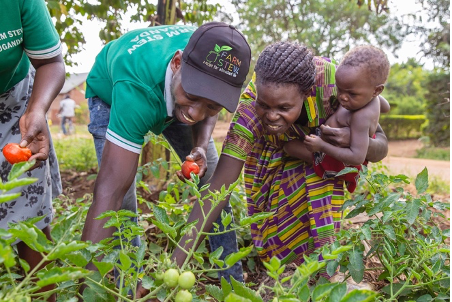
In October 2015, what began as a simple “mom’s day out” trip to Uganda changed my life forever. With a 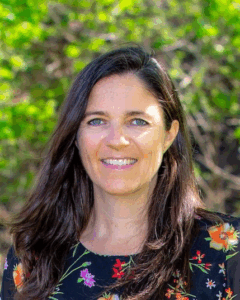 background in international nutrition (BS, Virginia Tech) and a Master of Public Health from Johns Hopkins University and extensive experience with the US Department of Health in Washington, DC, I had long prepared to serve overseas—but as a stay-at-home mom for 11 years, that season felt past. Then came Uganda, I had the opportunity to serve with the USAID Farmer-to-Farmer Program, teaching soybean processing to a large farming cooperative, I saw firsthand that practical, locally led training could immediately transform families facing severe malnutrition.
When I prayed about how the work could continue after I returned home, I sensed God’s simple instruction: “Hire the locals.” That step of obedience became the beginning of FARM STEW International.
The early years required courage. I personally funded the first Ugandan trainers, formed a board, and eventually left my county health department job to lead the growing ministry. Expansion came quickly—Zimbabwe in 2017, refugee camps in Northern Uganda in 2018, and an official launch in South Sudan during one of the worst food insecurity crises in the world.
In early 2020, overwhelmed by the weight of leadership and fundraising, I prayed aloud and told God I could either lead or carry the financial burden—but not both. The next day, an anonymous $100,000 gift arrived—our largest ever—just before COVID shut down the world. From that moment on, the anxiety lifted. The deal still stands: I will lead faithfully; God will provide.
Since then, FARM STEW has grown into a global, locally led movement equipping families with skills in farming, nutrition, sanitation, enterprise, temperance, rest, attitude, and water. By 2021, the ministry had reached Malawi; by 2022 it was active in the Philippines, Brazil, Zambia, Sudan, and Rwanda; and expansion into Latin America and West Africa soon followed, including Bolivia, Burkina Faso, Chad, Cuba, Ethiopia, Senegal, Panama, and Nicaragua.
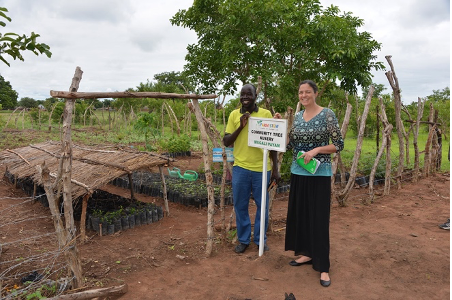
Through clean audits, strong local boards, and a multiplying Training-of-Trainers model, the ministry continues to steward resources carefully while reaching hundreds of thousands with hands-on, Christ-centered training.
Along with serving as Founder and Executive Director of FARM STEW, I have had the privilege of serving as President of ASI Lake Union and now as General Vice President of ASI Mid-America, helping mobilize lay members for mission.
As we look ahead, 2026 promises to be a remarkable year of growth — new countries, deeper impact, and continued evidence that when God calls us to something that seems impossible, He is already preparing the provision. All glory belongs to Him.
The History of the FARM STEW International Ministry
FARM STEW began in October 2015 in rural Uganda while Joy Kauffman, MPH, a public health nutritionist and graduate of Johns Hopkins University, was serving with the USAID Farmer-to-Farmer Program. Invited to teach soybean processing to a cooperative of 60,000 farmers, she discovered that practical, hands-on nutrition and agriculture training—using only locally available resources—could immediately improve family health. With the help of local leaders, the first Ugandan training team was formed. In 2016, FARM STEW International was officially established as a nonprofit organization.
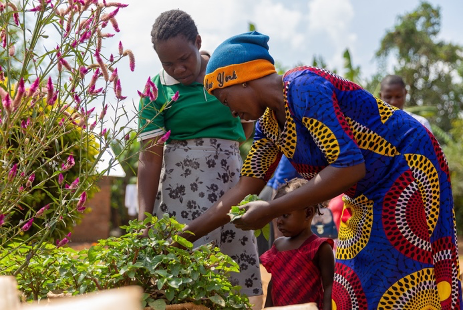
From that foundation, the ministry expanded steadily. Zimbabwe launched in 2017, followed by refugee camp programming in Northern Uganda and an official expansion into South Sudan in 2018 during a national food crisis. Despite entering just before COVID and navigating global shutdowns, the organization continued to grow through local leadership, translated curriculum,
and an expanding Training of Trainers (TOT) model designed for multiplication and sustainability.
By 2021, FARM STEW had reached Malawi, and by 2022 it was active in the Philippines, Brazil, Zambia, Sudan, and Rwanda. Continued growth in the last few years has opened doors in Latin America and West Africa, adding countries such as Burkina Faso, Ethiopia, Bolivia, Senegal, Panama, and Nicaragua. What began as one woman sharing practical knowledge has become a global movement—equipping families with biblical principles, agricultural skills, health education, enterprise development, and clean water solutions to move from extreme poverty toward abundant life. To learn more about Farm Stew’s mission and ministry, visit https://www.farmstew.org


No Comment