












If you have been a member of the Seventh-day Adventist Church in the last 50 years or even the last 10 years, you may have heard the cry,
“We are losing members!”
In 2022, I wrote an article for the Outlook, our Union magazine citing statistics that, “65% of our churches in Mid America Union Conference are declining.” The church at the General Conference headquarters reported recently that the Seventh-day Adventist Church in 50-years (1965-2014) lost 13,026,925 members. The global church is having conversations about what to do. Roger McNamee coined the phrase “New Normal” in the early 2000s, referring to the economic climate after the dotcom bubble. He characterized this era as one marked by slower growth, more volatility, and greater influence for individuals. The truth is we are living in changing times, the old normal, what we did fifty years or even ten years ago won’t produce the same results today.
I have been looking at our local church’s statistics and discovered that we recorded 257 people as missing in a decade (2013-2023), a 54.27 percent loss, clearly the older normal is not working. The pastoral team (elders and the pastor) discussed strategies for soul care, membership retention, and church growth. We had to restructure the worship service to be generational inclusive. As a pastoral team we challenged ourselves to serve in our spiritual giftedness. We agreed on a strategy that includes, a fellowship meal every sabbath, a church prayer group dedicated to praying for all prayer requests submitted each sabbath, we have Wednesday prayer meeting, we have literature distribution, community laundry project, a discover bible school, we divided the church in zones by zip code for pastoral team visits in the church community, physically or virtually, we encouraged small groups to position ourselves to offer encouragement for spiritual counsel, and congregational nurture.
In studying the church, we uncovered some data that you may not see if you just walk into a church sabbath morning, this data is based on two surveys done in our church. The survey results are substantively important. In the survey we asked several questions, and here is evidence of church health.
- Question 12, “I connect with God in a meaningful way during the worship service,” 25 points increase,
- Question 15, “I feel that the worship service has a positive influence on me,” an increase of 22 points.
- Question number 56, “I’m often bored during worship service,” 20 points improvement,
- Question number 89, “I prepare myself to participate in worship service,”16 points improvement.
There is still a lot of work to be done. I called a church member, I hadn’t seen in church for two weeks, she said, “I do not like the praise music, this contemporary Christian music you are bringing in church. This adoration/rock like concert in the sanctuary can bring attendees yes – what I want is a straight devotional service that will draw and attract people’s attention to Christianity.” I asked if she wanted to lead out in song service. “No, I don’t sing,” was the answer. One elder said, “The problem in this church has been the overall culture of this church, the culture of this church has been one of inflexibility, conservatism,”
Looking at the survey report, there is evidence of a general increase presenting a radical shift in the culture of the church from 2023, our pastoral team, are beginning to see the centripetal power of the gospel, evidence of people being attracted to the church, and wanting their families and friends to be included in the fellowship of the church, so that they can grow into mature Christians. One church member sent this text after attending Wednesday prayer meeting,
“Pastor, I was so delighted to be at prayer meeting. Just love the excitement about our Awesome God! Looking forward to Sabbath and Wednesday prayer meeting!”
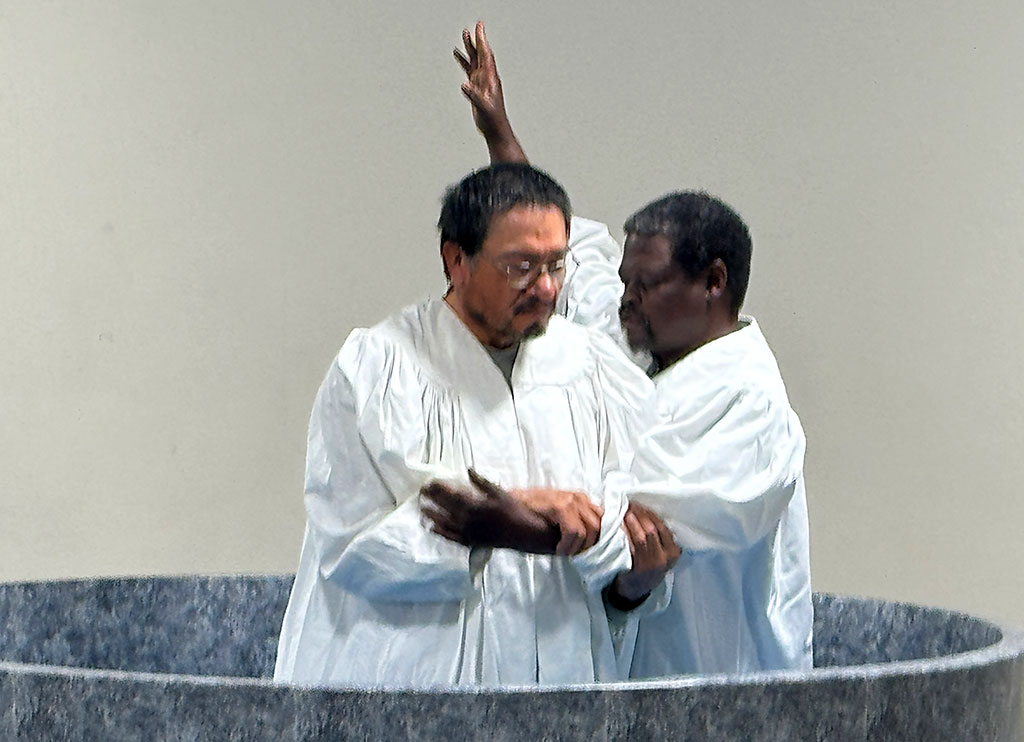
Our pastoral team are also praying and hoping that as a church community, our relationship with Jesus will have a centrifugal force on us to direct us outward to invite other people to join because the church has added value to our lives. For example, a lecturer in our church came to me and said, “pastor one of my students is here, he is wondering if he can be baptized?” One attending non-Adventist sent me this text, “Sir, per your sermon today, we as a family are indeed happy to be part of the RCSDA family.”
The results of the surveys show that there is steady growth in our church, compared to recent years. There is evidence of increased positive impact, the church climate is changing, one of the elders put it this way, “we were noticing some of the difficulties within the church. . .. The issues that we ran into were really causing us a lot of difficulty in maintaining our enthusiasm for coming to church, there was a lot of feuds between church members, there was a lot of issues in regard to differences on worship style.” Today the testimony is different, there are signs of openness, the same elder remarked, “well, our diversity, so we have a lot of diverse, people groups, diversity of thought, like I said, um, racial diversity in the church for a fairly monochromatic community, . . . we are a very diverse church, and I think that is one of the greatest strengths.” I can tell you that if you walk into the Rapid City Seventh-Day Adventist Church today, you will see a picture of a multi-ethnic and multi-generational Church that is transforming alongside the cultural landscape of the city itself. We are not there yet, but as the pastor, what I am seeing is what I call exciting stuff. The church growth is 6.49 percent from 2023 to 2025. The church has made a significant improvement in membership retention. This kind of news is what the devil hates, but for now, we will praise the Lord. A few weeks ago, we started our church visioning for 2026-2027, after the first session a church member posted this on Facebook,
“I really enjoyed the breakout session, it was very uplifting.” Pray with us as we vision God’s work.
1 Brian Mungandi, “Minnesota Conference Reports on Church Vitality,” Outlook Magazine (2022)
2 David Trim, “Retention and Reclamation: A Priority for the World Church,”
https://www.adventistarchives.org/ac2015-retention-report.pdf.
3 Roger McNamee, The New Normal: Great Opportunities in a Time of Great Risk (New York: Portfolio,
2004).
4 Pastor Brian Mungandi has been the Rapid City Seventh-day Adventist Church since October 2022.
5 Statistical Report, 2023-2025, https://www.eadventist.net/en/reports/comparison_report

No Comment