













I was thirty-seven months old when my brother came home. That year was counted in minutes, hours, days, weeks, then months.
The first thing I was taught was how to kiss him.
Lightly. Barely. I would lean over him at bedtime while Mommy rocked him and put my mouth against his forehead without any weight behind it. I was to kiss but not wake him.
Mommy felt it important for me to kiss him every night because he might not be there in the morning.
After he was born, while they were still hospitalized Mommy and Daddy told me he might die. I was standing on a step outside Mommy’s hospital room window. The hospital was very progressive making a way for children to visit their mothers
I stood there and told my parents we needed to pray to Jesus—and then I did.
He came home.
No one was sitting a three-year-old down to explain what was wrong with the baby. I heard conversations. I made sense of it the way small children do with incomplete information.
They did not have a diagnosis until he was 9 months old. Cerebral Palsy. I worked at learning to say these new words.
So I kissed him carefully, to not wake him, in case it was the last time–every night.
There is a clinical name for what was happening to me in those months, and it is not the one most people expect. It wasn’t fear. A frightened child cries, clings, asks. I did none of that. What I developed instead was hypervigilance — a nervous system that never fully stands down, listens for breathing while it sleeps, that reads a room before it enters it.
In a small child, hypervigilance doesn’t look like anxiety. It looks like being good at things. It looks like carefulness, and gentleness, and a little girl who always seems to know what the adults need before they ask. Families rarely worry about that child. They are grateful for her.
I am a Glass Child
There is a name for her now, too. Glass Child — a term popularized by Alicia Meneses Maples, who grew up between two brothers with profound needs. Glass not because we are fragile, which is the common misreading, but because we are looked through. It is meant to describe a child/adult who grew up in a home where one or more other children required a large amount of the parents’ resources and time. The family’s eyes go past us to the one who might not survive the night. Not every sibling cares for the term, and some parents find it unjust. I use it because the first time I heard it, I recognized myself, and I had been waiting a very long time to be recognized. An easy term that sums up the situation
I have spent my career sitting across from the grown version of that child. She comes in at forty, at fifty, wanting to know why she can’t sleep, why her chest tightens when the phone rings at an odd hour. She describes a childhood she insists was fine — and it was fine, in the sense that no one ever hurt her. No one did. That is exactly what makes it so hard to see.
But you cannot spend your first years rehearsing a death every night and expect your body to forget the rehearsal.
None of this is an accusation. My parents were not careless or unkind. They were doing the only arithmetic available to them: one child needed watching in order to stay alive, and one child did not. They were right. I have raised four children of my own. I know what finite looks like. Short of a medical team living in our house, the arithmetic was going to come out the way it came out.
A child, though, cannot hold both halves of that arithmetic. She only ever learns the half about herself.
It surprised every adult in the family when he turned one and was still alive. And there is a great deal more of this story to tell.
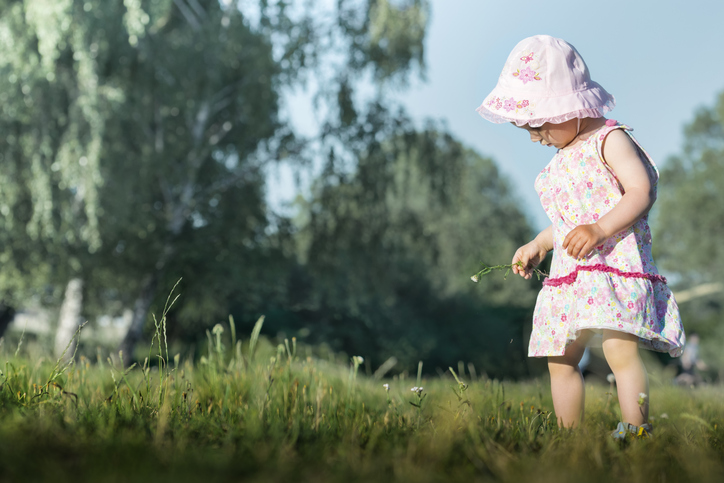
What I want you to see first is the small girl at the side of the rocking chair — so gentle, so quiet, so easy to raise. Loving carefully. Asking for nothing. Listening in the dark for a sound that would tell her the world was still all right.
Next time: the night I could not sleep.
Father, for every child who learned early to take up no room — You have never once looked past her. Help the rest of us to see what You see. Amen.