












On June 20, I preached a sermon at my local church that was written on my heart the week my dad died in January 2024. It took me 2 1/2 years to finish, and then when I preached it, to my horror, I cried. Nevertheless, I do think it’s an important message, so I’m publishing it here.
“In the past God spoke to our ancestors through the prophets at many times and in various ways, but in these last days he has spoken to us by his Son, whom he appointed heir of all things, and through whom also he made the universe.” —Hebrews 1:1-2, NIV
This is a sermon that has been written in my heart for more than two years, but I didn’t have the heart to write it, and if I wrote it, I didn’t think I’d have the strength to stand up here and speak it. This is a sermon from my Dad. God began giving me this message the week after he died.
Something I’ve learned about God and how He operates is that He never gives up. When He speaks, He makes His intentions clear. When my dad passed away, and I was numb to everything about his life, God still had something to say to me, and what He said was… that He still has something to say. Isn’t that funny? So, I’ll explain it here, so you know just how far God will go to get His point across.
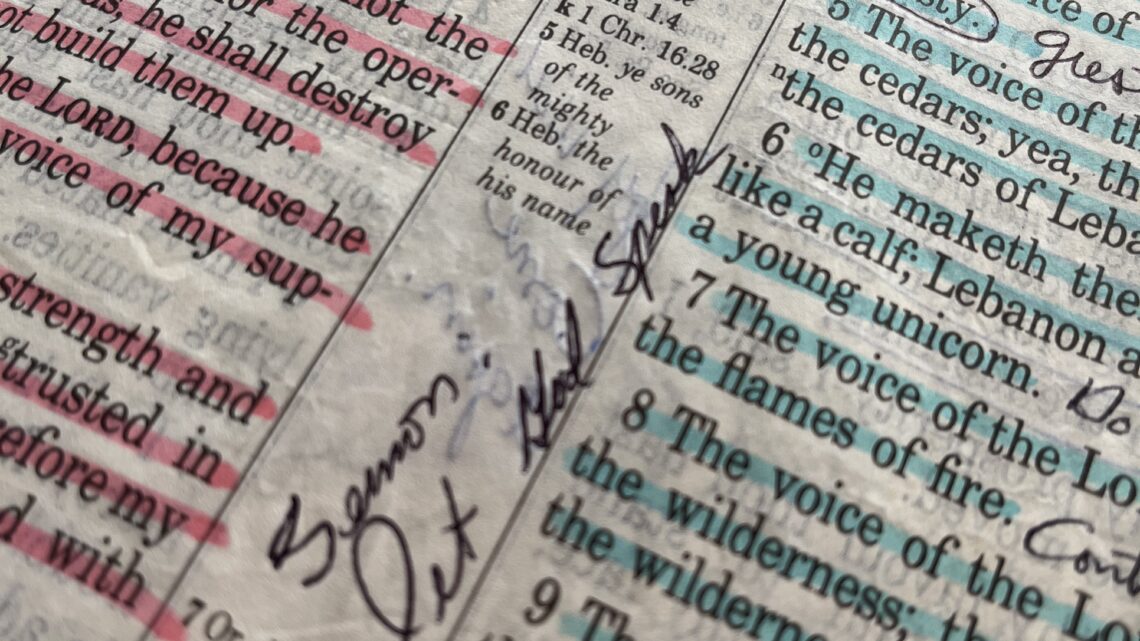
My dad died on January 6, 2024, and just 6 days later, thumbing through his Bible, I happened upon a margin where he wrote the following:
“Don’t Fear, Don’t Lose Hope, Don’t give up, Don’t be discouraged,” “Joy Will Come Again,” and “Let God Speak.”
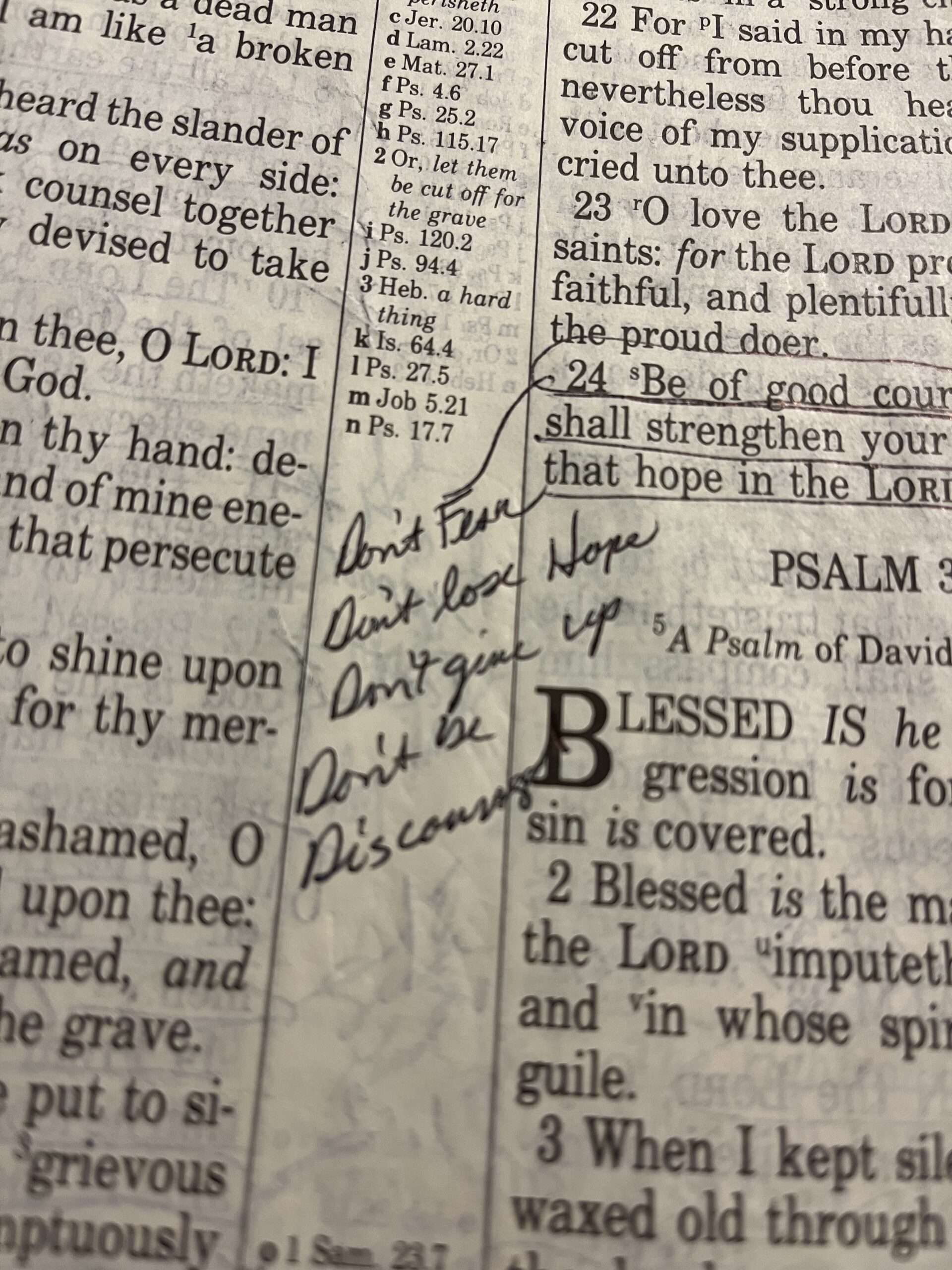
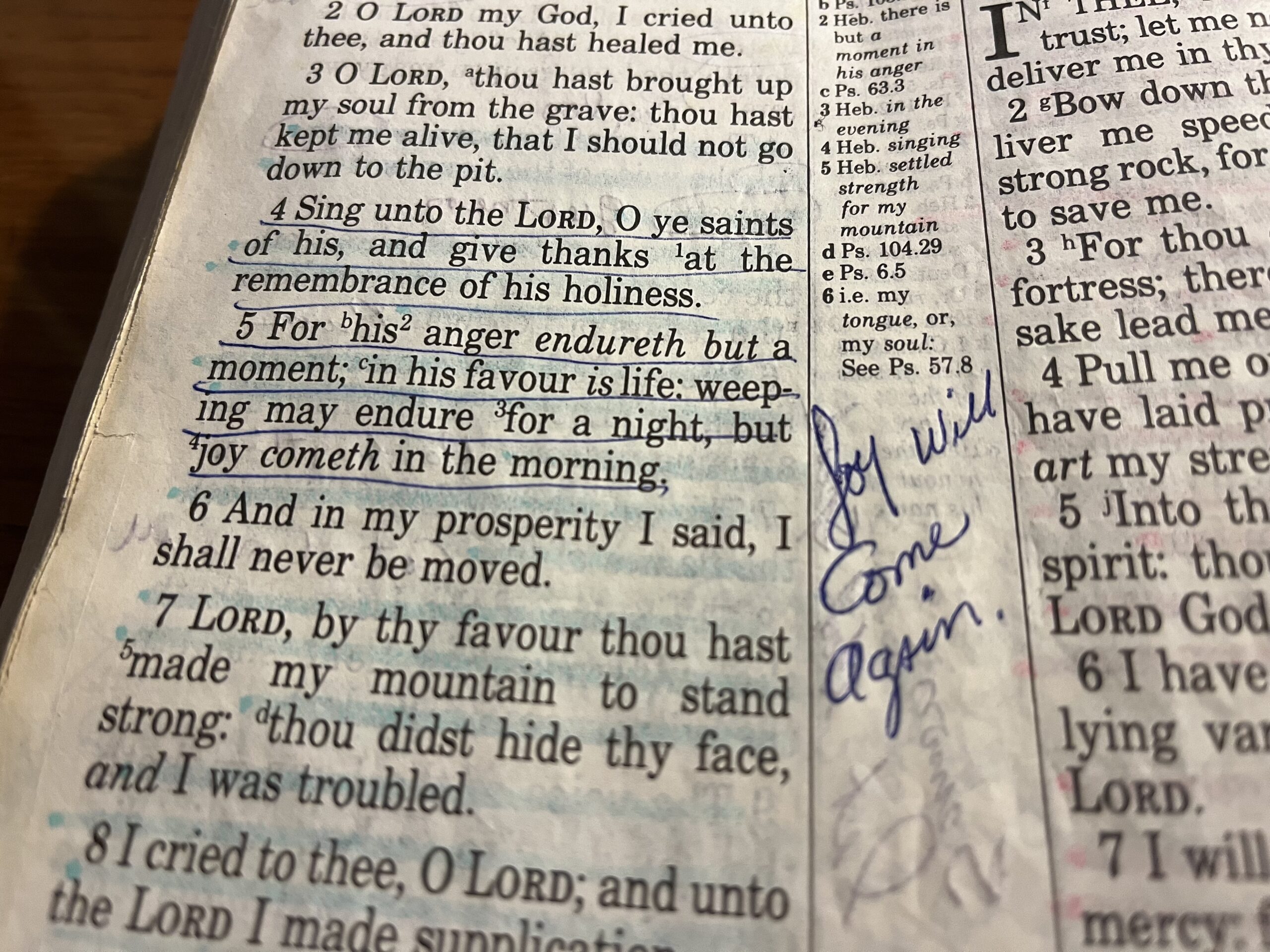
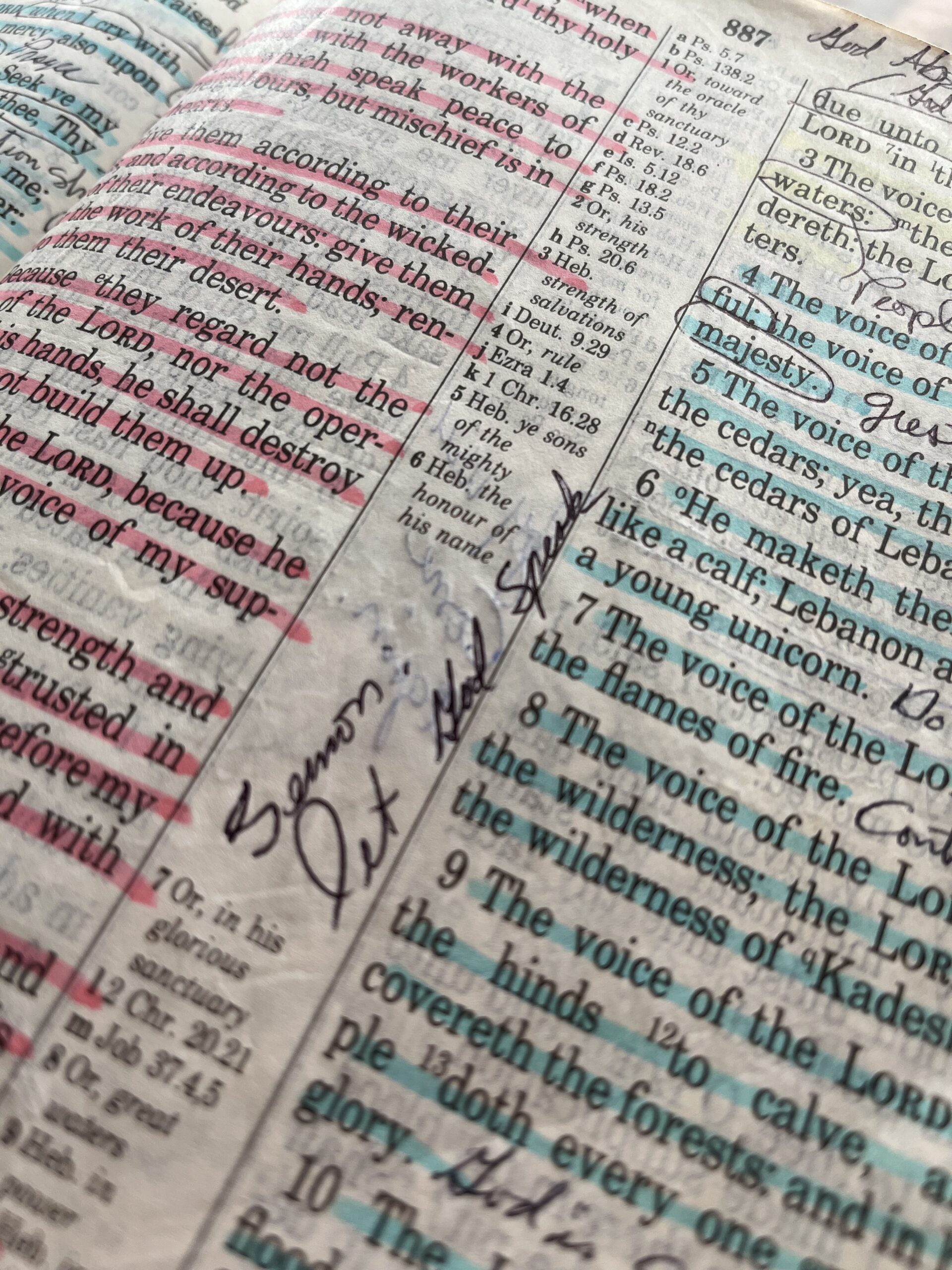
Now, the “Let God Speak” left such an impression on me that I got it tattooed on my arm. But just then, still reeling from loss, I wasn’t getting the message yet.
Just one day later, our first Sabbath back at church after Dad died, Pastor Kris Hicks was preaching, and the name of his sermon was… ready for this? “God is Speaking.”
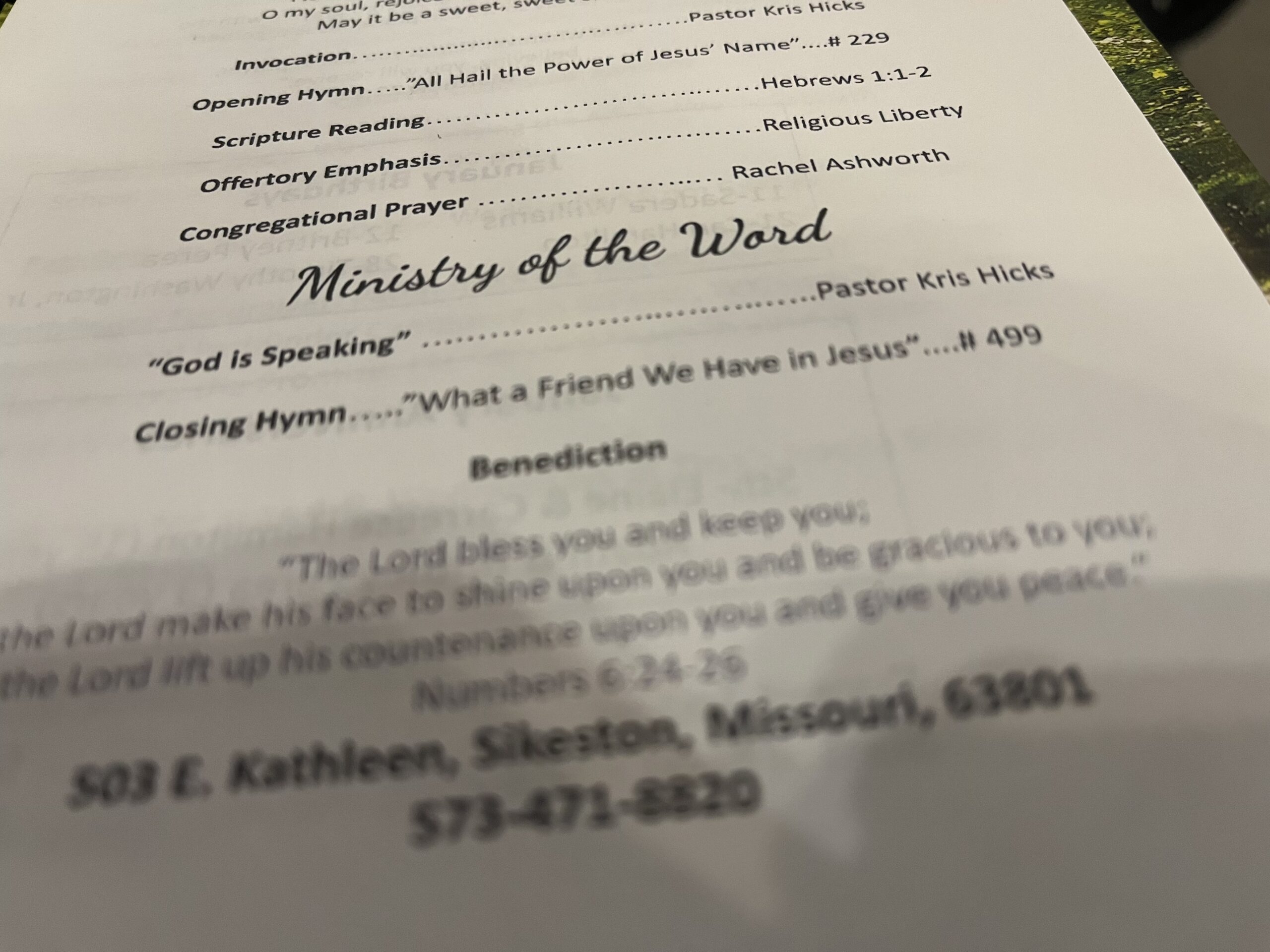
Coincidence? If you follow Christ long enough, you become very aware that coincidences are not a real thing that happens. What happens? God happens. So, when I was going through Dad’s books later that same week, just three days later, and happened upon a book with Dad’s writing in it, my eyes fell on a chapter called: “He Speaks to Me” followed by several lines dad wrote. He said, “First, friend, decide to love God always as you live. Next serve God and love God’s world for life. Now always obey God’s way of truth and love Him. Love God always. Love His world and all people. Love your neighbors always and love all sinners as you live. Reach forward and love life with God.”
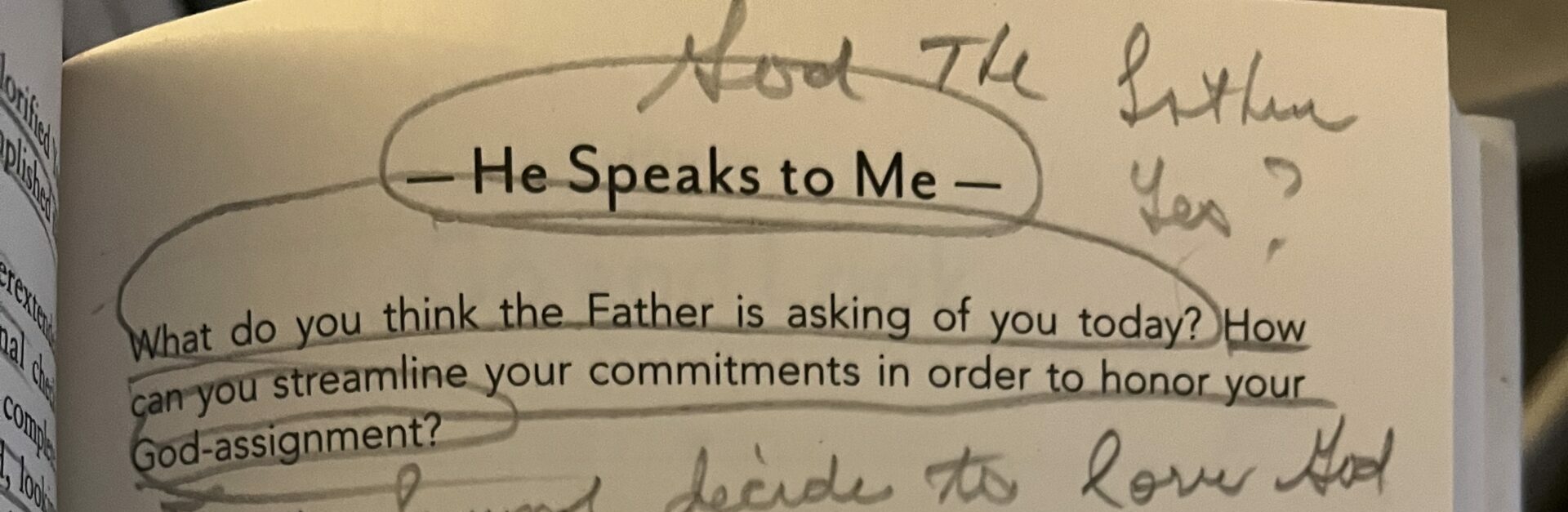
It was around this time that I sat up and really started to pay attention. What did God want to tell me? What was He preparing me for? I tried to write a blog about this. If you know me, you know I write blog posts for OUTLOOK magazine. But I found I wasn’t ready to write.
God wasn’t done, though. On February 5 that same year, the Adventist Review arrived as usual, but this month, one month almost to the day since my Dad died, Pastor Ted Wilson’s article was titled “How God Speaks to Us.”
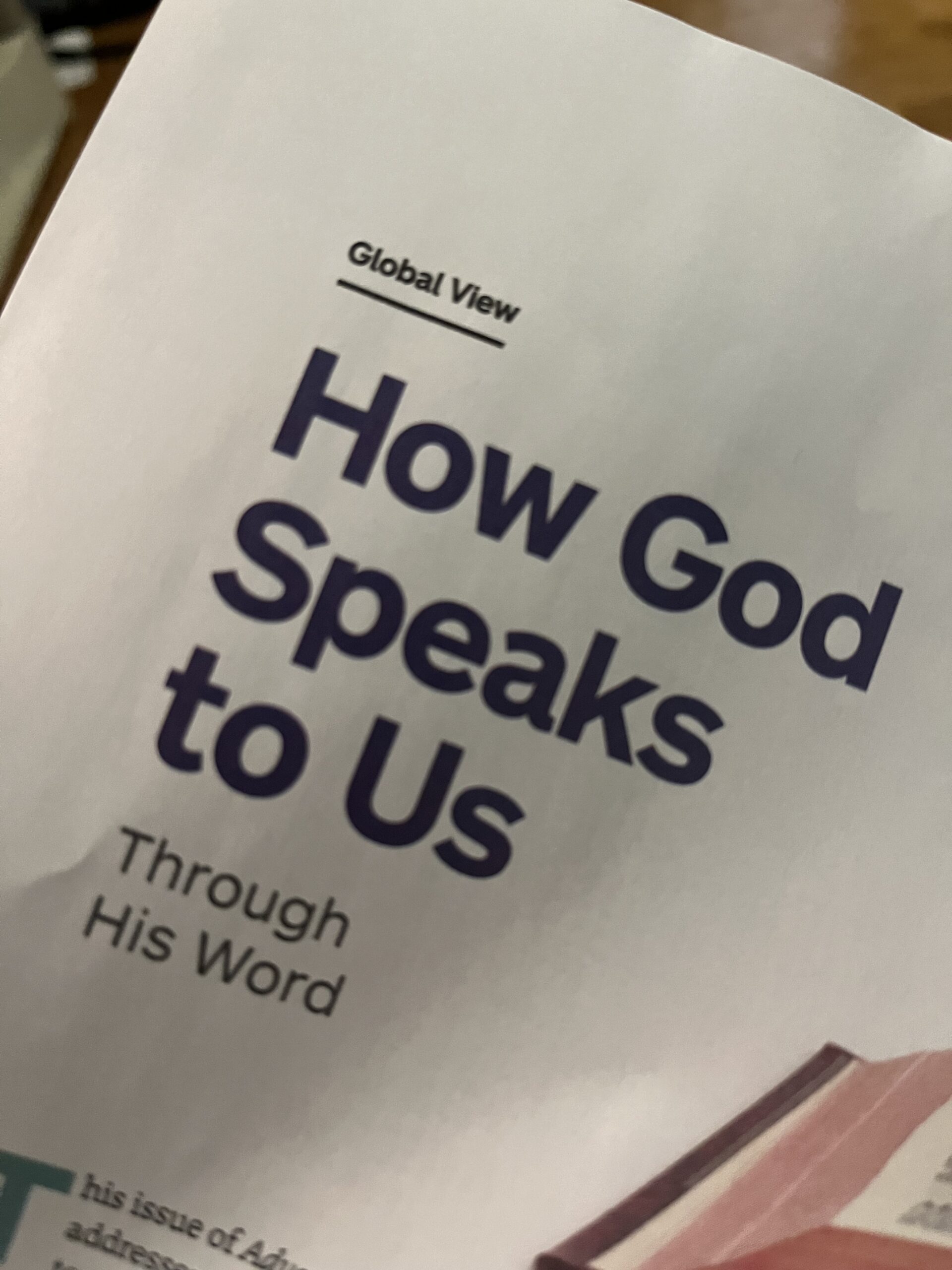
I wish I could report to you that I figured it all out. It was an easy riddle, and God had something amazing to tell me. That’s not what happened, though. I left my unfinished blog in drafts on the OUTLOOK website until May of this year. I couldn’t write a sermon because, actually, I stopped preaching for more than a year after Dad died. What could I possibly have to say if God wasn’t saying anything to me?
Don’t worry. Those feelings didn’t last forever. And I think I needed every bit of that time to work through my grief. Unfortunately, my grief returned this last week again—I assume because Father’s Day is coming up—and I attempted to make myself feel better by getting my Dad’s old Bible down.
I did not go searching for my favorite scriptures to see what he wrote about them. Instead, I flipped from the beginning, page by page, and right on the title page for the Old Testament, Dad had scrawled a list across the entire page, with the title, “God the Father Speaks.”
I’m telling you, I can’t make this stuff up. God is still telling me He’s speaking, and I think it’s high time we learn to listen.
Every relationship has a history of how it learned to talk. If you are married, have been married, or even have a very close friend, you can think back and see that communication began awkwardly, even quietly, before it became brave. A couple married many decades ago, or friends since grade school, can likely finish each other’s sentences now, but it didn’t start that way. It started with letters and notes, awkward phone calls, then learning each other’s tone, and finally just knowing what the other means before they say it.
The Bible is the story of God learning to talk to us—not because He changed, but because He kept drawing closer, and the form of His voice changed as the distance closed. Hebrews 1 says God spoke “at various times and in various ways”—many times, many ways. Dad saw this through Scripture, and this morning I’m going to walk us through each of his points.
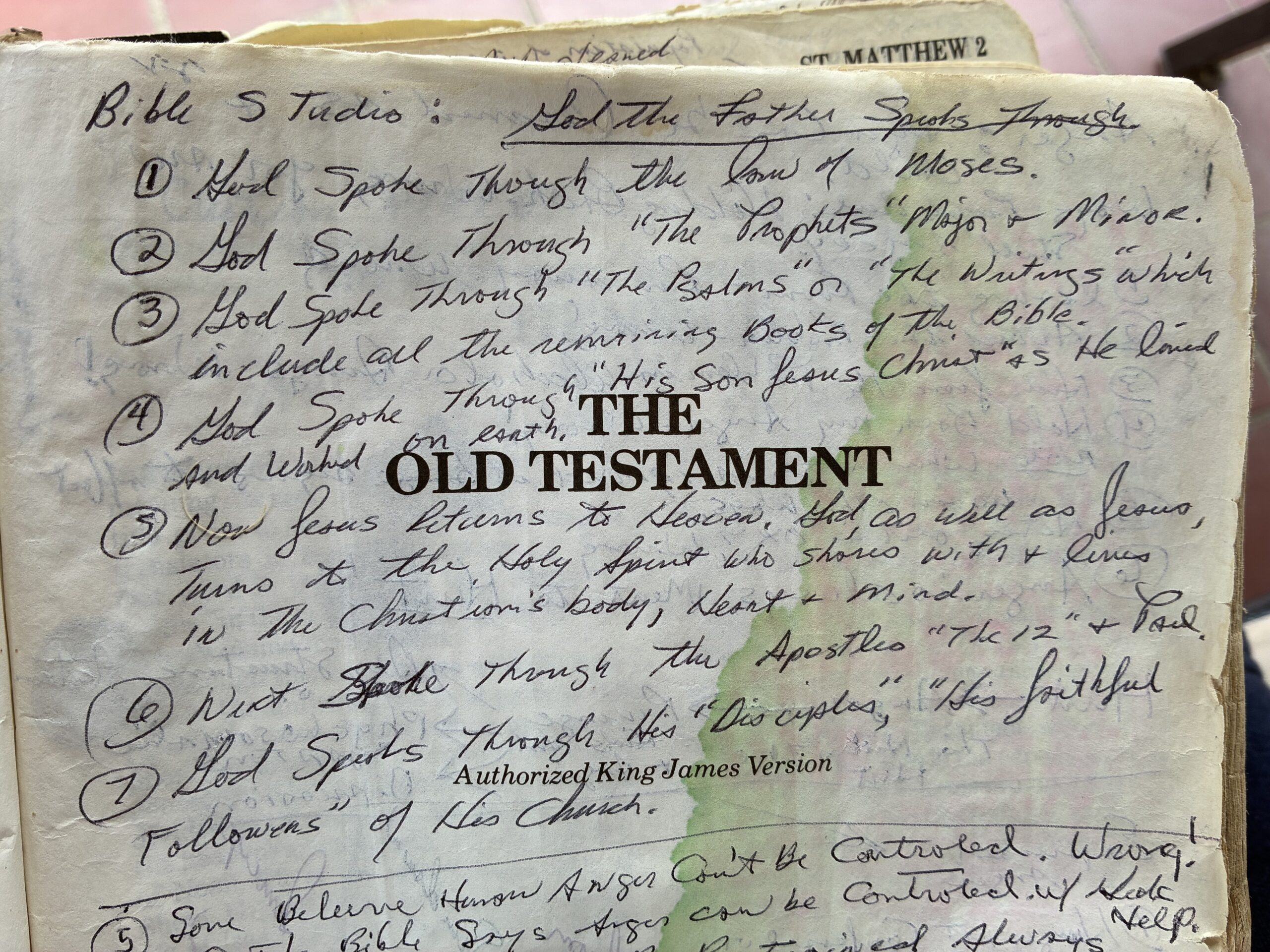
I. God Spoke Through the Law (Moses)
It starts at Sinai. Smoke, fire, trumpet—and a voice. Let’s turn to Exodus 19:16–19 and read together.
The Law wasn’t God being harsh. It was God doing something no other god in the ancient world did: telling His people exactly who He was and what He was like, in terms they could act on. “Be holy, for I am holy” (Leviticus 19:2). The Ten Commandments aren’t a cage—they’re a self-portrait. When God says “don’t murder,” “don’t steal,” “honor your parents,” He describes His own character and invites Israel to wear it.
This is God’s voice as a foundation. Before anything else is said, this is said first: here is who I am, here is what love and justice look like with hands and feet.
II. God Spoke Through the Prophets—Major and Minor
Centuries pass. The people drift. And God doesn’t go silent—He sends voices. Isaiah, Jeremiah, Ezekiel, Daniel—the “major” prophets, with their long scrolls. And then Hosea, Amos, Micah, Malachi, and the rest of the twelve “minor” prophets—shorter books, but with no less weight.
What were they doing? Calling a forgetful people back to a covenant they’d stopped remembering. Malachi 3:7 says, “‘Yet from the days of your fathers You have gone away from My ordinances And have not kept them. Return to Me, and I will return to you…’”
Woven through all of these prophets—buried in judgment oracles and tears over Jerusalem—are promises of someone still coming. Let’s look at Isaiah 53. Now turn to Micah 5:2.
This is God’s voice as memory and hope—refusing to let His people forget who He is, while pointing them toward who is still to come.
III. God Spoke Through the Psalms—the Writings
Not every word from God in Scripture is Him speaking down to us. Some of it is God’s people speaking up to Him—and Scripture preserves that too, as inspired. The Psalms, Proverbs, Job, Ecclesiastes, Song of Songs—these are what my dad called in his list, the “Writings.”
In Psalm 22:1, we see a man crying out, “My God, my God, why have you forsaken me?”—and God lets that stay in the book. Here’s someone working through doubt, grief, fury, and praise, often in the same psalm. This is God saying: I want to hear from you, too. Your honesty is part of our conversation, not an interruption of it.
This is God’s voice as a relationship—not a monologue, but the start of dialogue.
IV. God Spoke Through His Son
And then God does something no Law, prophet, or psalm could do. He doesn’t send another messenger. He comes Himself.
Let’s read through John 1 together (John 1:1-18). For thirty-three years, if you wanted to know what God’s voice sounded like, you could walk up and listen. You could watch how He played with siblings, cared for pets, served his family, then how he touched a leper, talked to a woman at a well, wept at a grave, turned over tables in righteous anger, and forgave the men who nailed Him to a cross.
Jesus is not God’s clearest statement—He’s God’s clearest self. Yet even Jesus’ disciples seemed to miss it. Turn to John 14 (John 14:7-9).
V. The Turn: Jesus Returns to Heaven, and the Spirit Comes to Live in Us
So, to review, we’ve looked at 4 ways God speaks to us throughout history: through Moses, the prophets, through writings, and through Jesus.
Here’s where the story takes a turn that should stop us in our tracks. Jesus ascends back to Heaven after His death and resurrection. He leaves Earth, and instead of the voice of God becoming more distant, it becomes—somehow—closer.
John 16:7 says, “Nevertheless I tell you the truth. It is to your advantage that I go away; for if I do not go away, the Helper will not come to you; but if I depart, I will send Him to you.”
And 1 Corinthians 6: 19 says, “Or do you not know that your body is the temple of the Holy Spirit who is in you, whom you have from God, and you are not your own?”
So, Jesus went away, but left a Helper—the Holy Spirit—and the Spirit doesn’t speak to people from outside anymore. He moves in. So, through Jesus, God’s voice stops being something you have to travel to a mountain or a temple to hear, and through the gift of the Holy Spirit, we don’t have to travel to Jesus or be with Him physically anymore. The Spirit is something we carry.
But wait—as my husband would say—but wait, there’s more.
Let’s turn to Acts 1 (Act 1:1-14).
This is the hinge of the whole sermon. Every previous chapter—Law, Prophets, Writings, Son—was God speaking to humanity. Now God speaks from inside humanity. That’s not a downgrade from having Jesus in the flesh. That’s intimacy beyond what even the disciples had standing next to Him on a road in Galilee.
Think about it for a moment. If you had a very important message to relay to very important people, but you couldn’t deliver it directly, who would you choose to speak for you? You would probably choose someone who knows you intimately and who will stay true to your character and your message. God trusts us that much—if we let in the Spirit, and we listen. Then He can not only speak to us, but through us.
VI. God Spoke Through the Apostles—the Twelve and Paul
Out of that Spirit-filled church comes the next chapter of Scripture itself. The Twelve, who walked with Jesus and now testify to what they saw. And Paul—never one of the Twelve, an unlikely convert, yet entrusted with most of the New Testament’s letters. Turn to 1 Corinthians 2, and we’ll read some of His words on the Spirit (1 Corinthians 2:6-16).
The apostles’ writings aren’t an afterthought to the gospels—they’re the church learning, in real time, how to live out what Jesus started. Ephesians 2 tells us how important this foundation is from God, to Christ, to the apostles, and finally, the Church. Let’s read it. Ephesians 2:19 (through 22).
VII. Now—God Speaks Through His Disciples
So, God speaks to us through Moses, the prophets, writings, Jesus, and the apostles. The last one is His disciples. Maybe you’re thinking “we already covered this,” but what I mean, and what dad meant when he made this list, is that God is still speaking through us.
This is where the story stops being history and becomes present—with us.
The Twelve weren’t the last apostles in the sense of “sent ones.” Jesus’ final words before the ascension were a commission, not a closing statement: In Acts 1:8, He said, “You will be my witnesses,” and He wasn’t only speaking to the 12.
Every believer who has carried that Word forward since—your grandmother who taught you to pray, the missionary who never wrote a book of the Bible but planted a church in a village no one’s heard of, the Pathfinder director knocking on doors where bikes lay in the yard, the the Sabbath School class writing a card to someone in the hospital—that is the same unbroken sentence God started at Sinai.
God hasn’t stopped talking. He just changed His mouthpiece one more time. Now it’s yours.
Conclusion—The Question This Story Asks You
If you trace it all the way through—Law, Prophets, Writings, Son, Spirit, Apostles—you land in this room, in this church, with the same Author still writing the same story. The question isn’t “did God used to speak?” The question is: what is He saying through you this week?
Maybe it’s a phone call you’ve avoided. Maybe it’s patience with someone who’s hard to love. Maybe it’s simply showing up faithfully to the small, unglamorous places God has put you. The Twelve didn’t know they were writing Scripture while they were living it. You may not either. But the voice that spoke through fire on a mountain is the same voice that wants to speak love through your hands this week.
He is still speaking. The only question left is whether the world can hear Him—through you.