
















When Minnesota churches began delivering food to families earlier this year, few expected the outreach would grow into a long-term ministry effort.
In the months following a community outreach effort that supported immigrant and refugee families facing uncertainty and food insecurity, Adventist Community Services (ACS) ministries across Minnesota continue to expand their impact. According to Minnesota ACS Director Leslie Morrison, the experience changed how churches think about community ministry and long-term support.
“We have five churches now that have established their own ACS center because of this,” Morrison said during an interview with Mid-America Union Church Ministries Director Tyrone Douglas. “They want to help their neighbors more.” A sixth ACS center is now being developed at the Minnesota Conference office. The conference has dedicated part of its building to continue a food shelf ministry and a winter coat outreach.
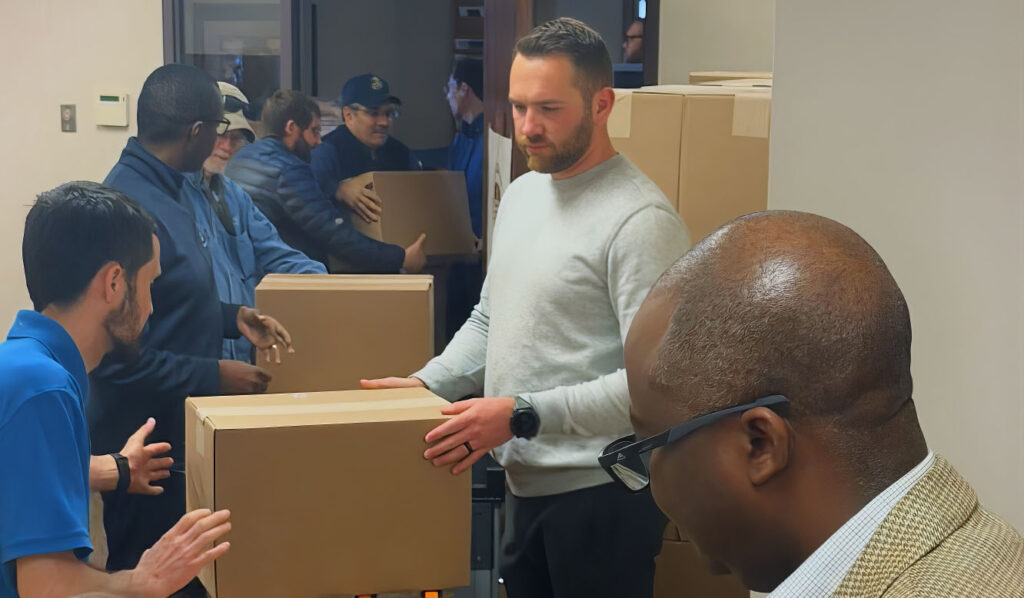
“The Lord’s providing,” Morrison said. “This is huge.”
Earlier this year, churches across Minnesota responded as many immigrant families struggled to access food and basic necessities during a difficult winter season. Since then, volunteers and churches have distributed more than 6,000 pounds of food throughout local communities.
Morrison said the outreach effort revealed a growing need many people do not realize exists. “What I’m finding out is that people from all walks of life here in Minnesota don’t have food,” he explained. “They might have jobs, but they still have a hard time buying food because it’s just so expensive.” As a result, ACS is now preparing to open an ethnic food shelf designed to better serve immigrant families by providing culturally familiar foods.
During the early stages of the ministry effort, obtaining enough supplies was difficult. Morrison said major stores limited how much food organizations could purchase at one time, making it harder to quickly respond to growing community needs. Still, schools and families were deeply grateful for the support they received. “The schools we delivered the food to were so overwhelmed that our organization was doing this,” Morrison said.
The outreach also led church leaders to think about other practical needs families might face. Morrison said ACS leaders even explored the possibility of helping repair damaged doors after hearing concerns from community organizations about families struggling to feel safe in their homes during the winter months.
 “Sometimes in ministry we focus on food or clothing,” Morrison said. “But when God calls for something different, we should act on it and make it happen.”
For Morrison, the experience has also carried spiritual lessons. Minnesota ACS has served communities through emergencies and relief efforts for nearly two decades, but Morrison said this was the first time he had seen needs develop at this scale during the winter months. “The Lord has shown me that He cares all year long,” he said. “And that we need to be prepared all year long.”
Morrison also shared how a personal injury unexpectedly prepared him for the ministry work ahead. After suffering a serious hip injury in late 2025, he was unable to continue his regular full-time work as a school bus driver. At first, he struggled to understand why it had happened.
Then the outreach effort began.
“If I was working 50 hours a week, there’s no way I could have gotten this warehouse together and helped get food to these people,” he said. Morrison said he later experienced healing after praying for strength to continue the ministry. “I cried out to the Lord,” he said. “And He healed my hip 100 percent.”
Looking back, Morrison believes the experience has challenged church members to think differently about caring for others during difficult times. “If we don’t help those now, who’s going to help us in the time of trouble?” he asked. “How are we going to live through that?”
As the ministry continues growing, Morrison said one of the greatest needs now is trained volunteers. “We need more than financial support,” he said. “We need trained boots on the ground.”
Minnesota ACS regularly offers disaster response training designed to prepare volunteers to serve during emergencies and community relief efforts. Morrison explained that trained volunteers allow ministry leaders to respond more effectively and help communities faster during times of need. “Once people are trained, they can adjust to almost any situation,” he said. “It makes the whole operation smoother.”
For church leaders in Minnesota, the outreach has become more than a temporary relief effort. It has grown into a reminder that ministry often begins by simply noticing the needs of neighbors and being willing to respond.

By Tyrone Douglas, Mid-America Union church ministries director, and Hugh Davis, Mid-America Union communication director