














Sacred Ground: Walking Beside a Sister in Arms
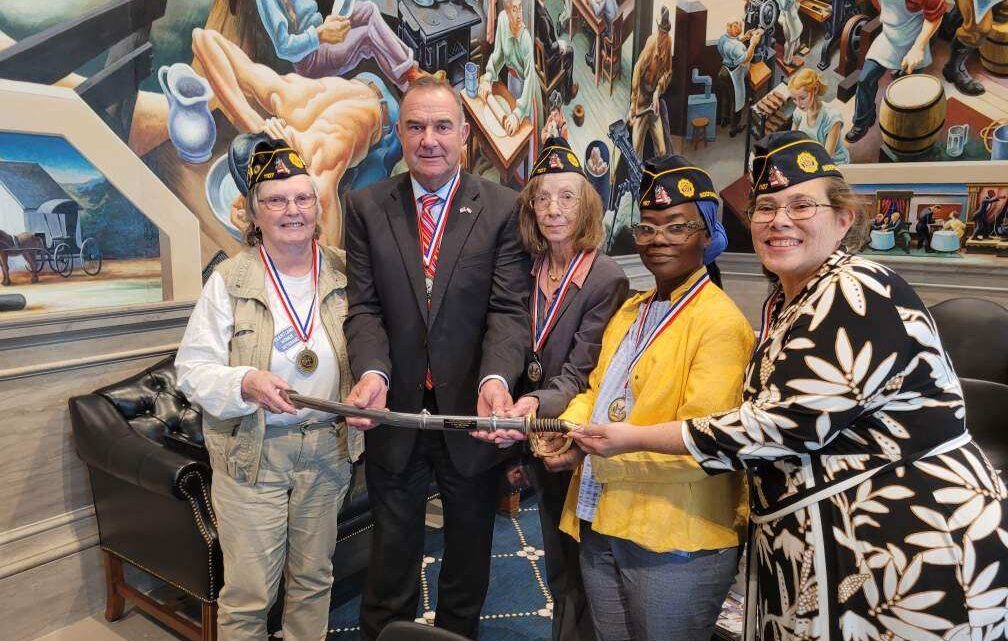
Before writing about veterans and faith, I think of my friend Sheridin Jones, a member of Linwood Temple Seventh-day Adventist Church and a Specialist in the U.S. Army who served during the Gulf War. Today, she continues her service as Commander of Heartland Women Veterans American Legion Post 1107, currently an all women’s post. Sheridan lives each day with the dual realities of wars once fought on distant shores and the quiet, continuing battles waged within. Over many conversations, she offered me a sacred window into that world, the unseen terrain of military life, memory, and faith. Through her, I met other women veterans, “sisters in arms,” who carry the lingering shockwaves of service, mental, emotional, and physical. Those encounters reshaped my understanding of resilience and faith, revealing the layered reality of being both a veteran and a believer.
Returning from the Battle
Many veterans return from war carrying not only physical wounds but deep emotional, relational, and spiritual scars. As Tara McKelvey observes in her article “God, the Army, and PTSD,” “the trauma of war seems to be especially acute for men and women whose faith in a benevolent God is challenged by the carnage they have witnessed” (McKelvey 2009). The church and its leaders are uniquely positioned to accompany veterans in rediscovering grace through community, connection, and care, provided they integrate trauma-informed pastoral training and collaborate with helping professionals as instruments of God’s continuing provision. Recent research underscores this need. In “Changes to Veteran Community Reintegration Research Needed to Address Diverse Needs of Veterans and Their Communities” (Journal of Military, Veteran and Family Health)(JMVFH), scholars emphasize that reintegration efforts must “address the expansive reintegration needs of Veterans and their communities” and call for “inclusive, veteran-engaged approaches” to healing and belonging (Heuer et al. 2025).
Their conclusion aligns strikingly with the theological vision of the body of Christ, a community that restores the wounded through participation, purpose, and presence. To frame this reflection, we turn to 1 Samuel 30, where David and his men return from battle to find Ziklag burned, their families taken captive, and their faith shaken. This ancient story mirrors the veteran’s journey from battlefield to body, from isolation toward reintegration.
Scriptural Story and Veteran Parallel
“Now when David and his men came to Ziklag on the third day, the Amalekites had made a raid against the Negeb and against Ziklag. They had overcome Ziklag and burned it with fire 2 and taken captive the women and all who were in it, both small and great. They killed no one, but carried them off and went their way. 3 And when David and his men came to the city, they found it burned with fire, and their wives and sons and daughters taken captive. 4 Then David and the people who were with him raised their voices and wept until they had no more strength to weep. 5 David’s two wives also had been taken captive, Ahinoam of Jezreel and Abigail the widow of Nabal of Carmel. 6 And David was greatly distressed, for the people spoke of stoning him, because all the people were bitter in soul, each for his sons and daughters. But David strengthened himself in the Lord his God.” (1 Samuel 30:1-6, ESV)
David’s experience exposes the rawness of trauma and leadership under pressure:
- Loss and devastation: the burning of Ziklag represents the collapse of the familiar, home, identity, family.
- Deep grief: “They wept until they had no more strength.” This is the exhaustion many veterans know too well.
- Guilt and moral injury: the men’s anger turns toward David, echoing the inner battles of shame and self-blame that haunt those who have seen too much.
- Disorientation: what happens when the world you defended no longer feels like home?
- Restoration through divine encounter: “David strengthened himself in the Lord.” Healing begins not in triumph but in honest dependence and community renewal.
Veterans often inhabit the same emotional terrain, returning from battle only to find that the geography of their hearts and homes has changed. The fight-flight-freeze responses of trauma mingle with spiritual questions of belonging and purpose.
Trauma, Faith, and the Ministry of Presence
Faith and trauma often collide. The veteran who once prayed before every mission may now doubt the goodness of God. The mother who waited at home may live with anxiety and resentment. These realities invite the church into a ministry not of fixing but of accompaniment. In Trauma-Informed Pastoral Care (McClintock 2022), Karen A. McClintock writes:
“Diverse people in your congregation and community struggle with ongoing spiritual needs during extended periods of traumatic grief. … Building upon your knowledge about traumatic grief, you can turn your awareness into actions.”
She cautions:
“When circumstances are such that people postpone their grief, they may experience pain and anguish for weeks or emerge later with displaced emotions or changed behaviors.”
Trauma-informed pastoral care therefore demands time, patience, and sacred attention. Leaders must resist the urge to move too quickly to closure. Grief delayed becomes grief distorted.
McClintock adds:
“People who have strong ties in faith communities, responsive partners, empathetic loved ones, and healthy relationships with other survivors will build trust and bond again during trauma grief recovery. … Your role is to provide safe places in which to mourn, light candles, cry a thousand tears, and welcome survivors’ stories.”
This is the calling of the church, to become Ziklag rebuilt: a sanctuary where veterans can cry, question, remember, and slowly reconnect.
Research-to-Practice Insight: Rethinking Reintegration
That 2023 JMVFH article, “Changes to Veteran Community Reintegration Research Needed to Address Diverse Needs of Veterans and Their Communities,” challenges policymakers, practitioners, and faith leaders to broaden how reintegration is defined and supported (Heuer et al. 2025). The authors identify three critical needs:
- Broaden the lens of reintegration: Move beyond employment or clinical outcomes to include mental, social, cultural, and spiritual well-being.
- Center lived experience: Engage veterans as co-designers of programs and research so their authentic voices shape what healing looks like.
- Promote knowledge translation: Bridge the gap between research and practice, empowering community organizations, including churches, to apply evidence-based models of belonging, resilience, and care.
In essence, the study calls for community-driven, veteran-engaged models that mirror the very theology of the body of Christ, where each member, especially the wounded, participates in the collective healing of the whole.
Theological Reflection: From Exile to Communion
The story of David and the findings of contemporary veteran research converge on one truth: healing is communal. The church is not simply a refuge but a re-membering body, a place where disconnection becomes reconnection, where trauma meets tenderness. When faith leaders practice trauma-informed presence, they embody the incarnational ministry of Christ, who drew near to the wounded, sat with the grieving, and breathed peace into fear. As the JMVFH study emphasizes, reintegration must center “collaboration between veterans, researchers, and community leaders” (Heuer et al. 2025) In the life of faith, pastors and congregations become that collaborative bridge, linking heaven’s compassion to human need.
Practical Steps for Leaders
- Establish Veteran Sabbaths and ongoing small groups.
- Provide trauma-informed training for clergy, leadership, and volunteers.
- Partner with local VA chaplaincy or veteran centers.
- Create rituals of remembrance and lament services.
- Offer family support groups recognizing secondary trauma.
- Design sensory-aware worship environments.
- Encourage storytelling ministries that honor both faith and doubt.
These actions turn theology into practice, presence into healing.
Finally, what struck me most was Sheridin’s coexistence between two worlds, her relationship with her faith community and her relationship with her life story as a veteran. She taught me that reintegration is not a single event but an ongoing negotiation between what was, what is, and what still aches. Our friendship, forged in honesty and prayer, became its own ministry of mutual healing. I remain deeply grateful for her invitation into the secret and vulnerable moments of her journey, a space where faith and service meet, sometimes in harmony, sometimes in tension, but always with courage.
Prayer for our Veterans
God of courage and compassion,
You gather the weary and the wounded into your heart.
Teach your church to walk beside those who have fought and now must find peace.
Make our sanctuaries places of safety,
our tables places of belonging,
our prayers places of rest.
Where faith has been shattered,
let your Spirit mend.
Where guilt and grief weigh heavy,
let your grace uplift.
May every veteran who crosses our path
know that they are seen, known, and loved by you.
In the name of Christ, the wounded healer, Amen.
References
Crossway. n.d. “1 Samuel 30:1-6, ESV.” Bible Gateway. https://www.biblegateway.com/passage/?search=1%20Samuel%2030%3A1-6&version=ESV.
Heuer, Jacquelyn N., Margeaux Chavez, Jason Lind, Bridget Hahm, Christine Melillo, and Karen Besterman-Dahan. 2025. “Changes to Veteran community reintegration research needed to address diverse needs of Veterans and their communities.” Journal of Military, Veteran and Family Health 11, no. 1 (February): #1-2. 10.3138/jmvfh-2023-0109.
McClintock, Karen A. 2022. Trauma-Informed Pastoral Care: How to Respond When Things Fall Apart. N.p.: Augsburg Fortress Publishers.
McKelvey, Tara. 2009. “God, the Army, and PTSD Is religion an obstacle to treatment?” Boston Review. https://www.bostonreview.net/articles/god-army-and-ptsd-tara-mckelvey/.

No Comment