











At 14 years old, I found myself standing in the back of my first-period reading class, trying to explain why I had fallen asleep. I hadn’t meant to drift off, but I was exhausted. I didn’t even realize the teacher had stopped reading until she called me out. I stood, embarrassed, and apologized immediately.
Her response, though, shook me: “You cannot come to class like this,” she said, looking me up and down. “What are you—high? Hungover?”
“What?!” My heart dropped. Suddenly, I was wide awake.
She didn’t know my story. She didn’t know that my mother was often away overnight and that I was the one responsible for getting my younger siblings fed, ready, and out the door for school—if there was even food to give them. That morning had been especially rough. We hadn’t eaten the night before, and I had barely slept.
“Lower your voice,” she said sharply. “I told you: You cannot come to class like this.”
I stepped back, deeply offended. “You don’t even know me,” I said. “I just fell asleep!”
“You need to leave,” she said, pointing at the door. “Go to the principal’s office. We’re done talking about this.”
And just like that, I walked out. I left behind not only my backpack and books, but also something much bigger—my trust in teachers. That year, I failed nearly all my classes. I stopped trying. I stopped believing school could be a safe place for me.
A new beginning
The next year, for high school, I made a bold choice. Against my mother’s advice, I applied to and enrolled at Holbrook Indian School, a private Seventh-day Adventist boarding school. She was skeptical: “That’s a Christian school,” she warned. “They’ll lie to you. They’ll tell you anything to make you believe what they believe.”
But something in me was desperate for a fresh start—something different, something better.
Even as I walked onto campus that first day, I had already built up walls. I promised myself I wouldn’t be fooled by Christian kindness or religious talk. I would do the work and keep my distance.
But the people at Holbrook were nothing like I expected. These weren’t the Christians my mother had warned me about. They didn’t shove beliefs down my throat. Instead, they listened. They asked questions. They saw me. And not just the “student” version of me, but the tired, hurting, searching teenager behind the grades and attitude.
They cared—not just about what I did in class, but about what was going on in my heart. Slowly, the walls I had built began to crack. I found safety, support, and belonging. I was baptized during my time at Holbrook, but more than that, I found a calling. I committed my life to Adventist education.
Growing faith-filled changemakers
Now, I see the same beauty every day in our classrooms.
Our multi-grade learning environments give students the space to grow at their own pace, while allowing teachers to meet them where they are—academically, emotionally, and spiritually. Morning worships and Bible classes don’t just highlight our priorities—they model for students how to make God a priority in their own lives. Our academies pursue academic excellence, but they also teach life skills—resilience, responsibility, and community—that prepare students for whatever path they choose after graduation.
The church calls “eternity” our mission—and I believe our schools are where eternity begins. They are growing tomorrow’s leaders, thinkers, and faith-filled changemakers.
Please, join me in praying for our schools this year—for our teachers, our staff, and most importantly, for the incredible young people who walk through our doors each day. They deserve our support, our prayers, and our belief in who they can become.
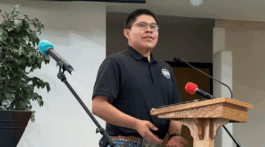
Jovannah Poor Bear-Adams is educational superintendent for the Iowa-Missouri Conference.
