












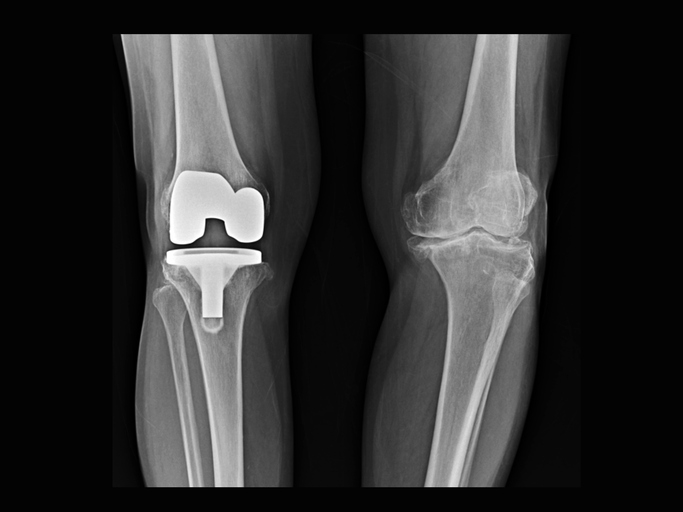
This summer, in my 50s, I underwent my first total knee replacement. My second knee replacement will follow in a few weeks. Yes, I am a little young for that. I finally came to the decision to move forward because kayaking and biking were causing me enough pain that I was choosing not to do them. Decisions about going to the store were made based on how much pain they would cause vs the need–pick up orders usually won due to time and pain. Those are decisions I do not want to be making daily!
Knee replacements were always in my future.
When I was just three years old, my parents took me to an orthopedic specialist because of problems with my knees. At age 15, I was starting to have pain and was diagnosed with arthritis.
People sometimes assume that needing a joint replacement, must mean I wore my knees out by making poor choices. Others assume if I had just exercised differently, eaten differently, lost weight, or done something else differently, this could all have been avoided. The reality is much more complicated.
Some bodies simply begin life differently than others, encounter different problems, are exposed to different events.
This does not mean I ignored my health. Throughout my life I have stayed active, cared for my body, and made choices which support good health. Those choices matter. They helped me stay mobile and active for many years.
Sometimes choices and prayer delay problems. Sometimes they lessen them. Sometimes they simply help us live the fullest life possible until medical intervention becomes necessary.
But healthy choices cannot rewrite our genetics. They cannot undo structural problems that began in early childhood.
Preparing for surgery and beginning recovery, I have felt the kindness of family, friends, patients, and colleagues. Meals prepared by my children. Morning and afternoon walks with my daughters. Messages have filled my phone. People have prayed for me. Every act of kindness has reminded me that healing is rarely something we do alone.
As I recover, I’ve found myself reflecting on conversations I’ve had throughout my life—and especially during my career as a psychiatric nurse practitioner. I’ve met many people living with chronic illness, disability, mental illness, autoimmune diseases, chronic pain, and conditions they never chose. Alongside the physical or emotional burden they carry, many also carry another burden: the quiet belief that perhaps their illness means they have somehow failed. Maybe they did not pray enough, have enough faith, should have lived differently. Maybe God is disappointed in them.
Those thoughts break my heart.
My own knees have reminded me that not every illness has a simple explanation. Sometimes we simply live in human bodies that wear out, break down, or begin life with challenges we never asked for.
As Christians, we are called to care for the bodies God has entrusted to us. We should eat well, stay active, get adequate rest, and make wise choices whenever we can.
But we should also remember that caring for our health is not the same thing as controlling it. There is a profound difference.
Over the next few weeks, I’d like to share some reflections on faith, health, prayer, medicine, and the compassion I believe we are called to show one another. We’ll talk about the incredible gift of the Adventist Health Message, why medicine and faith are partners, and why we need to be careful not to place unnecessary shame on people whose bodies—or minds—are hurting.
My knees have taught me many lessons. The greatest one may be this:
God does not measure our worth by the condition of our bodies.
We are loved by God on our strongest days and on our weakest ones. We are loved when we are running, when we are limping, and when we need someone else to push us in a wheelchair.
That has been true since I was three years old.
And it’s still true today.