

















Sometimes you can walk into a church and just sense that good things are happening. The air vibrates with joy. Members are working instead of watching. Hmong Minnesota Seventh-day Adventist Church is one of those action-packed places where every person seems to know they belong and that they have a task to do.
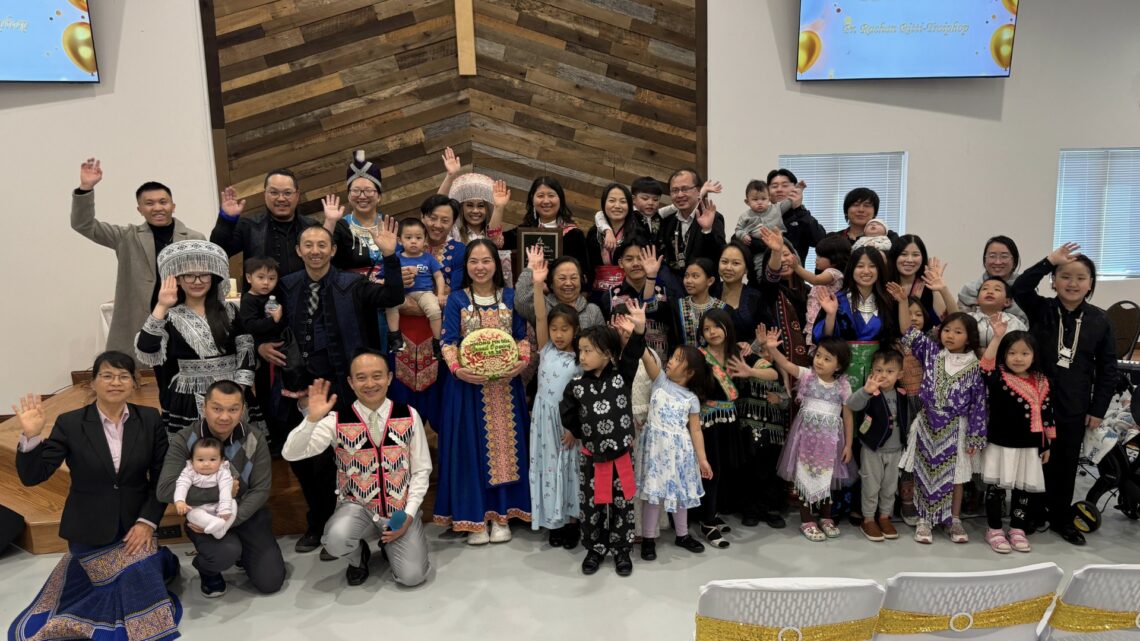
Founded around two decades ago in St. Paul, the Hmong group recently moved into a new building (the former Oromo Church on Central Avenue in Minneapolis) and celebrated their promotion to full church status. The festive ceremony featured traditional music, colorful costumes, Hmong foods, a candlelight dedication, and a visit from former pastoral couple Ko and Terri Saelee, who are now planting a new Hmong congregation in North Carolina.
Hmong Americans started arriving from refugee camps in Southeast Asia in the late 1970s and 1980s, and about 100,000 now make their home in Minnesota. Traditionally their religion includes elements of animism, shamanism and Buddhism, though many in Minnesota are open to Christianity. In a 2025 interview with Adventist Review, the Saelees explained that two factors helped guide their early Adventist outreach to the Hmong in Minnesota: first, the importance of building a support system for new members who may feel like outcasts after becoming Christians, and second, the need to gain the respect and friendship of Hmong leaders before introducing Christianity to other group members. This cultural understanding helped to establish the Hmong congregation as a sustainable model for making disciples.
In January 2024, Pastor Rachan Ritti-traiphop and his wife, Pranee Sereepat, arrived in Minnesota to serve the Hmong believers. A crucial part of Pastor Rachan’s ministry is purposely getting out to meet more people. The larger Hmong community is tightly interwoven, so he attends weddings, funerals, parties, family gatherings, sports events—any place where people come together. He also asks church members to introduce him to their relatives and friends. Later he invites these new acquaintances to his home for a meal, where he introduces them to other Hmong church members so everyone can get to know each other and form a circle of support and care. Before believing, many people need to experience belonging.
Lonely people who are adjusting to a new culture are often reluctant to leave the house, so Pastor Rachan regularly visits Hmong families in their homes. He asks questions about their lives and listens more than speaking. The first visit ends with prayer, and future visits include Bible study for those who are interested and preparation for baptism when they are ready. “In developed countries and urban societies, one thing people need most is relationships,” he says. “Loneliness is like a disease that eats away at human happiness.”
Like the Saelee family and others who served before him, Pastor Rachan understands that respect for community leaders is essential when approaching the group-oriented Hmong. He advises “handling the snake by its head,” or engaging with leaders first, showing honor, and seeking their advice before launching community service projects. Hmong Adventists are now known for singing and offering encouragement at funerals, attending family clan meetings in the Twin Cities, opening their church building for community events, and providing teams of church members to carry out volunteer work.
Pastor Rachan says one of his ministry heroes is Moses, who loved the Israelite people and was even willing to give his own life because of their sins (Exodus 32). Just as Moses did, Pastor Rachan depends completely on God’s power as he mentors new leaders and models biblical steps for growing a healthy church family.
Becky Scoggins is a freelance writer for Minnesota Conference.
