















Sabbath School Lesson for December 27, 2005-January 2, 2026
Introduction of Lesson 1, Persecuted but Not Forsaken
Memory Text: “Rejoice in the Lord always. Again, I say rejoice!” Philippians 4:4 NKJV
Paul, who wrote both Colossians and Philippians from prison after suffering many hardships, seems like the last person who would tell us to be happy when we are unjustly suffering for our faith. Knowing from experience how difficult life can be, however, he repeats the simple advice to face our trials with thankful, joyful praise to God. He said it not once, but twice, as we read in Philippians 4:4.
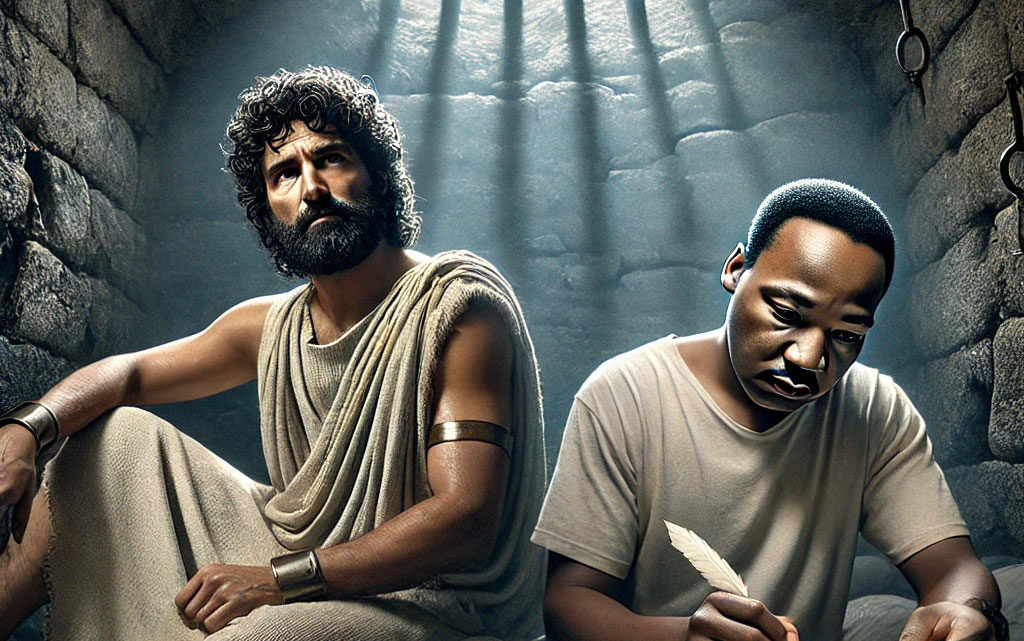
We are given a mental picture of what this rejoicing may have looked like for the apostle. When he and his coworker Silas were once jailed in Philippi, they used the quiet night time to sing hymns and pray, making their unfortunate situation there an opportunity to share their faith (Acts 16:25).
Paul continued to find creative ways to make his prisons a mission field. He reached many fellow believers through the letters he was able to write or dictate during his times of uncomfortable, lonely imprisonment. His converts found needed strength and encouragement from the uplifting words they received from their beloved faith leader. Generations of believers have also benefited from Paul’s wise counsel in these letters.
- Sunday: Paul, the Prisoner of Jesus Christ
- Monday: Paul in Chains
- Tuesday: Paul in Philippi
- Wednesday: Paul and Colossae
- Thursday: The Churches of Philippi and Colossae
Sunday: Paul, the Prisoner of Jesus Christ
Paul identifies himself as a prisoner or bondservant of Jesus Christ (Ephesians 3:1 and Philemon 1). Also as “an ambassador in chains” (Ephesians 6:20). He didn’t want his readers to forget the circumstances of his imprisonment, or the One he was suffering for. Jesus, who promised His disciples that He would never leave or forsake them, was a constant companion who sustained Paul during the most difficult hardships he had to face.
It is thought that the Prison Epistles (Philippians, Colossians, Ephesians, and Philemon) were written while Paul was incarcerated in Rome, about 60-62 A.D. In addition, 2 Timothy, called a Pastoral Epistle, was also thought to have been written while Paul was under arrest.
In his letter to the Philippians, it is pretty apparent that he wrote to them from Rome. In Philippians 1:13, he mentioned the palace guard, and in Philippians 4:22, he mentioned saints who served in Caesar’s household. Paul, as we can imagine, made converts in whatever setting he found himself. He made the best out of whatever trial he was going through.
Verses and questions:
Ephesians 3:1, Philemon 1, and Romans 14:8
- In what ways does our belonging to Christ make us His prisoners?
Ephesians 6:20
- How and for whom was Paul “an ambassador in chains”?
Philippians 1:13 and 4:22
- Why is it thought that Paul was in Rome when he wrote this epistle?
- Who may have been exposed to Paul’s preaching?
Monday: Paul in Chains
In defense of his ministry to the Macedonians in Greece, Paul recounts to the Corinthians the many hardships he was compelled to endure while serving God. One of them, of course, was imprisonments (2 Corinthians 6:5). Notice, he uses the plural. We know for sure that many times he found himself in jail for preaching the word of God.
When we think of Paul later being under house arrest in Rome, however, we should be aware that it meant more than just not being able to leave his place of residence. With no technical way of tracking his movements such as we have today, he was compelled to be chained to a Roman soldier at all times. This was evident in Paul’s letter to Philemon when he mentioned being “in my chains” (Philemon 10, 13). Ignatius, a Christian living at the time, described these soldiers behaving like “wild beasts”. Such confinements wouldn’t have been easy for Paul.
No matter how unbearable his lot though, Paul felt lifted up by knowing that God was very near, giving him the strength to get through his most difficult days. He explained how he drew spiritual power from the truths in God’s word and from the Holy Spirit.
Verses and questions:
2 Corinthians 4:7-12
- What did Paul have his hope centered on?
- How did this focus sustain him when times were hard, and when has it helped you personally?
2 Corinthians 6:3-7
- What did Paul rely on to stay spiritually strong in these harsh trials?
- Why are both the Bible and the Spirit of God needed to sustain us?
Tuesday: Paul in Philippi
Paul was on his second missionary tour in Asia Minor with Silas, when he had a vision in the nighttime and was told to go to Macedonia in the northern part of Greece. The two evangelists followed this divine guidance and set sail across the Aegean Sea from the seaport city of Troas and landed in Philippi.
Although they could have first gone to surrounding towns, Paul knew that Philippi was a very important city in Macedonia, enjoying a privileged status in the Roman Empire, as it essentially linked Rome with Asia Minor. Those born in Philippi were automatically considered Roman citizens. The official language in Philippi was, therefore, Latin, but many in the marketplace and those from adjoining towns spoke Greek.
It was here that Paul and his fellow workers met for prayer by the riverside, and where Lydia, a wealthy businesswoman who sold expensive purple clothing, became their first European convert to Christianity.
Although Philippi, so strategically located, seemed to be the perfect place from which to spread the gospel, it was obvious that persecution would eventually be noticed and dealt with harshly there as well. But, as often happened, this only contributed to more people becoming interested in hearing their message.
Verses and questions:
Acts 16:6-12
- How does God sometimes divert our original plan and why is it important to listen to His signals, natural and supernatural, that may seem annoying at first and keep us from completing our mission the way we intended?
Acts 16:13-15
- In what tangible ways would Lydia be able to help the missionary efforts of Paul and Silas?
- How would Lydia compare with the Samaritan woman at Jacob’s well who Jesus spoke to?
- What do these stories tell us about how the Lord uses women in the ministry?
Wednesday: Paul and Colossae
Colossae was about nine miles southeast of Laodicea in the Roman province of Asia Minor (in modern-day Turkey), and had a sizable population of Jews residing there. Although Paul apparently had never been to the city of Colossae, a convert of his, Epaphras, had been successful in growing a church of believers there, as Paul indicated in Colossians 1:7. Epaphras, it seems, became acquainted with Paul when he was in Ephesus, and brought the gospel back to his hometown of Colossae.
Philemon, another well-known Christian in Colossae, may have been converted at the same time as Epaphras. In Paul’s very personal letter to Philemon, one of his Prison Epistles, he pleaded with Philemon to treat his runaway slave Onesimus as a brother.
It is disappointing that Paul didn’t take the opportunity to condemn slavery itself, as we understand better now the highly immoral nature of the practice. We are grateful though that Ellen G. White took the controversial position of not returning escaped slaves, even when the U.S. Fugitive Slave Act compelled people to do so. She and many other Seventh-day Adventist pioneers were abolitionists, who supported the Underground Railroad.
Verses and questions:
Colossians 1:7 and 4:12
- In what ways was Epaphras an effective witness to those in his hometown?
- Why is it important to share the good news with those closest to us? How is this best done?
Colossians 4:9 and Philemon 15, 16
- How did God use Onesimus?
- How can we be more faithful to our brethren, those inside and outside the church?
Thursday: The Churches of Philippi and Colossae
From his opening statements in both his letters to the Philippians and the Colossians, we assume Paul is addressing both church leaders and members. In one, he mentioned, “overseers and deacons”, but in the other he just called them all “brethren”. This observation is interesting, because it confirms that the need for church organization was recognized early on for those who called themselves Christians, or saints belonging to God. In Acts 6:1-6, we see such organization being used in Jerusalem, where the first Christian church was established.
Paul carefully considered the geographic importance of the cities he worked in. But he also was successful because of the careful means by which he trained those who would provide care to the churches after he moved on to other places. Leaders and members alike were provided with tools both for outreach and the daily nurturing and retention of church members.
Paul found it easy to rely on assistants to carry on his work when he was no longer present with them. He also relied on trained literary assistants from time to time to pen and deliver his letters, as he didn’t hesitate to reveal in his long distance communication with the churches. God also uses each of us in His service today, when we dedicate and use our talents wisely to benefit others.
Verses and questions:
Philippians 1:1-3 and Colossians 1:1, 2
- Who was Paul addressing in his letters to both churches?
- What might be harmful in designating only certain believers as “saints”, as the Catholic Church has done for so long?
Friday: Final Thoughts
Two ideas stand out as we begin to look at the life of Paul through two of his prison letters, Philippians and Colossians. First, he suffered many things for preaching the gospel of Christ. And, second, his strategies for evangelism were very effective for spreading Christianity to the Gentiles. We do well, today, when we incorporate his methods of evangelism and also rejoice and grow when we are called to suffer for God’s cause.
“If you serve God faithfully, you will meet with prejudice and opposition; but do not become provoked when you suffer wrongfully. Do not retaliate…it is for you to press on in the meekness and lowliness of Christ…when we look to the cross of Christ for grace, we cannot fail.” Ellen G. White, in The Youth’s Instructor, Nov. 9, 1899.
Paul’s life was not easy, and neither is it easy for many Christians in today’s complex, chaotic world. Hopefully, Paul’s example of withstanding hardships and oppression will inspire us to deal with our hardships as Christ did–with calm, joyful praise and a strong resolve to do God’s will.
Next Week: Reasons for Thanksgiving and Prayer
To read the Sabbath School Lesson Quarterly and see more resources for its study, go to
