












Sabbath School Lesson for January 31-February 6, 2026
Introduction of Lesson 6, Confidence Only in Christ
Memory Text: “That I may know Him and the power of His resurrection, and the fellowship of His sufferings, being conformed to His death, if, by any means, I may attain to the resurrection from the dead.” Philippians 3:10, 11 NKJV
Paul established that we are to shine as lights in the world, and this is done by doing Christ-centered good works. Philippians, chapter 3, explains the relationship between those good works and our faith. We find in chapter 3 that rejoicing or boasting in Christ, rather than our own human strength and efforts, will lead to a genuine, radical transformation in the believer’s life. Knowing Christ fully is a progressive work that lasts a lifetime. As our relationship with Him deepens, we grow more and more like Christ, our loving Lord and Savior.
The Protestant Reformation came about because of the issue of faith and works. Reformers maintained that righteousness is a gift from God which comes by faith, not by works. Christ is the “author and finisher of our faith” (Hebrews 12:2). Our justification (being declared righteous) makes Him the author–the beginning of our faith. And our sanctification and glorification (being made righteous) make Him the finisher of our faith. It all comes by and through Him.
We can only be confident of our salvation by knowing Christ and making Him the priority and focus of everything we do. Our thoughts and actions should reflect that we are living by faith, not by the law. The law thankfully points out sin, but does not save us from it.
- Sunday: Rejoicing in the Lord
- Monday: Paul’s “Past Life”
- Tuesday: The Things That Matter
- Wednesday: The Faith of Christ
- Thursday: Just One Thing–Knowing Christ
Sunday: Rejoicing in the Lord
The idea of rejoicing in the Lord is a favorite theme in Paul’s writings. Surprisingly, it’s described a lot in the Old Testament, too, especially in the Psalms (Psalm 5:11, 9:14, and 31:7). Even Deuteronomy, thought to be mostly a repetition of the law, speaks often of rejoicing in the Lord (Deuteronomy 26:11 and 27:7). God’s word is an instruction manual for true happiness and joy. Lasting joy comes only from receiving God’s mercy, placing our trust in Him, and adopting His law as our way of life.
In order to secure this spirit of rejoicing, Paul warned the Philippians of false teachers who would entice them by presenting worldly pleasures that would take away their true joy. Wicked people of the world were known as dogs in Israel, so Paul called this group of false teachers dogs and “workers of evil”. He even referred to them as those of “the mutilation”–those Jews who ignored the Apostle’s Council (see Acts 15) and insisted that Gentile Christians be circumcised in order to be saved.
Philippians 3:3 provides a good summary of these themes by saying that it is more important to worship God in the Spirit, rejoice in Christ Jesus, and not put confidence in things of the flesh. Circumcision would not save them. Knowing and rejoicing in Christ would.
Philippians 3:1
- Why was repeating their need to rejoice in the Lord so important?
Philippians 3:2
- Who was Paul cautioning them to beware of, and why?
Philippians 3:3
- What did circumcision have to do with their confidence in Christ?
Monday: Paul’s “Past Life”
In order to understand why Paul told the Philippians to have confidence in Christ alone, he told them that he had every right to be confident of himself. He was a Jew in every sense of the word, which he thought made him worthy of heaven. But then, Jesus told him that he was lacking the most important thing: Christ.
Paul had been confident in the fact that he was from the tribe of Benjamin (the tribe that inherited land where Jerusalem was located), was circumcised on the eighth day (the most proper and desired time), and was a Pharisee who was taught by Gamaliel (a renowned, revered teacher of the law). He was so zealous for his misplaced faith that he persecuted those of the undesirable sect who followed Jesus.
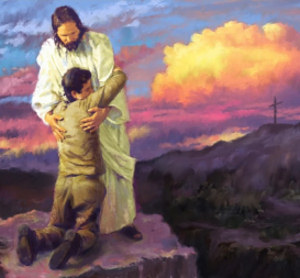
On the road to Damascus to carry out his persecutions, God showed Paul in a vision that by working against Jesus followers, he was actually working against the Son of God. His blindness from the vision that day underscored the fact that he had been blind spiritually without Christ.
Verses and questions:
Philippians 3:4-6
- What kind of things made Paul have confidence in the flesh, or his own human achievements?
- Where are we likely to misplace our confidence today?
Tuesday: The Things That Matter
Vanity and pride, looking to those things that matter to the world, puts us in direct opposition to the things that matter to God. Paul previously loved the things that made him a Jew. He was proud that he was perfectly following the Jewish traditions that he thought would save him. Fortunately, though, he was changed after having a vision of Christ that turned his world upside down.
God knows what it takes to transform us, to get our attention and loving obedience. We must be attuned to the things that matter to Him, even if it means being made blind for awhile like Paul. When we fail to open our eyes to God’s priorities, the things that matter to Him, our spiritual blindness causes us to waste time, talent, and opportunity on things that don’t matter at all.
Verses and questions:
John 9:39-41
- What was Jesus trying to tell us about blindness and how we are saved from it?
Matthew 13:22, Luke 4:5, 6, and 1 John 2:16
- What things matter and what things don’t matter in this world?
Wednesday: The Faith of Christ
Paul frequently talked about how we should have “the faith of Christ”. To be “in Him” is the best place we can be, according to Paul. Our identity must be so wrapped up in His salvation that others see Jesus through the way we live. The way Jesus forgave, healed, and sacrificed for us are things we can also do for others.
The law cannot save us–only Jesus can. When we believe, love, and trust God and His Son, we are living by the principles of saving faith that the Messiah demonstrated so well while He lived on earth.
Paul never ceased to proclaim God’s saving grace after being filled with the presence of Christ that day on the road to Damascus. The experience forever changed his law-driven life and allowed him to see the Giver of the law. His faith in Christ made all the difference and gave him a new mission–to share his newfound faith with everyone he met.
Verses and questions:
Philippians 3:8, 9 and Ephesians 1:4
- What does it mean to be “found in Him”–in Christ?
Thursday: Just One Thing–Knowing Christ
Paul did not want his readers to feel that the high calling he was describing was beyond their ability to achieve. He acknowledged that he was as imperfect as any of them (Philippians 3:12). That they were all on a journey, a race even, to reach their heavenly destination. The main thing was not to give up and stop running the race. Focusing on the finish line would help them stay on the path of having the mind of Christ, of knowing the things that mattered to their Lord, and obeying Him through the spiritual strength given them by the Holy Spirit.
There are things that each of us can do, as we press on toward the finish line of our race to secure salvation. Communicating with God through prayer and Bible study are key. But sharing what we learn about God also strengthens our faith and resolve to stay in the race of faith.
Even experiencing “the fellowship of His sufferings” (Philippians 3:10) can make us feel closer to Christ. Trials and hardship help us appreciate what Jesus suffered for us. No one has promised that the race would be easy, but God has promised that He will be with us every step of the way, all the way to the end of time (Matthew 28:20).
Verses and questions:
Philippians 3:10-16
- What are the main points Paul made about the race we are running, and its goal?
- Why is it important for us to look ahead as we run this race and not back at our past sins and failures? How do we do that?
Friday: Final Thoughts
Anyone who’s been in a close relationship knows how important trust, or having confidence, is to that bond. Yes, we must have confidence in people and institutions in order for our lives to run smoothly–both on a corporate and personal level.
People may fail us, but Paul preaches fervently about one relationship, the only one, that we can completely trust. When we place our confidence, our trust, in Christ, we know our faith is in the right place. God’s promises never fail. His love and mercy toward us never fail. And we can never fail in our desire to be saved when we place our trust in our awesome Creator God.
If salvation were dependent on our righteousness, none of us would have any hope of being saved. Our purpose in life should always be to know and follow Christ. Salvation depends on our turning away from a self- or law-centered righteousness, to one that is totally Christ-centered.
Next Week: A Heavenly Citizenship
To read the Sabbath School Lesson Quarterly and see more resources for its study, go to
