









A husband and wife from a Seventh-day Adventist church in the Minneapolis area were detained on their way to church with their three young children. The family was in the United States with lawful refugee status. The mother was taken in front of her husband and their children.
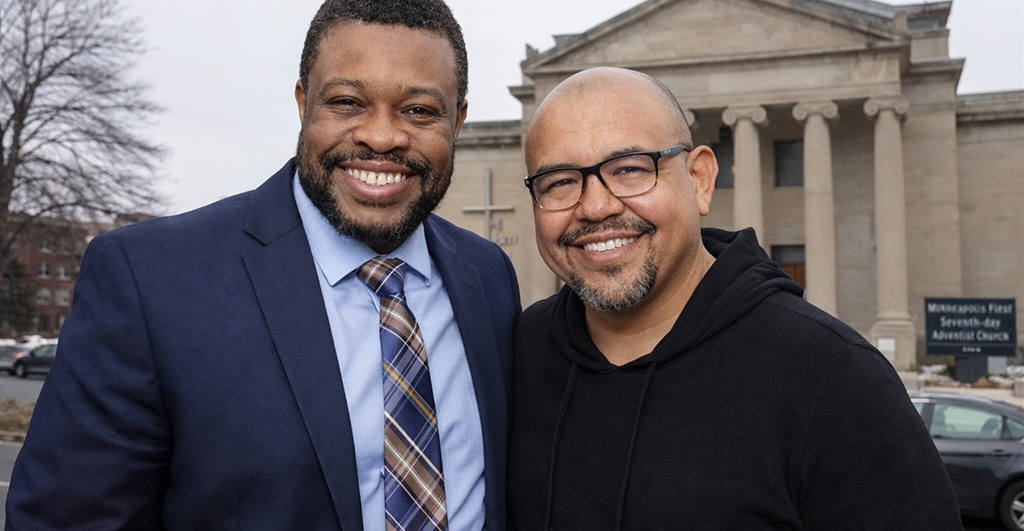
Pastor Ray Valenzuela of the Minnetonka Seventh-day Adventist Church said the experience has shaken members across Minnesota Conference churches—especially because many affected families are not undocumented.
“A lot of people have this misconception that, ‘If you’re documented, this shouldn’t impact you—you have nothing to fear,’” Valenzuela said. “But that’s not the case.”
Across the Minnesota Conference, pastors and churches are responding to fear that has entered daily life. Some families are afraid to leave home. Some are afraid to bring their children to school or church. Adventist Community Services (ACS) has already received more than 300 requests for food from members who say they are afraid to go out.
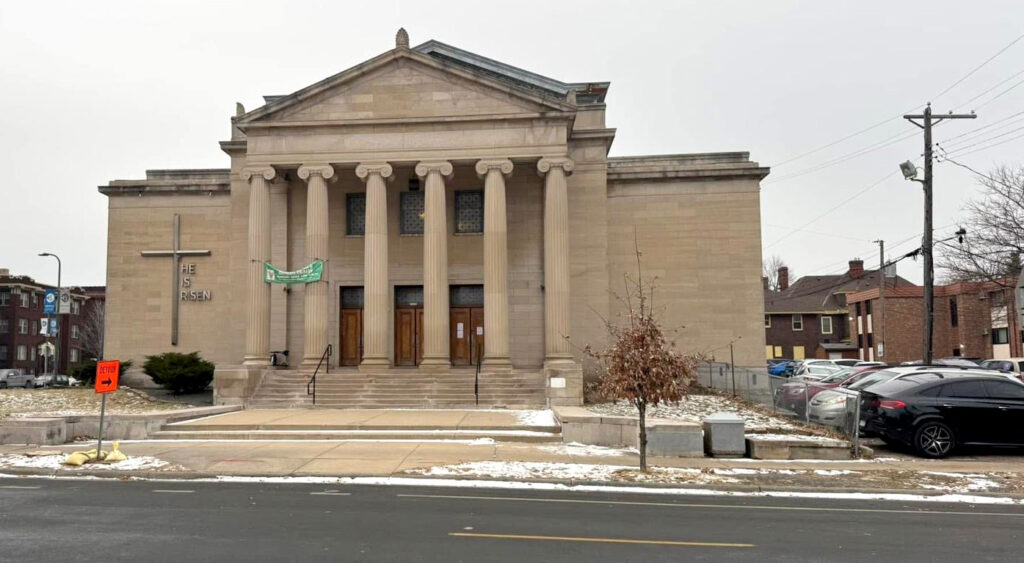
Two blocks from Minneapolis First Seventh-day Adventist Church, a U.S. citizen, Alex Pretti, was shot and killed on Saturday, January 24, 2026, in an incident connected to immigration enforcement activity in a neighborhood in south Minneapolis. The church canceled services that Sabbath. It was the second shooting linked to immigration enforcement activity involving a U.S. citizen.
For many churches in Minnesota, what once felt distant now feels close to home.
A Sabbath Morning Interrupted
Dr. Jude Senatus, pastor of Minneapolis First Seventh-day Adventist Church, said the violence happened so close to the church that the location is easy to picture.
“If you stand on the corner of my church, you can actually see where it happened.”
Senatus said he was getting ready to leave for church that Sabbath morning when he received a call from a member who was watching events unfold in the city.
“He told me, ‘Pastor, please, you need to look into this. Somebody just got shot… not too far from our church,’”
Senatus said.
He began calling members to confirm what was happening. One member who lived nearby tried to drive toward the church but could not get through.
“She said, ‘Pastor, we can’t even get there. There’s a lot of things going on,’” Senatus said.
“They were blocking the street all the way in front of the church.”
Senatus said he then called an emergency meeting with his elders. As they talked, they contacted someone who was already inside the church building.
“She had no idea what was going on outside,” Senatus said. When she went to look, she reported smoke, confusion, and crowds.
With limited time, the elders made a decision quickly.
“We didn’t have time to talk with the church board,” Senatus said. “We had to make that high-risk call.”
They instructed the member at church to tell people to go home and place a sign on the door, then moved services online.
“That’s when everything started,” Senatus said.
Fear Inside the Church Family
In a message to conference staff and employees, Minnesota Conference leaders acknowledged that fear is spreading through their communities.
“As we have been communicating with many of you, it’s clear how fearful people are right now,” they wrote. “There are real stories from people we know who are being directly, deeply impacted by what is happening in Minnesota.”
They described communities experiencing fear, anxiety, and division, and asked how people of faith are called to respond.
Scripture, they said, points the way.
“When we care for ‘the least of these,’ we are caring for Christ Himself” (Matthew 25:40). Leaders also quoted Galatians 3:28: “In Christ there is neither slave nor free—we are all God’s children.”
Conference leaders reminded staff that many members are in the United States legally, even if they are not citizens. Some hold refugee status. Some have sought asylum. Others are in the process of naturalization and are waiting for paperwork.
They also noted that the conference has more than 20 sponsored families working in churches and schools and is in regular contact with immigration attorneys to provide guidance and care.
Pastors Responding in Real Time
Pastors across the conference say they are caring for people in ways they have never had to before. Valenzuela said one of
the biggest surprises has been realizing that fear is not limited toundocumented individuals. He said people with legal status are being questioned and, in some cases, detained..
“That has led many families—documented or not—to stay home.”
“My members started asking me, ‘Pastor, what can we do?’” he said. A member shared a list of 50 families who needed help. The church created a simple questionnaire to learn what those families needed most. Reading the responses late one night, Valenzuela said most expressed gratitude for food. But some revealed urgent needs. “My kids are sick. We need Tylenol,” one response said. “Their kids are sick,” Valenzuela said, “but they’re afraid to leave to go get medicine.” Another response came from a single father who worried about leaving his children alone if he went out to work or shop. “This is a whole new territory,” Valenzuela said. “We’re trying to figure out how to help people when fear controls every decision.”
Conference leaders say they are actively working to support churches, schools, and families during this season.
The conference has gathered guidance for churches and schools, materials from immigration attorneys, and counsel from the North American Division. Leaders are also developing two video resources: a panel discussion with immigration attorneys to address practical questions, and a conversation with licensed therapists focused on fear and anxiety.
Leaders share, “We are doing everything we can to provide care and protection.”
The situation extends beyond one conference. The Central States Conference, which has three churches in the area, has shared its own statement and action plan related to immigration enforcement.
Fear Without Control
During a conversation, Senatus was asked whether the fear he is seeing now feels similar to the fear churches experienced during COVID. He said the difference is control. “With COVID, people felt like they had options,” he explained. “They could stay home. They could wear masks. They felt like they had some control.” “This is different,” he said. “People feel like they have no control.” That lack of control has changed church life. At Minneapolis First, potlucks were canceled. Attendance dropped sharply. Even officers and volunteers began staying home.
“I’m worried about their spiritual life now that they are isolated,” Senatus said. “I’m dealing with something I’ve never dealt with before.”
Feeding Families Who Cannot Leave Home
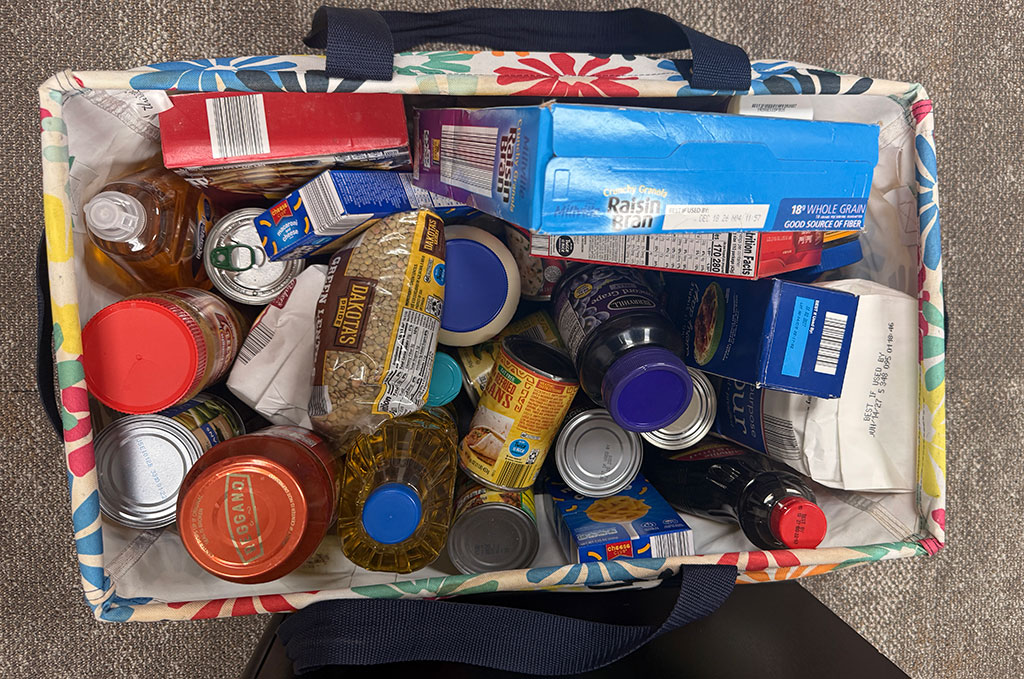
While pastors pray and counsel, Adventist Community Services is delivering food. Les Morrison, director of Minnesota Adventist Community Services, wrote to pastors that increased immigration enforcement has left many families stranded in their homes.
“Many of our church families are unable to work, grocery shop, or send their kids to school due to fear of being arrested and deported,” he wrote.
The fear, he said, is affecting people with many kinds of legal statuses, including some U.S. citizens. As of last week, ACS had received more than 300 requests for food and had already served at least 150 people. At Minneapolis First Church, a weekly food pantry that once served more than 200 people has dropped to around 70. “We stopped having lines outside,” Senatus said. “We just let people come inside and wait, so it doesn’t draw attention.”
Fear at Home, Too
The fear has also reached into pastors’ homes. Ray Valenzuela is Mexican American. His wife, Alyssa, is of Caucasian descent—an added layer that shapes how she thinks about his safety as he steps into tense situations to care for others. Alyssa recalled the day Ray told her he needed to visit a hospitalized church member. ICE agents were present outside the woman’s room, and her family and lawyer were not allowed to see her.
“I was afraid for him,”
Alyssa said. “Not because he was looking for confrontation, but because you don’t know how someone will react.” When Ray left, Alyssa said she broke down in tears at work. “We just needed to pray,” she said. Another teacher offered to have her husband—who is white—go along to help ensure Ray’s safety. Alyssa said the support mattered.
Fear Reaches Schools
Fear is also affecting schools connected to local churches. Valenzuela described moments when teachers and pastors have had to help coordinate transportation for students because parents were too afraid to come out. Some families have shifted to online learning out of concern for safety.
“These are things we never imagined having to navigate,” he said.
Communities Finding Solidarity
Despite the fear, Valenzuela said he is also seeing hope.
“It’s amazing how the community is coming together—religious and non-religious,” he said.
After sharing what was happening on social media, Valenzuela began hearing from people across the country—and even outside the United States—asking how they could help. “I’m hearing from lawyers, business owners, retirees,” he said. “People saying, ‘How can we help?’”
He visited a small Spanish-speaking church in Minneapolis that had quickly organized a food distribution network serving hundreds of families. People from the community—many who don’t attend their church—were showing up in droves with food and supplies,” he said. Valenzuela said the experience has also opened doors for connection with pastors from other denominations and Latino ministry networks.
“This is creating opportunities we didn’t have before,” he said. “People are finding solidarity.”
A Family Still Healing
One family continues to weigh heavily on Valenzuela’s heart—the refugee family detained on their way to church. The mother was held for nearly a week. When she returned home, Valenzuela and his wife visited and prayed with the family.
“She’s home,” he said, “but she’s not the same.”
The husband shared that his wife is struggling to sleep. Their children—still learning English—are quieter now. The youngest cries at night, missing his mother. “She was held in restraints on a cold floor” Valenzuela said. “Still wearing her Sabbath clothes.” The family is now being considered for expedited permanent residency processing.
Finding Meaning in the Crisis
Both pastors say the crisis is reshaping how they lead and care for their congregations.
“This has stretched me,” Valenzuela said, “but in a good way.”
An elder recently told him, “You were brought here for such a time as this.”
For Senatus, hope is anchored in Scripture, prayer, and a long view of faith. “Fear is a natural response to real danger,” he said. “But we have a choice about where we take that fear.”
 He said his greatest concern is spiritual isolation. When people stop gathering, worshiping, and connecting, he worries about what that does to faith.
“That’s what keeps me up at night,” Senatus said. “I’m worried about their spiritual life.”
Still, his hope remains steady. “We serve a God who told us these things would happen,” Senatus said. “And He also promised that He would never leave us.” He pointed to the Bible’s repeated assurance that God walks with His people through hardship—not around it. “The battle doesn’t belong to us,” Senatus said. “It belongs to the Lord.” Even in the middle of fear, he said he has seen God at work—through pastors checking on members, churches choosing to open their doors, and people continuing to pray when answers feel unclear. “Sometimes all we can say is, ‘Lord, I don’t know what to do,’” he said. “But my eyes are on You.”
“We’re not walking this path alone,” he added. “And that makes all the difference.”
Details have been shared with care to protect the privacy, safety, and legal standing of families involved.
How to Help
Conference leaders say that legal challenges, lost wages, travel costs, and basic needs often place a heavy financial burden on families affected by detention and deportation.
Those who wish to support families through practical assistance may donate to Minnesota Adventist Community Services (ACS). Gifts are being used to help provide food baskets and emergency support for families who are afraid to leave their homes.
Donations may be sent electronically to the Minnesota Conference ACS Disaster Response at www.mnsda.com/give or by check to Minnesota Conference ACS at 8232 Highway 65 NE, Spring Lake Park, MN 55432.
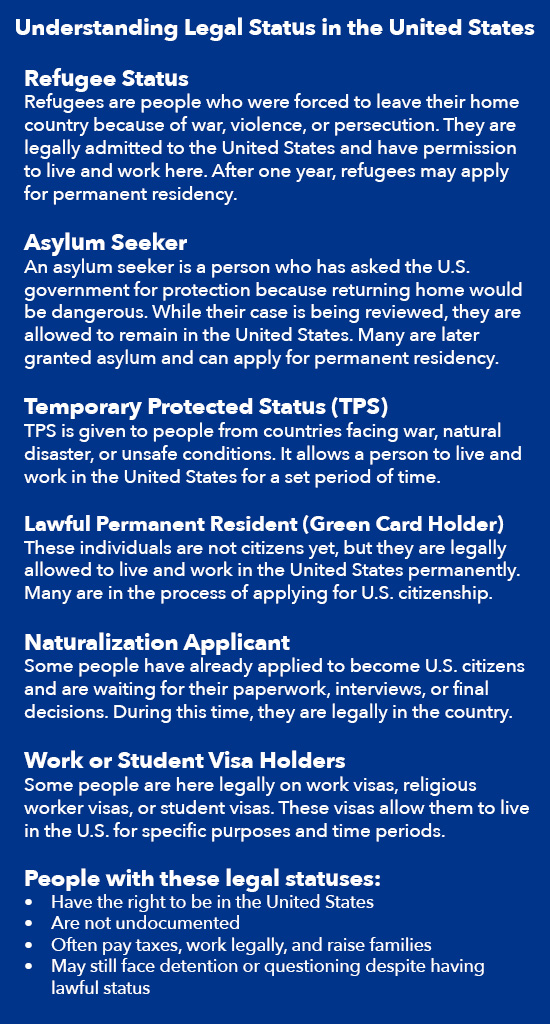
Understanding Legal Status in the United States
Many people living in the United States are here legally even if they are not yet citizens. These are some of the most common legal statuses that allow a person to live, work, or remain in the country under current law.
Refugee Status
Refugees are people who were forced to leave their home country because of war, violence, or persecution.
They are legally admitted to the United States and have permission to live and work here. After one year, refugees may apply for permanent residency.
Asylum Seeker
An asylum seeker is a person who has asked the U.S. government for protection because returning home would be dangerous. While their case is being reviewed, they are allowed to remain in the United States.
Many are later granted asylum and can apply for permanent residency.
Temporary Protected Status (TPS)
TPS is given to people from countries facing war, natural disaster, or unsafe conditions.
It allows a person to live and work in the United States for a set period of time.
Lawful Permanent Resident (Green Card Holder)
These individuals are not citizens yet, but they are legally allowed to live and work in the United States permanently. Many are in the process of applying for U.S. citizenship.
Naturalization Applicant
Some people have already applied to become U.S. citizens and are waiting for their paperwork, interviews, or final decisions. During this time, they are legally in the country.
Work or Student Visa Holders
Some people are here legally on work visas, religious worker visas, or student visas.
These visas allow them to live in the U.S. for specific purposes and time periods.
Important to Know
People with these legal statuses:
- Have the right to be in the United States
- Are not undocumented
- Often pay taxes, work legally, and raise families
- May still face detention or questioning despite having lawful status
This overview is intended for general information and does not constitute legal advice.
Many members in Minnesota Conference churches fall into one of these categories. They are part of the community, part of the workforce, and part of the Seventh-day Adventist global church family.
By Hugh Davis (with Ai-assisted research and drafting)