













As I mentioned in my last article about types of Christ
https://www.outlookmag.org/types-of-christ/
everything we find in the Bible points to the Son of God. It wasn’t just prophets who represented Him, but even places, events, numbers, and objects were symbolic in nature, instructing us about how we can be saved. Here’s one of those types to consider.
Places
God evidently “placed” a lot of significance in places. His followers were often told to mark places where God particularly blessed them in some way. You may have noticed that a simple altar, consisting of a pile of rocks, were often encouraged as a reminder of a blessing or event that had happened there. All the way back to Cain and Abel, we find the practice of having a place to worship as meaningful to our relationship with God.
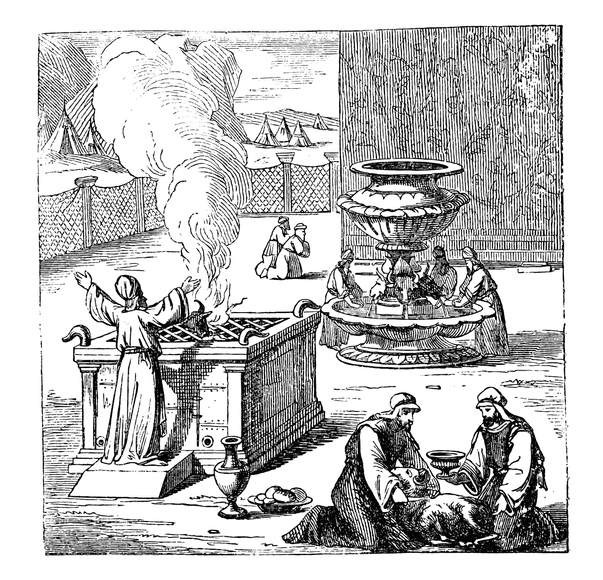
The Israelites had lost so much knowledge of God during their years of enslavement in Egypt, that God found it necessary to build a tangible dwelling place for Himself, as they traveled back to Canaan. Every part of that sanctuary served as a teaching tool to further instruct them about the way of salvation. This was recognized in Psalm 77:13, where it says, “Thy way, O God, is in the sanctuary.” Each room there, the courtyard, the Holy Place, and the Most Holy Place, taught them, and us, about our justification, sanctification, and glorification, as we get closer and closer to that place called heaven, the most longed-for-place of all.
I find it interesting that our modern churches still have similar places in them as the sanctuary, and later the temple. We have our foyer, where people are greeted (like in the courtyard), the Sabbath school classrooms, where people learn about who God is (like the Holy Place), and the sanctuary, where reverence is particularly important, (as it was in the Most Holy Place).
But don’t stop looking at God’s dwelling places. The wilderness was a place that the Bible often mentions too. The Israelites wandering in the desert wilderness, Elijah and John the Baptist spent time there, and even Jesus went to quiet, solitary places in the wilderness to talk to God. As we know, Satan used that same wilderness as a place to tempt the Lord, just as He uses our earth as a place to tempt us now. Jesus proved that it is possible to get close to God in our “wilderness” experience here, and it’s even possible to say no to Satan when he tempts us in this sinful place we find ourselves.
Yes, let’s remember that somewhere in these wilderness spaces were mountains, many of them important places where God’s presence was felt in a miraculous way. There was Mt. Ararat, where the ark came to rest after the Flood–Mt. Sinai, where the Ten Commandments were given–Mt. Carmel, where the prophets of Baal were challenged–and many others! Of course, they all were pointing forward to the all-important-place where Jesus died for our sins, a place called Golgotha, or Mt. Calvary.
No matter what place you are in during your wilderness journey on this earth, I hope you will remember that God can be with you there. He has promised to be with us always in Matthew 28:20. Both in our mountaintop spiritual experiences, and in our deep valleys of sorrow and death, as the familiar 23rd Psalm reminds us. We have only to call on Him, and He will answer (Psalm 91:15). God’s hand is not too short to reach us in our deep, darkest places (Isaiah 59:1). Praise the Lord!
