


Adventist News
 West County Church Hosts Community Health Expo
– June 4, 2026
West County Church Hosts Community Health Expo
– June 4, 2026
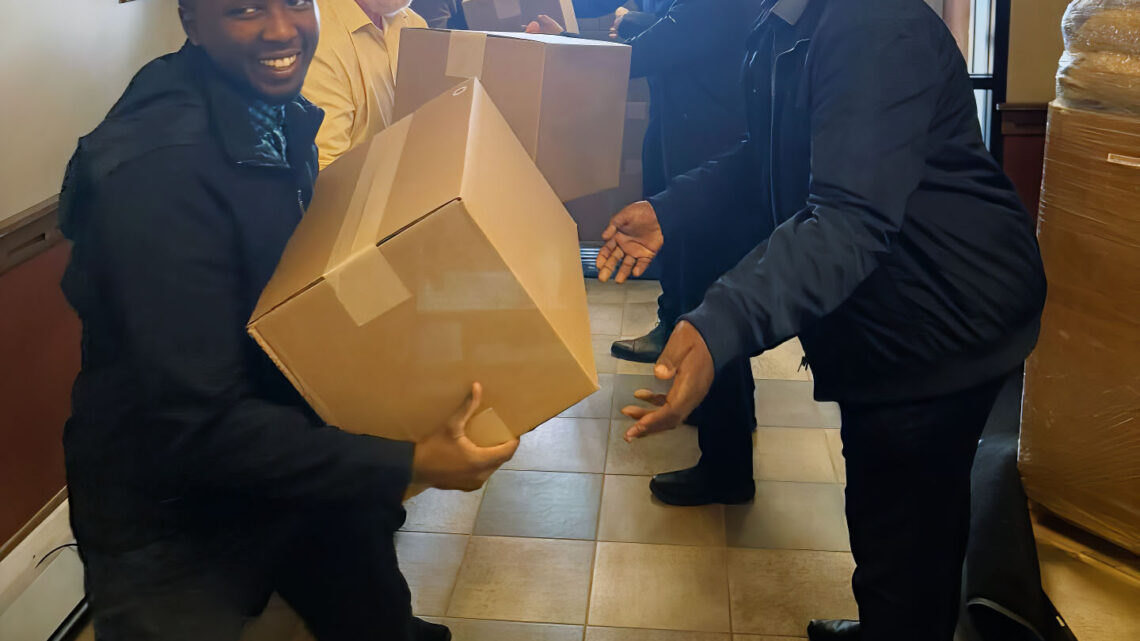
This year’s Health Expo at West County SDA Church was held on the afternoon of April 26. Thirty-four volunteers and 20 vendors came together to serve 86 guests of all ages who attended the event. The Expo highlighted the eight natural laws of health and provided guests with information about their blood pressure, BMI, body fat percentage, lung capacity, and overall health age. St. Luke’s Hospital offered cholesterol and glucose screenings. Guests also had the opportunity to enjoy a chair massage provided by A Health Pattern, relax with a warm foot soak, sample nutritious vegan foods, strengthen their trust in God, receive prayer, and take home a free plant. Health counselors were available throughout the event to provide consultation and support. The vendors played an important role in the Expo, sharing valuable information and offering promotional giveaways for attendees. Their participation was greatly appreciated. One of the greatest blessings of the day was seeing four individuals express interest in attending the local church. One gentleman has since attended several Sabbaths, and church members have enjoyed getting to know him better. May the investment of time, care, and resources that goes into the Health Expo bear fruit for God’s eternal kingdom. Dar Moore is a member of the West County Seventh-day Adventist Church in Missouri.
Read more... West County Church Celebrates New Life in Christ
– June 4, 2026
West County Church Celebrates New Life in Christ
– June 4, 2026
Over the past several months, from November through May, members of the West County SDA Church in Missouri have celebrated as several precious individuals chose to publicly commit or recommit their lives to Jesus Christ through baptism. Each occasion was marked by great rejoicing as these new believers united with God’s family and became part of the church community. Their decisions serve as a reminder that God continues to work in hearts and draw people to Himself. Praise God for His work in their lives! By His grace and with the support of their church family, we pray that each one will continue to grow in their knowledge, love, trust, and service to the Lord as they walk with Him day by day, and that they will be ready to meet Jesus when He returns. Dar Moore is a member of the West County Seventh-day Adventist Church in Missouri.
Read more... 2026 Adventurer Bible Game Focuses on Strengthening Bonds
– June 1, 2026
2026 Adventurer Bible Game Focuses on Strengthening Bonds
– June 1, 2026
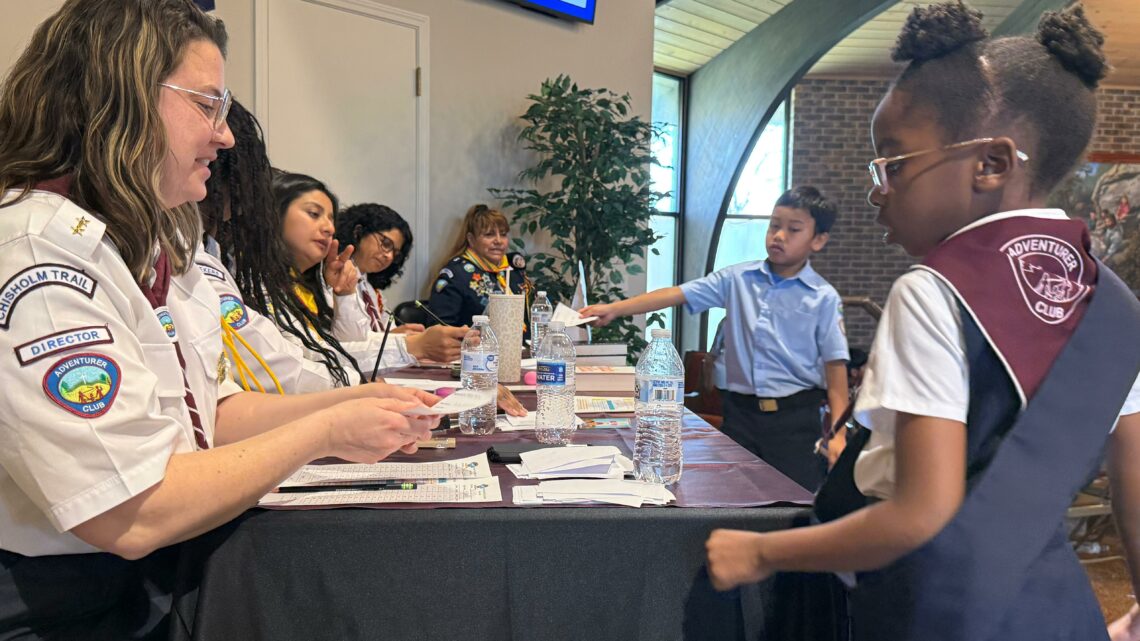
With God’s blessing, we successfully concluded March with our main Adventurer event: the 2026 Bible Game. Throughout the year, Adventurers studied diligently alongside their parents and teachers, focusing on six books featuring women of the Bible: Esther, Ruth and Naomi, Hannah, Abigail, Deborah, and Mary and Elizabeth. Five clubs participated, comprising six Adventurer groups and six parent groups. The most gratifying aspect was fulfilling the fundamental purpose of Adventurer ministry: strengthening the bonds between parents, children and teachers. The event also fostered vital values such as honesty, loving obedience, and respect for God and others. Every participant listened attentively and maintained a positive, optimistic attitude. Congratulations to the directors of the participating clubs: Hawk (Great Bend Hispanic), Truth Seekers (College View Lincoln), Shalem (Lincoln Hispanic), Truth Seekers (New Haven K.C.), and Chisholm Trail (District SDA KS). Nelly Cruz is the Kansas-Nebraska Conference Adventurer executive coordinator.
Read more... V. Lindsay Celebrates Library and STREAM Lab Ribbon Cutting A new chapter begins in Kansas City
– June 1, 2026
V. Lindsay Celebrates Library and STREAM Lab Ribbon Cutting A new chapter begins in Kansas City
– June 1, 2026
On a day marked by joy, gratitude and renewed vision, V. Lindsay Seventh-day Adventist School celebrated the ribbon cutting of its newly renovated library and STREAM (Science, Technology, Reading, Engineering, Arts and Mathematics) lab, two spaces designed to transform the student learning experience and support the school’s continued growth. What was once underutilized space has been reimagined into vibrant, student-centered environments that promote curiosity, creativity and academic excellence. The ribbon-cutting ceremony brought together students, families, staff and community members to witness not just the opening of new rooms, but the beginning of a new chapter in the school’s journey. As the ribbon was cut, students eagerly stepped into the spaces, many wearing lab coats, ready to explore, question and engage. Their excitement was immediate and unmistakable. The STREAM lab, designed to support hands-on, inquiry-based learning, reflects a commitment to preparing students for a rapidly evolving world while grounding their education in faith-based principles. Central States Conference president Elder Cryston Josiah was among those in attendance, and his words captured what many felt in the room: “In all my years of visiting schools, and even as a parent with children who attended here, I have never seen a lab like this. The integration of STREAM, especially the inclusion of reading and the arts alongside STEM, is truly exceptional. From the microscope stations to the maker space and 3D printing, this is a powerful example of what intentional, forward-thinking education can look like.” His remarks affirmed what many experienced firsthand. This was not just a renovation, but a reimagining of what learning can look like. The STREAM lab gives students access to tools and resources that support innovation and discovery: 3D printers, microscopes, experimental tables, building and maker stations, manipulatives and virtual reality glasses. From exploring the human body in virtual reality to designing and building with engineering tools, students are already discovering new ways to think, create and problem-solve. On the library side, the newly redesigned space offers a warm, welcoming environment that encourages literacy, reflection and discovery. With flexible seating, a reading nook tree, and dedicated areas for individual and collaborative reading, the library invites students to grow both academically and spiritually. For a school that had books on site for years without a fully functioning library space, this transformation carries particular meaning. Literacy remains a cornerstone of V. Lindsay’s mission. School leaders understand that reading is foundational to student success, and they are committed to helping students grow in literacy across every subject—not only in academic achievement, but in self-confidence and Christlike character as well. This milestone is also part of a larger vision for continued growth. Future plans include expanding outdoor play areas, upgrading classroom technology, and pursuing STREAM certification to further strengthen academic programming and student outcomes. The renovation reflects the broader values of the Central States Conference and its commitment to quality Christian education. By investing in schools like V. Lindsay, the conference is demonstrating that excellence is possible and expected even in smaller settings. At its core, this celebration reflects the mission of Adventist education: to nurture the whole child—mind, body and spirit—while preparing students to serve and lead. As students filled the rooms with energy and excitement on that March afternoon, one thing was unmistakably clear: the investment in these spaces is already shaping the culture of learning at V. Lindsay Seventh-day Adventist School. And this is only the beginning. Schari Fontus was education superintendent for the Central States Conference at the time of this writing.
Read more...
Blogs
 Creation Re-Booted – II The Virus
– June 3, 2026
Creation Re-Booted – II The Virus
– June 3, 2026
“Warning! Security threat detected!” Few messages strike more dread in the heart of a computer user. A virus can work invisibly, stealing or destroying crucial data. The damage increases over time, and may eventually crash the entire system. The event log in Genesis reveals exactly what happened— how, after such a promising launch, creation reverted to a planet covered in water—back to the chaos before creation. The event log records each catastrophic step. The first 2 chapters of Genesis describe an ordered world, with God over all, and Humankind as stewards over all life here. Genesis 3 introduces another level, telling us the serpent is more cunning, shrewd, prudent than the other animals. Apparently there is a hierarchy among the animals, with the serpent at the top. Ancient readers sensed danger immediately. Creation stories they knew often portrayed a hero fighting a serpent—an agent of disorder and chaos. Seeing the serpent as above the other animals only heightened their alarm. The interchange between the woman—she is not yet named—and the serpent is so familiar, many skip over it. I did, too, until the audacity of the serpent’s claim dawned on me: “God knows that on the day you eat from it your eyes will be opened, and you will become like God, knowing good and evil.” Do you see it? For many years I didn’t. The serpent tells the woman that he knows something she does not—how can that be, if she has dominion over him? And those same words indicate that he knows what God knows! Agent of disorder indeed. If what he says is true, the order so carefully established in the first two chapters collapses.* He claims that he — an animal — stands on equal footing with the Creator. And humankind does as well. Once humankind accepted this lie as truth, eating the fruit became mere formality. The virus had already begun its work. By the time God comes to the garden in the cool of the evening, disorder has already begun unraveling the system. Before the virus, the man and the woman were both “Adam”—the two were one. When God asks the man if he had eaten of the forbidden fruit, the man blames “the woman you gave me.” The oneness had already vanished. It’s every one for himself. The woman blames the serpent—who God had created. We call what follows a curse, or penalty. In fact it’s a diagnosis. God addresses the parties in reverse order. First, He tells the serpent that he will crawl on his belly, but that’s not the worst part. There will be perpetual hostility between the woman and the serpent, and the snake will get the worst of it. While the snake will injure the heel of one of her descendants, that descendant will crush the serpent’s head. Next God addresses the woman. She will experience pain in childbirth and will be in conflict with her husband—which we’ve seen already. Finally, God addresses the man. Before the virus began its work, humankind ate the fruits of trees. Now, the man must labor to have enough to eat. And the earth will not cooperate. It will bring forth thorns and thistles to complicate his task. God had commissioned humanity with two tasks: to be stewards over creation, and to be fruitful and multiply. Having accepted the virus of disorder, both tasks will be more difficult. The woman, whose unique role is giving birth, will find that painful. And the man will find dominion frustrating. Those are not penalties imposed, but consequences revealed. Only at this point does the woman receive a different name. Adam names her Eve. And as we saw with the animals, naming something indicates dominion. The war between the sexes has truly begun. The virus of disorder has just begun its work. The next entries in the event log make for grim reading. If you’d like Ed to speak at your church, contact him at BibleJourneys@Yahoomail.com Put “Speaking Inquiry” in the subject line. * I have not encountered this idea— that the serpent’s claim essentially collapses the order estabilshed in Gen 2-3—anywhere else.
Read more... The Teacher’s Notes–Repentance and Forgiveness, Lesson 10 Adult Bible Study Guide, 2026 2Q, "Growing in a Relationship With God"
– May 30, 2026
The Teacher’s Notes–Repentance and Forgiveness, Lesson 10 Adult Bible Study Guide, 2026 2Q, "Growing in a Relationship With God"
– May 30, 2026
Sabbath School Lesson for May 30-June 5, 2026 Introduction for Lesson 10, Repentance and Forgiveness Memory Text: “If we confess our sins, He is faithful and just to forgive us our sins and to cleanse us from all unrighteousness.” 1 John 1:9 NKJV As 1 John 1:9 indicates, our Lord is faithful (being full of lovingkindness), and just (trustworthy enough to deal with us fairly). When we repent of our thoughts and actions that separate us from Him, God’s forgiveness has the power to cleanse us from our unholy behavior. One of the most dramatic episodes in the story of the Exodus that demonstrates God’s forgiveness occurred when the Hebrews allowed a golden calf to be made and worshipped while Moses was on the mountain receiving the Ten Commandments. A mixed multitude who had joined the Hebrews when they came out of their land of bondage had instigated and participated in this defiling behavior. Even Aaron, the brother of Moses, did not have the strength and courage to deny their demanding threats. As horrific as this sin was, God offered a way that those who repented would be saved from the inevitable death that came from their despicable behavior. Moses’ interceded for God’s people, just as Christ, the One who has led us out of the bondage of sin, now intercedes for us in the courts of heaven. This week, we will explore: Sunday: The Rush of Life Monday: Holy Spirit Promptings Tuesday: Real Repentance Wednesday: Sufficient Grace Thursday: The Most Expensive Robe Sunday: The Rush of Life There is nothing wrong with a life full of meaningful activity. Martha showed herself to be an active, hospitable friend of Jesus whenever He came to their house. She busied herself with all the preparations necessary to make His stay warm and inviting. When Jesus arrived in their home, however, Martha found out that she needed to have her daily tasks complete, so she could spend time at the feet of Jesus, along with her sister Mary and brother Lazarus. Martha’s example helps us understand why the Sabbath is so necessary for us to gain the most out of our relationship with God. We, too, must leave the many worldly activities that prevent us from getting the most out of our weekly visits with Him. The day before Sabbath, the preparation day known as Friday, is the time to wrap up as many duties and activities as possible to make the best use of our precious hours with God. God is always anxious to remove our filthy rags of unrighteousness and exchange them for the garments of salvation (Isaiah 61:10). What better time than the holy Sabbath day to reflect on how God longs for us be clothed in the full beauty of His holiness. Verses for reflection and discussion: Luke 10:38-42 What can we learn from Martha’s rush of activity, and the choice of her sister Mary? Isaiah 64:6, 61:10, and Psalm 29:2 Why do we need to step back from the rush of our busy lives and take time to sit at the feet of Jesus? Monday: Holy Spirit Promptings We are given insights about the need to repent from the story of Hosea. This prophet was told by God to marry Gomer, a prostitute. Her continued, adulterous behavior was to be a metaphor, reminding the Israelites of their back-and-forth relationship with God. Every time they turned to idolatry, worshiping other gods, they were wounding God’s heart afresh. Knowing our tendency to offer fleeting, halfhearted apologies to God, followed by excuses and no real effort to change our ways, God has given the job of convicting us of sin to the Holy Spirit (John 16:8). The Spirit continually speaks to our hearts about the many ways we threaten our relationship with God. One of the most foolish things we can do is refuse to listen to the Spirit’s promptings and continue sinning against our heavenly Father. Paul referred to this refusal as grieving the Holy Spirit (Ephesians 4:30). It surely brings sadness to God when we don’t fully repent and willfully keep repeating our mistakes, just like Gomer, the adulteress wife of Hosea. God can’t pardon or help us when we aren’t listening to His Holy Spirit. That’s why Jesus called our refusal the “unpardonable sin”. Verses for reflection and discussion: John 16:8 and Luke 11:13 Why is the Holy Spirit needed to convict us of sin? In what ways can we show our appreciation of this valuable gift from God? Hosea 6:1-3 What was the purpose of the early and latter rains in the agriculture of Israel? How does this analogy describe the magnified spiritual workings of God through the Holy Spirit? When are these rains to occur spiritually, and for what purpose? Ephesians 4:30 and Mark 3:28, 29 How do we grieve the Holy Spirit, and why is it a foolish thing to do? Why did Jesus call it the “unpardonable sin”? Tuesday: Real Repentance The world encourages us to think and act with independence, to indulge in the things that appeal to us, and to put ourselves ahead of others. This “me first” attitude even applies to nations who neglect to see themselves as part of a more global structure. This so-called nationalism causes people to ignore the suffering and needs of other nations, and results in isolating themselves from the world community. Repentance from these destructive behaviors involves two steps on our part individually. With humility and deep sorrow, we must admit our inadequacies and failures. We must personally resolve to abandon our sin, and rely on God to give us strength to clean up the mess we have caused by our willful actions. Simply put, we repent and God forgives. Thankfully, God gives us ample time to do so, because the Bible tells us that He is “not willing that any should perish” (2 Peter 3:9). When we act in faith and repent fully, God is more than happy to prune us and shape our characters <a class="cat-post-excerpt-more" href="https://www.outlookmag.org/the-teachers-notes-repentance-and-forgiveness-lesson-10/" title="Continue reading The Teacher’s Notes–Repentance and Forgiveness, Lesson 10 Adult Bible Study Guide, 2026 2Q, “Growing in a Relationship With God”“>Read more…
Read more... Is YourBody Telling You Something? Listen To Your Body
– May 27, 2026
Is YourBody Telling You Something? Listen To Your Body
– May 27, 2026
https://youtube.com/shorts/YSMcXqa01ss?si=96xtV8HmTnGMhoss
Read more... Exercise For Health Motivation
– May 27, 2026
Exercise For Health Motivation
– May 27, 2026
https://youtube.com/shorts/3wt8Mk3MOSI?si=9oB_UBAdmcaNjwYH
Read more...
Featured Stories
 Three Graduates from the Class of 2026 Share their Union Experiences
– June 1, 2026
Three Graduates from the Class of 2026 Share their Union Experiences
– June 1, 2026
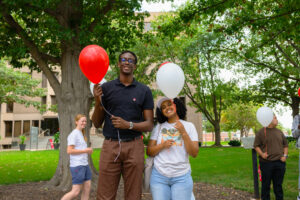
Gideon Logan As a graduating International Rescue and Relief and Biomedical Science double major, Gideon Logan’s time at Union offered him countless adventures. When first starting college, Logan planned on becoming an ecologist. Around the time he realized a career in habitat restoration would actually keep him in an office, he started taking IRR’s EMT class. While in the class, Logan recalls being left with a lot of questions. He was learning how to treat a variety of issues, but he wasn’t learning the root causes. His curiosity drew him to rethinking his path and deciding to become a doctor. During the IRR expedition in Malawi last year, he gained valuable first-hand experiences that confirmed his calling as a physician. “I did more than 100 hours of shadowing in clinical rotations,” Logan said. “I got to scrub in to assist with surgery. I had my first experience doing CPR on someone. I got to suture. I even delivered a couple babies … there’s a little boy in Mozambique named ‘Gideon’ after me. It was a really good experience.” Logan’s desire to be a compassionate person is very apparent. Whether it’s to be a listening ear or someone who offers wisdom-filled advice, Gideon’s primary goal is to be authentic and build real connections with people. Savannah Fortney, Logan’s fiancé, said, “When he worked as an EMT, he was known for not just getting the patient from point A to point B, but taking the time to hear their story and to get to know them even in a short ambulance ride. One thing that is pushing him to pursue this career path is the continued opportunity to get to know people who are hurting. He wants to be able to form relationships and trust with those that he interacts with.” Yann Birasa From his confident walk across campus, there is no indication in Yann Birasa’s relaxed stride that he hasn’t lived in the Midwest his whole life. Having grown up in Belgium and Rwanda, Nebraska wasn’t a place Birasa had ever intended to go. This changed, however, when his cousin told him about Maxwell Adventist Academy in Kenya. By attending an Adventist high school, Birasa’s life was turned around. Through God moments, he was baptized, and with a little help from Union’s own Pastor Rich Carlson, he made the decision to seek education across the ocean at Union. Before ever making it on campus, Birasa had been messaging his soon-to-be teammates on the men’s basketball team. Pastor Rich had connected him with men’s basketball coach Drew Mekelburg and students on the men’s team. Birasa said, “It felt like I was already on campus without even being on US territory. It was insane.” So when he showed up as a wide-eyed international student, he was able to settle in with a ready-made circle of friends. Now, everybody knows Birasa. From being a freshman on the basketball bench, to being voted SA president and even receiving a campus celebrity award at this year’s spring banquet, Yann has become an important leader on campus. He’s everywhere. Whether it’s up front giving speeches or exploring Lincoln with his friends, Birasa is always offering a hello and a smile. Graduating with a degree in business finance with a minor in psychology, Birasa is ready to take the next step of his life to Florida where he’ll be working for AdventHealth. He’s bringing with him a newfound love of golf, a mindset of curiosity and discovery, and an eagerness to explore the restaurants of Orlando. Birasa’s memories — the days spent with friends, the long hours on the bus with the basketball team, and the time enjoying every homemade chocolate chip cookie he could get his hands on — will stick with him for the rest of his life. While reflecting on his years spent on Nebraska soil, Birasa said, “The best part of Union is the people. The people let you come as you are. You can come from far, you can come with a different culture, you can come different, and the Union community welcomes you and understands you. Even though we are different, at the end of the day, we are all God’s children.” Kylie Wehling In seventh grade, Nebraska native Kylie Wehling sat with her dad at Union’s Friday night vespers. The chords of the song “Oceans” drifted across the sanctuary as the pianist’s hands glided along the piano keys. Her dad turned to whisper to her, “One day, you’re going to play like that up there.” Wehling remembers thinking how unbelievable that seemed, but at the same time praying that what her dad said would turn out to be true. Not long before that night, Wehling had suffered a massive hand and wrist injury. Shattered glass had severed nerves, tendons and arteries in her left hand, taking away her ability to play the instruments she loved. Creating music with the piano, cello and French horn now seemed impossible, and Wehling wondered how this was a part of God’s plan. Now a graduate from Union Adventist University, Wehling’s life has been filled with challenges, and with each one, her perspective grows. “I always go back to Scripture and have a solid, honest prayer with God,” she said. “Like, ‘hey, this kind of stinks. I failed, I hit a wall. I don’t know what You want me to do next. Lead me.’ And it kind of reframes my mindset that this is not necessarily a closed door, but an opportunity to go somewhere else until we walk into a different area that God has called us into.” Union ties run deep in the Wehling family, as does a commitment to the ministry of health care. Both of her parents, Dr. Merlin Wehling and Chere (Ray) Wehling, graduated from Union in 1997, and her brother, Caleb Wehling, graduated in 2024. While her brother followed in their mother’s footsteps to a career in nursing, Kylie is finishing her degree in biomedical science to follow her Read more…
Read more... The Joy and Freedom of a Generous Life by Ron Carlson, president, Kansas-Nebraska Conference
– June 1, 2026
The Joy and Freedom of a Generous Life by Ron Carlson, president, Kansas-Nebraska Conference
– June 1, 2026
Jesus spoke often, and candidly, about money—not because wealth itself is evil, but because of its unique power to shape the human heart. Again and again, He pointed beyond coins and possessions to a deeper spiritual reality: what we treasure ultimately determines who we become. In the Sermon on the Mount, Jesus gives a clear and sobering warning: “Where your treasure is, there your heart will be also” (Matt. 6:21). Money, more than almost anything else, has a way of quietly capturing our loyalty. It promises security, comfort and control—things we naturally crave. Yet Jesus urges us to recognize that these promises are temporary at best, and deceptive at worst. Earthly wealth fades, breaks and slips away, but a heart anchored in God endures forever. Perhaps the most direct statement comes when Jesus says, “You cannot serve both God and money” (Matt. 6:24). This is not presented as a mild caution but as a spiritual reality. Money makes a poor master. It demands attention, breeds anxiety, and often pulls our focus away from trusting God. When our lives revolve around accumulating or protecting wealth, we may find that our faith slowly weakens, replaced by self-reliance and fear. Jesus illustrated this danger in the story of the rich fool (Luke 12:16–21). This man had been blessed with abundance, yet instead of seeing his wealth as a gift to be shared, he hoarded it for himself. His plans were practical by worldly standards (build bigger barns, secure the future) but he failed to consider eternity. God’s response is striking: “You fool! This very night your life will be demanded from you.” The tragedy was not his wealth, but his misplaced trust. He was rich in possessions but poor toward God. The power of generosity And yet, alongside these warnings, Jesus offers a beautiful and liberating vision of generosity. “Give, and it will be given to you,” He says (Luke 6:38). This is not a transactional promise, but an invitation into a different way of living, a life marked by open hands rather than clenched fists. Generosity breaks the grip of materialism and reorients our hearts toward God and others. We see this vividly in the story of the widow’s offering (Mark 12:41–44). While others gave large sums out of their abundance, she gave two small coins—everything she had. Jesus honored her gift above all others, not because of its size, but because of its spirit. Her generosity reflected deep trust in God. She held nothing back, and in doing so, revealed a heart fully surrendered. Generosity is not about the amount we give, but the posture of our hearts. It is an act of worship, a declaration that God, not money, is our provider. Each time we give, whether to support ministry, help a neighbor, or meet a need, we participate in God’s work and reflect His character. In a world that constantly tells us to accumulate more, Jesus invites us to live differently. He calls us to loosen our grip on earthly wealth and to invest in what truly lasts. When we do, we discover a profound truth: the greatest blessing is not found in what we keep, but in what we give. May we heed His counsel, guarding our hearts against the subtle dangers of wealth, and embracing the joy and freedom that come through a generous life.
Read more...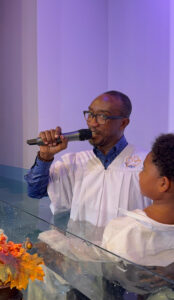 Headfirst Stepping into faith
– May 27, 2026
Headfirst Stepping into faith
– May 27, 2026
In St. Louis, Missouri, Pastor Lusajo Kasyupa is focused on revival. The Tabernacle of Praise Church is full of disciples meeting several times a week. Every Sabbath morning, up to 30 people arrive hours before service to pray. They pray over every seat in the sanctuary, every musical instrument, and every microphone. They show up at 9 am for what Pastor Kasyupa calls “Make Your Voice Heard in Heaven.” Getting to church extra early isn’t easy, especially for families. Before working in St. Louis, Pastor Kasyupa shepherded a flock in the nearby town of Charleston at Grand Avenue Seventh-day Adventist Church. That’s where he first brought up the idea of holding an early-morning prayer meeting before Sabbath school. There were doubts about such a program working. Sabbath school attendance was not great to begin with. Pastor Kasyupa said, “I remember mentioning to my prayer ministry leader, who is my elder, ‘If nobody’s there, four people will be there: that’s me, my wife, and our two sons.’” But the church family responded. It wasn’t long before the early-morning prayer meetings attracted 10, 20, and even 30 people each week. “We’re not asking for silver or gold or anything,” he said. “We’re just asking for the presence of God to permeate our worship experience.” When he moved to Tabernacle of Praise, Pastor Kasyupa brought the new program with him to great success. As part of the Pentecost 2025 initiative from the North American Division, the church has recently gained a number of new disciples. One of those is Tenshi Shaw, a kindergarten teacher and mother to 7-year-old Dakari. Tenshi had been looking around, attending different churches for a while. She had attended Baptist churches as a child and found herself searching for a renewed connection with Jesus, so she asked her churchgoing friend, Cherie, if she could come along with her. Cherie could tell that Tenshi was in a place of spiritual need and pushed her to officially become a Seventh-day Adventist. Stepping into faith When she was younger, Tenshi struggled with fears about life after baptism. “For the longest time growing up, you think once you get baptized you can no longer do any wrong,” she shared. “That’s what I’d been told.” It wasn’t until she met Pastor Kasyupa and joined Tabernacle of Praise that she decided baptism was for her, even if she wasn’t perfect. “He told me that was not the case at all. This is about stepping into your faith.” When church members told Tenshi that Dakari expressed a desire to get baptized too, she was amazed. “When I saw my son going in the path that I did when I was younger, finding my faith, finding Jesus, and saying he wanted to get baptized,” she said, “I just had tears falling.” Her son’s journey has been shorter, but just as convicted. “Dakari just jumped in headfirst,” said Tenshi. “He just believed with his whole heart that he was a child of God.” Pastor Kasyupa explained, “I believe in the power and efficacy of prayer. And I’m a living witness of what it has done in my personal life. I wanted to direct the church … [to] avail itself of the privilege of prayer.” Now, bright and early on Sabbath mornings, Dakari and his mom are there. He likes to pray over the drums. Bio: Luke Morris is a senior English major from St. Louis, Missouri. When he isn’t writing or studying, he enjoys playing folk music. Travel tip: That thing you’re very worried about will be fine. People have an endless ability to adapt to new circumstances. Worst-case scenarios aren’t so bad.
Read more...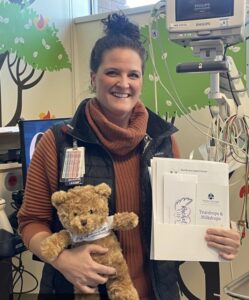 Turning Loss Into Love How AdventHealth Parker strengthened support for families after infant loss
– May 25, 2026
Turning Loss Into Love How AdventHealth Parker strengthened support for families after infant loss
– May 25, 2026
Loss is never easy and the loss of an infant is among the most heartbreaking experiences a family can endure. According to the CDC, infant loss remains a significant reality in the United States, with approximately 5.6 infant deaths per 1,000 live births and one in four pregnancies ending in loss, including miscarriage and stillbirth. These moments call not only for clinical excellence, but for deep compassion and presence. In 2024, a mother experienced the sudden loss of her 9-day-old infant in the AdventHealth Parker Emergency Department (ED). While she later expressed profound gratitude for the kindness and compassion shown by the ED team during those unimaginable moments, she also shared something important: after leaving the hospital, she felt unsure of what to do next. She lacked resources specific to postpartum care after neonatal loss, such as guidance on lactation suppression and emotional support. Rather than letting this feedback end there, the AdventHealth Parker ED team members chose to listen, learn and respond with love. In early 2025, Jennifer Jones, RN, clinical nurse manager for the ED, received the mother’s feedback through patient advocacy. Jones immediately reached out to leaders and clinical nurses across departments, including obstetrics (OB), to better understand what resources existed and where gaps remained. Through collaboration with Shiri Laufer, RN (OB bereavement champion) and Ashley Albright-Pedigo, RN (ED bereavement champion), it became clear that while OB had strong postpartum loss resources, the ED needed additional tools tailored to grieving mothers. That realization sparked change. Through cross-department collaboration, postpartum and grief resources were shared, expanded and formally integrated into ED processes. A new approach was established: when neonatal loss occurs in the ED, both the OB and ED teams now partner to ensure families receive comprehensive emotional and physical postpartum support. When Jones later sent the mother a condolence card explaining the new support plan, the mother reached out personally to share her appreciation, expressing comfort in knowing that her experience would help future families receive clearer guidance and care. But the work didn’t stop there. In late 2025, Caitlin Curtis, RN, became the new ED bereavement champion, further expanding resources and training. Drawing from partnerships with lactation services, child loss support organizations and neighboring facilities, Curtis helped create a bereavement resource folder for families experiencing loss. These folders include grief support information, lactation guidance after loss, counseling resources, chaplain contacts, funeral and autopsy information, journaling tools and a small memorial item—offering continued support long after families leave the hospital. As Curtis shared, “These people are not just patients but real people who we care for and that is the heart of nursing.” This year, ED nurses and chaplains received training on how to compassionately offer these resources and support families during some of their most vulnerable moments. This work is a powerful example of what it means to live out AdventHealth’s ‘Love Me’ service standard: listening with empathy, responding with intention and transforming even the hardest moments into opportunities to better serve those who trust us with their care.
Read more...