












The world does not need more warnings.
I know that sounds strange from someone who spent decades writing for a magazine called Signs of the Times. But stay with me.
The people around us already know the world is in trouble. They believe it ends through nuclear war, pandemic, climate collapse, forces beyond their control. Apocalyptic thinking does not belong exclusively to Christians — it saturates the culture. Henry David Thoreau wrote a hundred and seventy years ago that the mass of men live lives of quiet desperation. He was right then. He would be more right now.
People do not lack things to fear. They lack something to hold onto to sustain them despite the fear.
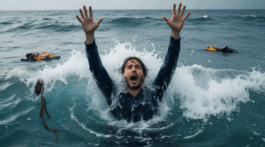
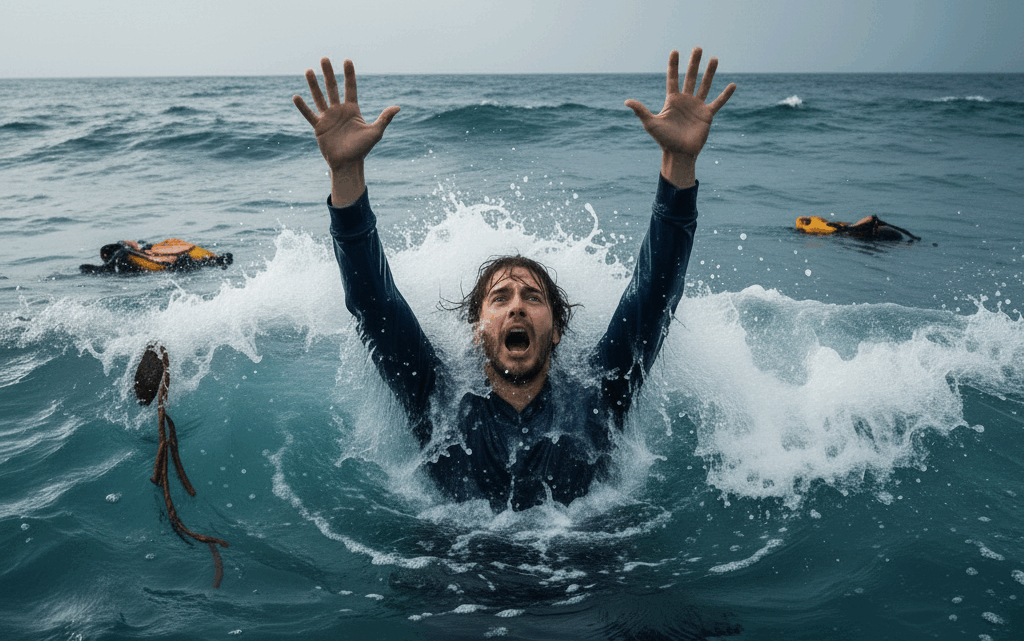
Picture a man in the water, going under. You stand on deck. You lean over the rail and call out: “You are in serious trouble.”
Does he not know that already?
What does a drowning man need? He needs something to grab. He needs a life preserver. And the word on that preserver — the one thing that pulls him toward the ship — is this:
Hope.
And we have this hope! This is the emphasis we Adventists need to make. Not away from truth, not away from the hard realities ahead. But toward the recognition that truth without hope is not the gospel. It is fear with better footnotes.
The doctrines we traced in the last post are not, at their core, warnings. They are answers. The Great Controversy does not primarily threaten — it explains. It makes the suffering of good people comprehensible without destroying faith in a good God. The Second Coming does not primarily set a deadline — it ends sin and death and reunites everyone who has loved someone and lost them. The Sabbath does not primarily impose a rule — it offers rest, built into the structure of time itself, available to every person regardless of wealth or geography. The state of the dead is not a doctrinal curiosity — it assures us that the God who notes the fall of a sparrow does not also run an eternal torture chamber.
These are not warnings in disguise. They are reasons to hope. Hard-won, specific, tested-under-pressure reasons. And a world drowning in fear needs people who offer them with conviction — not because they read it somewhere, but because they lived in it when things fell apart and found that it held.
On May 19, 1780 — the Dark Day, when forest fires in Ontario combined with fog over New England to produce a darkness so complete that chickens came home to roost — a man named Abraham Davenport stood in the Connecticut legislature and said:
I am against adjournment. The day of judgment is either approaching or it is not. If it is not, there is no cause for adjournment. If it is, I choose to be found doing my duty.
That is not despair. That is hope — the specific, actionable kind that keeps you at your post when everyone else heads for the door.
We carry that hope. There’s a reason we love to sing the song, “We Have This Hope!” Then why don’t we emphasize hope rather than fear? Could it be that in focusing on crisis, we are also drowning? Have we lost our hope?
Because that’s what people drowning in fear need today—ourselves included. They are not waiting for a warning. They are waiting for someone to throw them something to hold on to. Something we cannot share unless we first possess it.
Next: What it means to sail — a final word on mission, identity, and what this ship was built for.
If you’d like Ed to speak at your church, contact him at
BibleJourneys@Yahoomail.com
Put “Speaking Inquiry” in the subject line.