












There is a moment, somewhere in your thirties, when safety starts to feel like wisdom.
I was twenty-five when I first became a principal — of a three-teacher school in a good community, a comfortable situation, a predictable future. My wife, who has always been wiser about these things than I, told me to keep my head down. Don’t say anything. Just get along.
She wasn’t wrong. It was good advice. And I nearly took it.
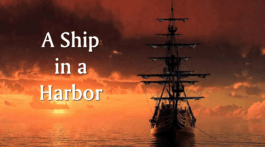
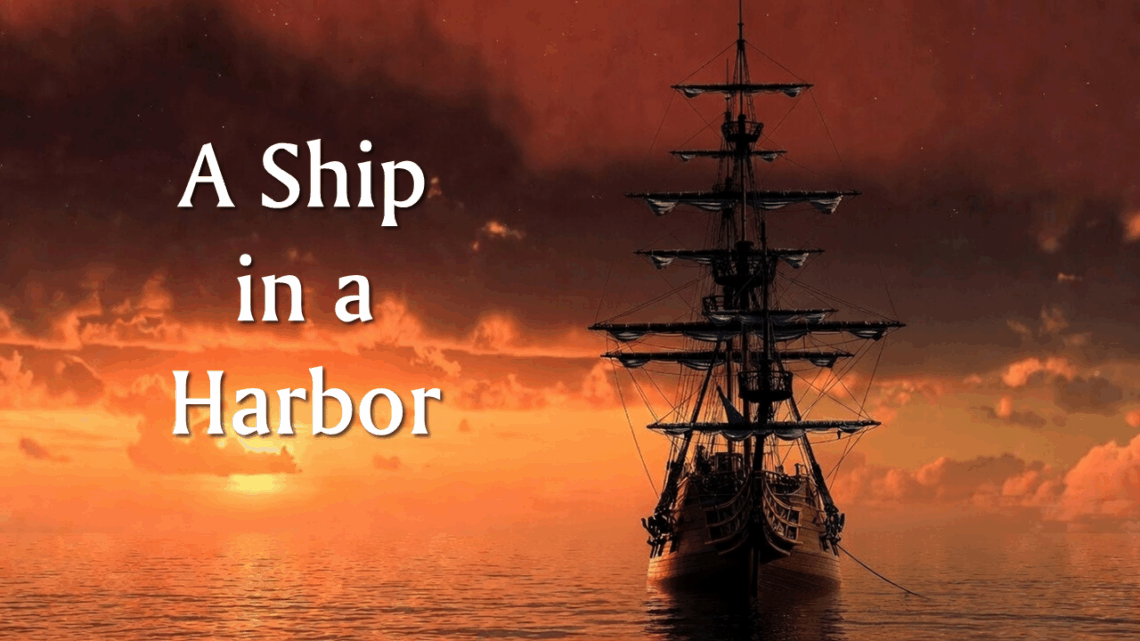
Then we went to a shopping mall — a thing that is growing increasingly rare— and while we were browsing, I saw a poster that changed my life. It showed a square-rigged ship at anchor, at sunset. And beneath the image,this line:
A ship in a harbor is safe.
I stood there longer than I should have. Because I realized that this new job could be a professional safe harbor. And I wanted to be safe. Doesn’t that sound reasonable? The storm is coming — you can feel it in the news, in the culture, in the conversations you have with people who are quietly terrified. The sensible thing, surely, is to get below deck and wait it out.
But there is a second line to that quote. You may already know it.
But that is not what ships are built for.
And I knew I wasn’t built to stay safe. So I didn’t keep my head down. I wrote things that sometimes pastors didn’t appreciate but my editors did. I took risks that didn’t always pay off and some that paid off for other people when they didn’t for me. And over the decades, experience confirmed what God had built me for — not the harbor, but the open water.
That worked well as a personal philosophy. But what about on a larger scale? That’s a question I’ve been thinking about for years, and one I want to explore over the course of this series.
If an individual can be built for something — called to a purpose that involves risk rather than safety — then so can a community. So can a church—a community of faith. And if that’s true, then the most important question any church can ask concerns not whether growing or shrinking attendance, not perfect orthodoxy or doctrinal purity, though all of those things matter.
The most important question is this:
What is this ship built for?
I am a Seventh-day Adventist. I have been one my entire life, through seasons of profound gratitude and seasons of genuine pain. I have been told, by a pastor, to my face, that my existence was a problem for the church. I have also experienced brotherhood in this community that I have not found anywhere else on earth. So I am neither a cheerleader nor a critic. I am someone who has thought long and hard about what this particular ship is — and what it was built to do.
Currently, multiple disputes occupy the attention of too many in the Adventist Church. Arguments about theology, about governance, about who gets to lead and on what terms. Some of these arguments matter. Some of them are what I can only describe as cruise ship arguments — disputes about who sits at the captain’s table, who gets first in line at the buffet.
No one has time for those arguments on a battleship. A battleship knows what it’s for. And when a community knows what it’s for, the arguments that consume so much energy simply lose their urgency. Not because disagreement goes away, but because there is something more important than winning an argument..
Over the next four posts, I want to trace how this ship was built, what it was built for, and what it means to sail it well — especially now, when the waters are getting rough and the people around us are running out of reasons to hope.
Because that, I think, is the point. Not the arguing. Not the anchoring. The sailing.
Next: How a young church was born not from division, but from a shared expectation — and why that matters more than most of us realize.
This is the first installment of 5, based on a transcription of a presentation at a Men’s retreat.