










Sabbath School Lesson for September 20-26, 2025
Introduction of Lesson 13, The Tabernacle
Memory Text: “Then the cloud covered the tabernacle of meeting, and the glory of the Lord filled the tabernacle…For the cloud of the Lord was above the tabernacle by day and fire was over it by night, in the sight of all the house of Israel, throughout all their journeys.” Exodus 40:34, 38 NKJV
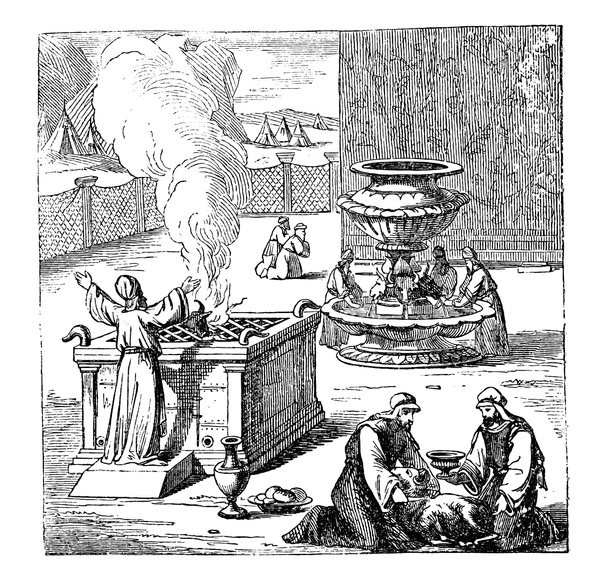
In order for God’s people to present the right picture of God to the nations around them, they would need to be in as close a relationship with God as possible, so they could get to know His character and will for their lives. Therefore, God presented to them a plan for building a tabernacle of meeting right in the midst of their camp. This special meeting place would enable them to see His glory, veiled in such a way that they would feel invited to worship Him there.
Sin has a tendency to make humans fearful of God, resulting in them pulling away or even hiding from God, like Adam and Eve did, and later, their son Cain. The sanctuary services provided a way for God to teach them about His character and the plan of salvation in a simple, beautifully symbolic way, if they would only follow His precepts and commandments as they journeyed on to Canaan.
- Sunday: The Sabbath of the Lord
- Monday: Offerings and the Spirit
- Tuesday: The Tabernacle Built
- Wednesday: God’s Presence in the Tabernacle
- Thursday: Jesus Tabernacled With Humanity
Sunday: The Sabbath of the Lord
Many people think that the Sabbath began with the Jews when God gave them the Ten Commandments. However, the Sabbath goes all the way back to creation (Genesis 2:1-3). It had no doubt been kept by the early patriarchs, with animal sacrifices regularly offered upon an altar, as part of their worship practice.
However, the newly-released Hebrews needed a refresher course about Sabbath observance after their long years of slavery in Egypt, where most of them were not allowed to rest on that day. The Sabbath was therefore demonstrated by the unique way the manna fell and provided their sustenance all week except the Sabbath. This manna began to fall even before the Ten Commandments were received by God on Mt. Sinai, telling us that the Sabbath was meant for all time and for all people.
Both the Sabbath and our worship services still have the same purpose today: to enable us to feel God’s presence and be blessed by His love and salvation in a special way. God has always wanted to draw near and reveal Himself to us. Therefore, Sabbath and the earthly tabernacle indeed had the divine purpose of blessing God’s people with His presence.
Verses and questions:
Exodus 35:1-3 and Matthew 7:1-2
- How important was the Sabbath in God’s eyes at this pivotal time for the Hebrews? And even now?
- Why is it important to remember that God is the ultimate Judge when it comes to Sabbath observance?
- What general principles can we apply to ourselves about the Sabbath as we rest on that day?
- In what ways would you like to improve your rest time, when it comes to your own Sabbath observance?
Monday: Offerings and the Spirit
Before listing any of the physical items needed for building the tabernacle, the Lord specified that their gifts must be from those who gave willingly (Exodus 35:5). Their hearts must have been in a good place with God at that time, because so many elaborate gifts poured in that Moses had to stop the offering call he had made (Exodus 36:5-7).
God was active in giving during this time as well. He gave the craftsmen and artisans the skills necessary to build the articles of furniture and sew the clothing for the sanctuary services. This included endowing both men and women with spiritual gifts and talents so they could do their very best to make the tabernacle worthy of God’s presence.
When we allow the fruits of the Spirit to flourish in our lives, we, too, can help God’s church accomplish all its goals of spreading the gospel. He can use each and every one of us to do something for the God’s community of believers. We just have to be willing partners for whatever He calls us to do.
Verses and questions:
Exodus 35:4-36:7
- Why did God require only the best materials be given for their building of the tabernacle, and that the gifts come only from willing hearts?
- Why do you think only Bezalel and Aholiab were the only two artisans mentioned in Moses’ account?
Galatians 5:22-26
- How were these spiritual fruits helpful in building the tabernacle?
- How do we can grow our fruits of the Spirit? What things in our lives help them to grow?
Tuesday: The Tabernacle Built
The sanctuary was more than a place to worship God. It was filled with visual object lessons to help them feel closer to God by learning more about His plan of salvation. God’s love and justice, the hallmarks of His character, were woven into every article and ritual that took place in the tabernacle.
The daily ministry in the outer court and the Holy Place included their confession, God’s forgiveness, and how they would grow in their relationship with Him. Then, there was the yearly worship service on the Day of Atonement that brought the High Priest into the Most Holy Place. This solemn service reminded them of the final end of evil and triumph of good that would take place on the final Judgment Day in heaven. This was all part of God’s plan to deal with and finally rid the earth of sin.
No wonder Moses was given such precise instructions about the building of the sanctuary. Each and every detail would tell something about their loving, just God.
Verses and questions:
Exodus 36:8-39:31 and Hebrews 7:25
- What can we learn about God from the fact that He gave such intricate details involving His worship?
Wednesday: God’s Presence in the Tabernacle
Exodus 40:33 tells us that Moses “finished the work” of building the tabernacle, and this was cause for a very special celebration. A specific day, therefore, was set aside to inaugurate or welcome God’s presence into the tabernacle. It also allowed the edifice to be dedicated, or consecrated for God’s use, including the anointing of the priests who would serve there.
This momentous event reminds us of the time when God finished His work of creating our world and celebrated it on the seventh day of creation week. Moses had finished his work of freeing God’s people from Egyptian slavery. They were ready to be filled with God’s presence, as Moses had experienced it himself on Mt. Sinai. This was the only time, by the way, that Moses was allowed to enter the Most Holy Place in the sanctuary. From that time on, the high priest only would have that honor once a year on the Day of Atonement.
The entire encampment would depend on God’s glory hovering over the tabernacle in a cloud by day and fire by night. When the cloud would move, they knew it was time for them to break camp and follow God’s presence.
Verses and questions:
Exodus 40:1-38
- Why was it necessary for everything concerning the tabernacle to be consecrated and anointed?
- What was significant about Moses’ role in setting up the operation and services of the sanctuary?
- What symbolic meaning was there with all the washing that was required?
Thursday: Jesus Tabernacled With Humanity
Just as the tabernacle was a place for God to dwell among His people in the Old Testament, John reminds us joyfully that Jesus became flesh and dwelt among us too (John 1:14). The life and death of the Messiah allowed us to see God’s glory in a very closeup, personal way.
But His presence was not limited to the rather short time of His incarnation. Matthew 18:20 proclaims that where two or three are gathered in Christ’s name, He is in the midst of them. His Holy Spirit also dwells, or tabernacles, in us. Jesus tells us, “Behold, I stand at the door and knock. If anyone (that means even one person) hears my voice and opens the door, I will come into him and dine with him, and he with Me” (Revelation 3:20).
Revelation 21 gives us a beautiful description of the New Jerusalem, that Holy City that comes down from heaven after the millennium. Curiously, there is no temple there (Revelation 21:22). God’s closeness to us in the City will evidently be the same as if we were dwelling in the Most Holy Place of the earthly sanctuary, where God’s presence was the most intense.
We also note that New Jerusalem is laid out as a square (Revelation 21:16). And, sure enough, the only room in the tabernacle built in the wilderness that was a square was the Most Holy Place, where all its sides all measured fifteen feet.
Verses and questions:
John 1:14, Matthew 18:20, and Revelation 21:1-3
- In what ways has God dwelt with us, besides in the earthly tabernacle?
Revelation 21:16, 22
- How do we understand these two descriptions of the Holy City?
Friday: Final Thoughts
We mustn’t forget that the tabernacle was a miniature representation of the heavenly sanctuary, adapted to our human condition and experience. It was a copy and shadow of heavenly realities (Hebrews 8:5). Just as we can know only a few things about a person by seeing their shadow, we can have but a small glimpse of who God is as we worship Him here on earth.
God’s temple in heaven, His divine residence, is where the universe assembles to worship Him. We must be cautious about making heaven fit our limited human understanding. It far surpasses anything we can imagine (1 Corinthians 2:9).
Our steadfast goal must be to know and understand God, as far as He has revealed Himself to us in the Bible and through prayer. We naturally want to be around people we love; so being with God, dwelling with Him, should be our greatest anticipated joy. His Holy Spirit dwelling in us is as sweet as it gets on this sinful planet.
Spiritually, we can have a small taste of heaven on earth by inviting God into our innermost being. It’s a small space for such a grand presence, but He loves us enough to dwell with us in our hearts as we get to know each other better.
Next Week: Recipe for Success (new quarter’s study about Joshua)
To read the Sabbath School Lesson Quarterly and see more resources for its study, go to
