













Sabbath School Lesson for September 6-12, 2025
Introduction of Lesson 11, Apostasy and Intercession
Memory Text: “Then Moses returned to the Lord and said, ‘Oh, these people have committed a great sin, and have made for themselves a god of gold! Yet now, if You will forgive their sin–but if not, I pray, blot me out of Your book which You have written.’ ” Exodus 32:31-32 NKJV
With Moses alone on the mountain receiving commandments and divine guidance from God, it’s understandable that some of the Israelites would fear losing their leader after forty days of separation from him. During this waiting time, when they should have been confirming their covenant with God by fasting and prayer, a sizeable number instead went to Aaron with a demand that he give them something tangible to worship, for fear Moses would not return.
Aaron must have been alarmed, even terrorized, by their threatening stance. But, instead of refusing their faithless, untrusting entreaty, he complied and aided their apostasy by melting down and molding a golden calf for them to worship.
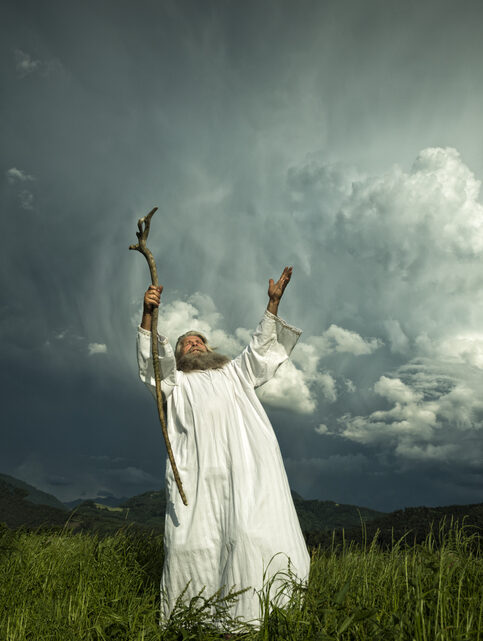
Even after such a blatant act of disobedience, Moses interceded for God’s people, preventing God from destroying them all and building another nation from Moses’ lineage alone. This selfless intercession on the part of Moses has made him a type of Christ, our Intercessor in the heavenly courts above.
- Sunday: Failed Leadership
- Monday: Idolatry and Evil
- Tuesday: Corrupting Themselves
- Wednesday: God’s Righteous Wrath
- Thursday: Intercession
Sunday: Failed Leadership
Aaron demonstrated a common attribute of all failed leaders. He cared more for his own welfare than for those he was supposed to serve. He bowed to public pressure, rather than upholding the divine standards that God had revealed to him so far on their journey to Canaan.
Aaron knew well the distaste God had for idolatry. But, instead of reminding them how sinful this idolatrous action was, he suggested a plan that would only feed their immorality and cause more depravity in the camp.
God and Moses both had reason to be disappointed, even angry, with Aaron’s lack of leadership during this sad episode. It would not be easy to remedy the situation; but God mercifully put in place a plan to extinguish the flames of growing discord and save those who still held onto their faith and desire to serve God and not the creature.
Verses and questions:
Exodus 31:1-6
- How might Aaron have justified his unwise decision?
- What alternative course could and should Aaron have taken in this troubling situation?
Monday: Idolatry and Evil
Several passages in the Bible reveal the foolishness of worshiping idols and the gods behind them. These manmade creations cannot see, hear, smell, or feel. In other words, they are powerless in doing anything we ask of them.
Aaron was familiar with the gods of Egypt. Regardless of this knowledge, he chose to make a golden calf, in tribute to either the bull god, Apis, or the cow god, Hather. In direct defiance of God’s first two commandments, he encouraged the worship of a creature, rather than the Creator. In doing so, he erased the gap between God and man. The pagan gods they chose to worship were no more powerful than the men who created them.
To receive spiritual power, one must go to the only source of true power, the Lord God Creator Himself–not some inanimate creation of man, such as the golden calf Aaron molded out of their gold earrings. This blatant act of disobedience soon led to a great feast, or party, to celebrate their newly-created god. As Exodus 32:6 tells us, they ate and drank “and rose up to play”. This festive partying consisted of immoral, depraved, acts of lust and uncleanness, such as those commonly associated with idolatry back in Egypt. Keep in mind that idolatry often involved vile sexual practices, in addition to cruel human sacrifices.
Verses and questions:
Exodus 32:6 and Romans 1:22-27
- What kind of dishonorable and vile practices followed their giving peace and burnt offerings to their golden calf god?
Psalm 115:4-8 and Isaiah 44:9-10
- Why was it useless, and even harmful, to worship idols?
Tuesday: Corrupting Themselves
Unlike the pagan gods who could neither see nor hear, the God of Moses knew exactly what was going on in the camp below. Before Moses descended from the mount, Exodus 32:7 reveals that God alerted him to the fact that the people brought out of Egypt “were corrupting themselves”.
Even though Satan was the instigator behind the scenes, the people were responsible for their faithless actions. Even Aaron could blame no one but himself for his part in their sinful revelry.
The people were corrupting themselves. Indeed, all of us contribute to our downfall when we attempt to replace God with anything else life has to offer, such as money, power, food, entertainment, sports, family, school, shopping–you name it. When these “things” dominate our time and thoughts, we are in jeopardy of losing our connection with God, or at least diminishing it.
Verses and questions:
Exodus 32:7, 8
- How can people “corrupt themselves”? In what way are we responsible for this, and not Satan?
- What kind of golden calf idols are worshiped in our culture today?
Matthew 10:37
- What did Jesus mean by this verse that sounds almost like disobeying the fifth commandment to honor our parents?
- Could this admonition be applied to all our family members? Why?
Wednesday: God’s Righteous Wrath
When God saw the idolatry and reckless debauchery of His children, He was rightfully filled with anger and indignation. Without Moses’ intercession, He was likely to have destroyed them all and begun a new nation with the sons of Moses.
Then Moses, too, felt the depth of that wrath when he saw in person the results of their idolatry as he and Joshua descended from the mountain of God. It disgusted him so much that Moses threw down and broke the two tablets of Commandments he was carrying. The people were breaking God’s Commandments, so he did the same. And God later rebuked Moses for his hasty, angry response.
When confronting Aaron about the part he played in their disobedience, it perhaps shouldn’t surprise us that Moses’ brother tried to avert the blame to others. He even claimed that magic was somehow involved, describing how he threw their gold into the fire, and magically a calf came out. This only proves once again that one sin leads to another. In the case of Aaron and so many others, his sin of idolatry quickly led to the sin of lying about it.
Verses and questions:
Exodus 32:9-29
- What was different about God’s anger and that of Moses?
- What do you think Aaron was trying to do by making excuses for himself?
Thursday: Intercession
Let’s not forget the extent to which Moses interceded for the backslidden people of God. He was willing to give up his own eternal life, in order to save them. He would be a substitute for them, similar to the way Christ is our Substitute when it comes to our salvation. Our forgiveness depends on God’s Son bearing our sins and dying the death we deserve.
The word “forgive” in Exodus 32:32 is from a verb that means to “carry” or “bear” something. Speaking of Jesus in Isaiah 53:4, we find that “He has borne [or carried] our griefs”. They were put on His shoulders. We are encouraged to let Him carry our burdens (1 Peter 5:7 and Psalm 55:22), so that would include the burden of sin.
In the case of the idolatry Moses had just witnessed, God called for the death of only those who were not willing to repent. This dreadful punishment would help guarantee that the Israelites could continue safely on their journey with God on their side. They had to eliminate the troublemakers, so justice and peace could once again be felt among the people.
Verbs and questions:
Exodus 32:30-32
- Why was Moses willing to die for those who had made and worshipped the golden calf?
- How does this make Moses a type of Christ?
Friday: Final Thoughts
By destroying those who had been guilty of idolatry and refused to repent, we might feel that their punishment was too harsh. But God had already shown the universe the disastrous result of permitting sin to continue unpunished. Cain, who killed his brother Abel, was a prime example of this. His wickedness spread so widely that the destruction of the whole world by a flood was necessary in order for anyone to survive the effects of sin.
The idolaters in the Hebrew camp were already on a fast track to destroying themselves, too, so there had to be a quick and complete punishment in order for God to repair the damage done by their selfish, unholy behavior. We must constantly focus on God’s mission and not our own selfish desires, like those who worshipped the golden calf. We are all in danger of becoming idolaters, when we take our eyes off our Creator.
Next Week: Apostasy and Intercession
To read the Sabbath School Lesson Quarterly and see more resources for its study, go to
