















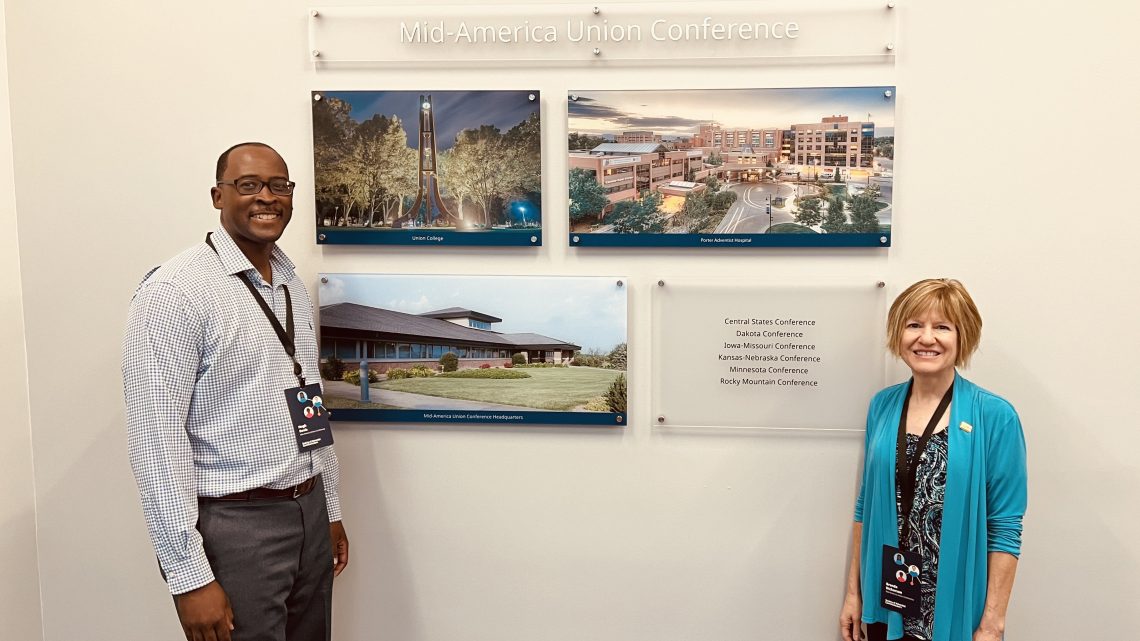
While there are no fewer than a dozen articles in the 1980 editions of Northern Union Outlook, Central Union Reaper, and the new Mid-America Adventist Outlook discussing the mergers that created the current Mid-America Union, there is more to be gleaned from people who were actually part of the process.
One man who was deeply involved and still remembers the events well is retired pastor and church administrator Ralph Watts, Jr., a Union College graduate who began his ministry as an evangelist in the Nebraska Conference.
According to Watts, as merger talks were beginning in earnest, Elder E.S. Reille came from the Carolinas to serve as president of the Central Union. All the departments of both unions were fully staffed at that time, says Watts.
On May 26, 1980, following several months of discussion, Central Union leaders met, and on May 28 Northern Union leaders met. Only a few weeks later, on July 14 and 15, the respective constituencies gathered in Kansas City to vote official actions.
Elder Neil Wilson, representing the General Conference, encouraged the merger of the two unions by stating that it “would strengthen the work.” Elder C.E. Bradford, president of the newly formed North American Division, was also in support of the process.
What Were the Options?
Since neither union was considered viable due to their small size, the merger of the two unions was fairly straightforward. But the mergers of various conferences were more difficult. The main reason for merging conferences was financial concern around the number of academies, summer camps and local conference offices.
Although enrollment was declining in a number of schools and at least one board had already voted to close their school, many constituents felt they were being forced to merge without the benefit of time to discuss the options and develop a strategic plan that would be most effective.
Rhonda Karr, current treasurer of the Iowa-Missouri Conference who had just begun working as a treasurer in the 1980s, says she heard talk about how the conference mergers should have been Iowa-Nebraska and Kansas-Missouri. And when Minnesota was in the mix, there was some talk of Iowa-Minnesota. “Probably something better would just have been a more open discussion,” says Karr. However it was done, “it was going to be painful because there was going to be a feeling of loss for someone.”
Watts believes that “the problem was with the process. Decisions were being made too quickly. The committees felt like they had no options but to do what they were being told.”
Are Adventist church leaders today doing better at respecting and empowering grass-roots constituencies than 40 years ago?
“I believe that in North America the division leadership is better equipped today to deal with such things,” affirms Watts. “They are experienced enough and wise enough to handle mergers and closings of academies and colleges that might occur due to covid and other issues.”
Watts’ advice to administrators—based on what we’ve experienced in the past—is that “leadership has to do its homework. Select Blue Ribbon Commissions from the local areas to work and plan carefully and strategically. Then bring in key thought leaders and influencers to discuss the issues and craft something to recommend. The process is critical. It can’t happen quickly.”
Watts also has counsel for church constituents who believe administrators are overreaching their authority. “Your voice can be heard by approaching your conference administration. Talk to your president. Express your concerns about issues in a clear manner. Also talk to your representatives who serve on your conference and union Executive Committees.”
Pull-Quote:
The way we are functioning today is the result of a lot of hard work and sacrifice and sometimes pain. —Rhonda Karr, Iowa-Missouri Conference treasurer
