






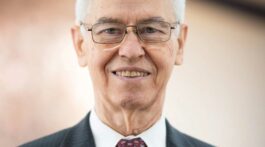

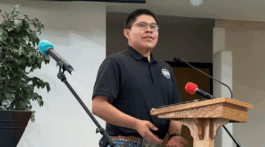


On April 4th, 2025, Ezra Kenyanya joined me for an online conversation about workplace ministry. May his story inspire you to consider how Jesus is working through your values and backstory to bless your family, friends, co-workers, and community.
Jim: Ezra, we met through our work for the Minnesota Conference. Where else are you ministering?
Ezra: There’s a lot going on in my life. In addition to serving part-time as an associate and youth pastor at Kenyan Community Church, I work full-time for the Jeremiah Program. We are a non-profit organization who helps single mothers move from poverty to prosperity. I also run initiatives like Vuna International, and Dira which supports youth and young adults in finding their purpose through financial literacy, career and academic excellence, and value-based coaching.
What do you want to be?
Jim: Wow. This is a lot. But during our visit at The Jeremiah Program’s St. Paul facility, I began to see a through line in your ministry roles.
What has shaped you to be someone who can minister across these separate but related spheres of influence?
Ezra: Like most young people, I was asked what I wanted to be when I grew up. It’s a hard question. During my undergraduate experience I chose to major in biology because a lot of people in my circles experienced some type of health failure. But medicine wasn’t who I am.
However, I had a deep desire to meet people’s needs in a practical way, and during my graduate studies I discovered a program at Andrews University in Community and International Development. This degree became the perfect match for my passion to meet needs.
Ministry Roots
Jim: You’re a bit of a rubber meets the road Reverend.
Ezra: That’s precise. You summed it up well. I like theory. I’ll read about it. But if it doesn’t meet the road, it doesn’t interest me.
Jim: Was there a formative experience that allowed you to embrace practical ministry?
Ezra: Growing up in a Christian home, love was a verb… It was all about action.
My parents were first to help people in need. If someone was sick, they were there. If someone needed a place to stay, mom and dad made a way. I remember our family hosting another family of eleven in our four bedroom home. It was a subconscious influence.
At seventeen I transitioned from Kenya to the United States. I was leaving friends behind. I was leaving what I knew to enter the unknown.
When I arrived at college in New Hampshire I didn’t know anyone. It is amazing to remember the people who showed kindness. One family took me in as their son, hosted me for four years, adopted me, fed me, and gave me a car to drive.
These experiences shaped my values, and I would eventually discover a desire to help people navigate the challenges I had faced in coming to a new culture.
After undergrad, I still didn’t know what I wanted to do. So I joined a three month mission trip to five different countries. I saw people with less than me being happy and fulfilled. This led to a mind shift about meaning and purpose.
At the same time, there were ways where I felt lost. I lived in the U.S. for nine years before returning to Kenya. When I did return, people asked, “Where are you from?”
“I’m Kenyan.”
But something about the lingo I picked up, led people to ask, “why are you saying it that way, are you really from Kenya?”
Then I returned to the U.S., and I got the same question: “Where are you from?”
Jim: Your experience makes me think of third culture kids. People who immigrate to a new country in their youth, and as time passes they begin to feel like they don’t belong to their old world, but they don’t fully belong to their new world either… and it all happens in the same lifetime.
Ezra: Yes, being a teenager and moving to a new culture, I struggled with identity. There were moments of finding myself which shaped me, and I wanted to ensure that anyone going through a similar experience received support.
Connecting the Dots
Jim: When did you realize this kind of humanitarian work was your calling?
Ezra: I stumbled upon a program director at Andrews University who explained the concept of social justice from a place of love. For the first time, I found something in the church aligning with a meeting peoples’ need in a practical way. It changed my perspective and I never missed a class.
Jim: So your roots prepared you for your graduate studies, but you didn’t know it until arriving at Andrews.
Ezra: Exactly. My upbringing prepared me for a life of service. At the same time, I believe if the church lived a practical gospel, many non-profits wouldn’t exist. Onlookers get the theory of our faith, but there is a disconnect when we fail to put it into practice.
Value-Based Coaching for Tent Makers
Jim: You mentioned working with young people to clarify their purpose. How can values-based coaching help our young people to live a more practical life as Tent Makers?
Ezra: Decision-making is often based on values. When you know your values, decisions align with who you are.
My values are God, family, autonomy, creativity, and independence. They guide my life choices. Tent-making ministry allows me to work part-time in ministry while engaging in practical, value-driven work.
Jim: Your observations remind me of Timothy Snyder’s book On Freedom where he says freedom is forged as we choose between values.
Ezra: Exactly. Knowing your values gives you freedom. The Jeremiah Program aligns with my values. It allows me to partner with various constituencies in meaningful ways to forge greater change in the Twin Cities.
The Jeremiah Program
Jim: In closing, can you give us a snapshot of the Jeremiah Program?
Ezra: Jeremiah Program serves single mothers, helping them pursue higher education. We provide affordable housing and coaching, focusing on breaking barriers to education. Our two-generational approach supports mothers and their children, allowing them to build better futures.
A Note to the Reader: To learn more about the various entities Ezra supports as a MN Tent Maker, you may visit www.jeremiahprogram.org, www.vunainternational.org, www.diraprogram.org, or kenyancommunitymn.adventistchurch.org. To hear our entire Intersect Podcast conversation visit https://bit.ly/ezra_ken or scan the QR Code.
Jim Moon is the volunteer coordinator for Minnesota Conference’s tent maker initiative.
