














Sabbath School Lesson for November 22-28, 2025
Introduction of Lesson 9, Heirs of Promises, Prisoners of Hope
Memory Text: “Return to your stronghold, O prisoners of hope; today I declare that I will restore to you double.” Zechariah 9:12 ESV
Nearly half of Joshua’s account, chapters 13-21, provides precise geographical details about the land divisions that the various Hebrew tribes received when they reached Canaan. At last, the land promised to their forefathers–Abraham, Isaac, and Jacob–was available for their settlement. It no longer felt like a dream. It was now a reality for them to enjoy.
In order to make and keep the land of their inheritance a reality, however, they must maintain their covenantal relationship with God. The land was a gift, with God still the owner. He shared it with them as long as they complied with His requirements.
We are encouraged by the many spiritual comparisons between the occupation of Canaan by God’s people and the hope we have to someday occupy the heavenly Canaan God has promised us. No more will we be prisoners, hoping for the return of an Eden-like existence, but heirs of the New Jerusalem in an earth made new.
- Sunday: Eden and Canaan
- Monday: The Land as a Gift
- Tuesday: The Challenge of the Land
- Wednesday: The Jubilee
- Thursday: The Land Restored
Sunday: Eden and Canaan
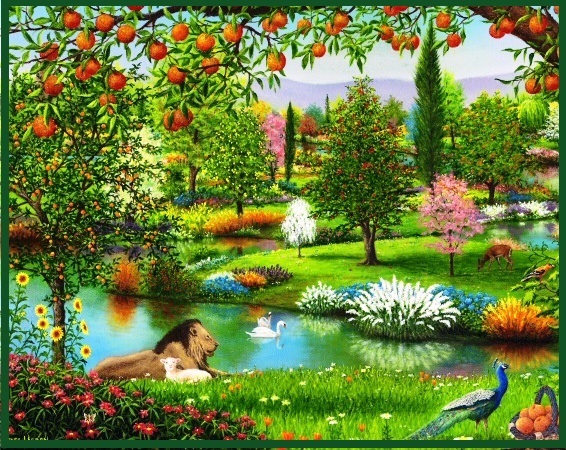
The Garden of Eden was the perfect setting for Adam and Eve to have all their physical and spiritual needs fulfilled. Not only did they enjoy the lush provision of the fruit of the trees and vines there for their physical sustenance, but were able to have the closest communion possible with their Maker, allowing them to learn more and more about His loving character as time went on. The Garden was a symbol of the abundant, eternal life we all were meant to have.
After sin, the entrance to the Garden of Eden was shut off from the human pair (Genesis 3:23, 24). They and all their children after them essentially became wanderers in a foreign country they were not meant to occupy. In order to restore their lost relationship with God, He gave Old Testament patriarchs hope by promising them a relatively fertile land they could settle, namely Canaan, a place of easy living described as “a land of milk and honey” (Exodus 3:8).
As Christians, we also cherish Jesus’ promise that we have a home in heaven to look forward to, an inheritance of Edenic glory and splendor, more beautiful than anything we can ever imagine on this earth now (John 14:1-3 and 1 Corinthians 2:9).
Verses and questions:
Genesis 2:15-17 and 3:17-24
- Why were Adam and Eve blocked from living in the Garden after their transgression?
Genesis 28:13 and Hebrews 6:11-15
- Why has a land of promise sounded so inviting to God’s people throughout the Bible?
Monday: The Land as a Gift
The term “landlord” is fitting for the Lord God, who allowed His children to occupy the land they had been promised, but He retained the ownership of the land for Himself (Psalm 24:1). Their occupancy would always be dependent on their fulfilling the terms of their contract with Him.
Slaves are without roots, without ownership of anything or any place. This is why God’s gift to them of land caused such joy. They would finally have a solid framework and identity beyond their lives of toil and hardship. Living in Canaan would allow them to prosper both physically and spiritually. It represented their freedom, a release from the fearful, nomadic existence that had previously dominated their lives.
The land would not be without cost, however. The children of God must agree to obey all the commandments of their generous Benefactor if they wanted to continue their peaceful existence there.
A beautiful land endowment has also been offered to Christians. We now wait for a home in heaven, hoping to escape our present bondage by looking forward to an earth made new. We, too, must continue to comply with God’s commandments, especially after the cost God paid at Calvary for our freedom and salvation from this sin-hardened world.
Verses and questions:
Exodus 3:8, Leviticus 20:22, Deuteronomy 4:1, 6:3, and Psalm 24:1
- What kind of land would “flow with milk and honey”? What did that expression mean?
- What were the requirements of God’s people, if they were to continue living in such a bountiful land?
Leviticus 25:23, 1 Peter 2:11, and Hebrews 11:9-13
- Why are we still “strangers and sojourners” here on earth?
- What do you long for in heaven that you don’t have now?
Tuesday: The Challenge of the Land
The challenge of achieving conquest of the many pagan tribes residing in Canaan was enormous. Even the skilled, equipped Egyptian forces had been incapable of permanently occupying the walled cities within its borders. It would only be through the powerful, miracle-working God of the Hebrews that success would be realized.
The first half of Joshua’s book described how the conquest unfolded. The second half focused on the challenges of occupation. Settling the land was just as important for their success. Driving the heathens out of its borders would be fruitless, if they were left open to returning and occupying it again later.
When the Israelites complied with the requirements of God, their efforts were rewarded. The gift of occupying their long-awaited, sweet Canaan was contingent on their willing obedience to their precious Lord and Savior. God’s gift of salvation works in a similar way. We can do nothing to earn salvation, but only to fully trust God every step of the way and follow His instructions with the strength and power He gives us.
Verses and questions:
Joshua 13:1-7
- What were the challenges Joshua, now advanced in years, faced with the removal of so many pagan tribes?
- How did dividing the land by the Hebrew tribes, already established, make it easier for Joshua?
Wednesday: The Jubilee
The land divisions according to their tribes, clans, and families would prevent the wealthy from claiming too much for themselves. It is always God’s desire that people are treated fairly, that the gap between the rich and the poor be as small as possible.
This desire was reflected in many of the instructions God laid out for them. The Jubilee, for example, which was to be celebrated every fifty years, would cause all land and persons to be returned to their previous owner or family. All debts were forgiven, a powerful reminder of our sins being forgiven, in addition to reminding them that God was still the owner of it all.
When it comes to our salvation, we are all on an equal footing with God. Every one of us has the same need for His grace to cover our sins. He doesn’t favor one over the other, and encourages us to do the same. We must also remember that everything we might claim to own ultimately belongs to God.
Verses and questions:
Leviticus 25:1-5, 8-13
- What was the purpose of the sabbatical year?
- Why was fifty years chosen for the Jubilee celebration?
Thursday: The Land Restored
Living in Canaan, with its potential blessings, always depended on their continued, close relationship with God. When that commitment to worship and obey God was broken, harsh consequences were the result. The multiple chances to repent and return to God’s favor demonstrates how loving and merciful God is to those who love Him in return.
Eventually, they would become so distant from their heavenly Benefactor that they became again wanderers outside their promised land of inheritance. This happened most dramatically during the Babylonian captivity and exile. Even during that frightful episode, God never turned His back on those few who remained faithful.
God is also able to live in the hearts of His followers today, no matter where they live. By accepting Christ as our Lord and Savior, we receive spiritual blessings of peace, joy, and hope that become as fulfilling as if we were already in heaven with our Lord. He is with us, even though we aren’t physically with Him yet in the heavenly home He has promised at His coming. How we long for His return when His eternal kingdom will be restored and we are welcomed into His loving arms to stay forever.
Verses and questions:
Jeremiah 31:16, Ezekiel 11:17, and 37:25
- How were these promises fulfilled?
- Why are these promises to Jeremiah and Ezekiel important to God’s people today?
John 14:1-3, Titus 2:13, and Revelation 21:1-3
- How has God promised to restore land to His people in these last days?
Friday: Final Thoughts
The number of refugees in the world (those seeking refuge outside their country of origin) is currently about fifty million people, with even more displacements within countries. This reflects the growing amount of unrest there is in the world today. Trusting and having hope in the promises of those around us (our neighbors and community leaders) is closely connected with the land we occupy on this earth.
Thankfully, there is One who has always proven trustworthy. God does not promise that we will never have trials on this plot of land we now occupy (John 16:33), but He has promised us the spiritual strength and courage to rise above the storms of life. With God, it is possible to be prisoners of hope and love, rather than prisoners of despair and grief.
He also promises His followers a future in a beautiful land of Edenic proportions. How we long to dwell with Him there in peace and prosperity for all eternity.
But, in the meantime, we can be assured that He dwells in our hearts, when we invite Him to. This heart occupancy determines the abundant life God describes in John 10:10, one we can enjoy the instant He takes residence there, filling us with joy, peace, and love.
Next Week: The True Joshua
To read the Sabbath School Lesson Quarterly and see more resources for its study, go to

No Comment