















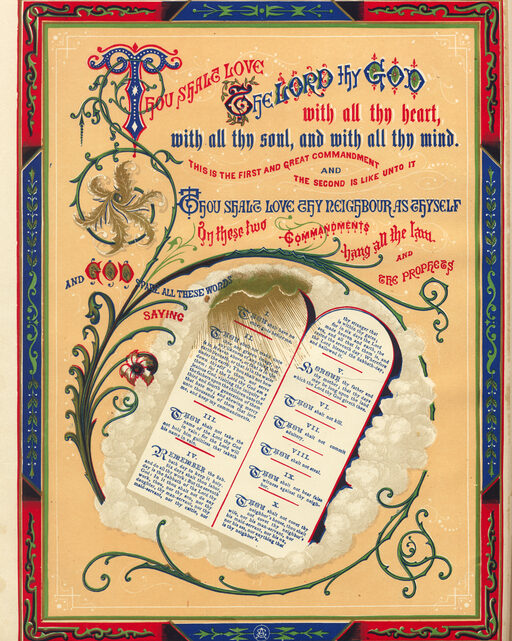
God’s law is more than a set of rules—it reflects His holy character. From the time Adam fell, humanity has struggled under the weight of sin. We cannot meet the law’s perfect standard on our own. But through Christ, forgiveness and the power to live faithfully are made possible. Understanding this balance between law and grace can bring both peace and purpose to our daily lives.
The Law is Sacred
God’s law is holy. It shows us right from wrong and points us toward Him. Disobedience isn’t just breaking rules—it puts us above the law, as if it doesn’t apply to us (1 John 3:4; Romans 8:7; Exodus 20:8–11).
But the law is not meant to be a burden. Think of it as a roadmap: it tells us where the dangerous cliffs are, where the safe paths lie, and how to reach our destination.
When we approach the law with reverence, it becomes a guide to living fully in God’s will.
Observing the Sabbath, loving our neighbors, and acting with integrity aren’t just legal requirements—they are ways to experience God’s presence daily.
Obedience is Spiritual
Following God’s law is more than a checklist—it’s a spiritual act of love and faith. Some might think that obeying the law alone can earn salvation, but only Jesus kept it perfectly (Hebrews 4:15). Because He never sinned, He alone could die to redeem all humanity (2 Corinthians 5:21; John 1:29).
Obedience is about our hearts, not just our actions. It’s choosing to trust God’s wisdom rather than our own instincts, even in everyday decisions: being honest at work, showing patience with family, or serving others quietly. This spiritual obedience is our response to His love, not a way to earn it (1 Peter 1:18–19; Galatians 2:16).
Under the Law vs. Under Grace
Paul reminds us: “Ye are not under the law, but under grace” (Romans 6:14). That doesn’t mean grace gives us a free pass to ignore God’s law (Romans 6:15).
Under the law means being subject to its punishment because of sin (Romans 3:19–20; Galatians 3:10).
Under grace means forgiveness through Jesus and the power to obey Him (Romans 8:3–4; Titus 2:11–12).
Grace doesn’t remove the law—it empowers us to live according to it.
Instead of focusing on fear or guilt, we live in love and freedom. Grace turns obedience from a duty into a joy, because we are walking with Christ, not trying to earn His favor.
Rest in Christ—Now and Forever
Christ offers rest from sin today and the promise of eternal rest in the new earth. Keeping God’s law through faith brings spiritual peace now and points us forward to the eternal Sabbath (Hebrews 4:3, 9; Isaiah 66:22–23). Obedience is not about striving in our own strength—it is part of entering into Christ’s rest.
Imagine the Sabbath not as a restriction but as a gift: a day to step back from our busy lives, reconnect with God, and recharge spiritually. This same principle applies to every day we live under grace. Each act of obedience, each choice to trust Him, is a taste of that eternal rest.
Reflection and Application
What small ways can you honor God’s law today—not out of obligation, but as a spiritual response of love?
How can you experience Christ’s rest in the middle of your busy schedule?
Consider starting your day with quiet prayer, asking for strength to obey and guidance to walk in faith.
“If we would know what it is to have Christ abiding in the heart, we must seek Him in the first hours of the day. In secret prayer we may obtain the help that will fit us for every duty, and prepare us to meet every trial.”
— Steps to Christ, p. 70
Obedience to God’s law is not a burdensome duty—it is a spiritual response of love and faith. The law is sacred, and by God’s grace we are empowered to obey, finding rest in Christ now and anticipating the eternal Sabbath in the new earth. May we dedicate ourselves to God each day—walking under grace, honoring His law, and enjoying the rest that only Christ can give.
R Scott Holder writes for OUTLOOK on a variety of spiritual topics.

No Comment