















Unlike Mark and Matthew—and most other books in the Bible—Luke opens his account with a statement of intent.
“Since many have undertaken to compile an account of the things accomplished among us, just as they were handed down to us by those who from the beginning were eyewitnesses and servants of the word, it seemed fitting to me as well, having investigated everything carefully from the beginning, to write it out for you in an orderly sequence, most excellent Theophilus; so that you may know the exact truth about the things you have been taught.” (Luke 1:1-4, NASB).
Reading this carefully reveals a great deal. 1) A general story about Jesus circulated among believers which 2) Luke decided to authenticate and clarify. One significant thing is revealed by what he doesn’t include.
Nowhere does Luke say, “The word of the Lord came to me,” or “I had a vision (or dream).” Instead, he wrote the account because “it seemed fitting to me” to do so. That’s important because it tells us something about how inspiration operates. Note, I accept that Luke was inspired, but not, perhaps, in the way we might expect. We will examine this shortly.
Of the four gospel writers, Luke is the only Gentile. Although he knew the apostle Paul, neither of them had been first-hand witnesses to the events in Luke’s account. So to verify his account, he “investigated everything.”
Luke addressed his account to Theophilus, another Greek—and likely gentile—name. So we have a Greek author, writing to a Greek audience, using a Greek approach—”to write it out . . . in an orderly sequence.” Greek thinking permeates Western civilization, including us. So, who was Theophilus?
“Theos” means God, and “philos” means lover, friend. We don’t know whether Luke intended this for a particular individual with that name or was he addressing all those who believed in God. But this highlights one of the major differences between Luke and the other gospels.
Matthew and Mark are Jews, and Matthew wrote for a largely Jewish audience. Luke, however, approaches his account from s a Greek perspective, addressing an increasingly Greek body of believers. Luke wants us to see Jesus as a real historical figure, and to do this he uses a historical approach. As heirs of this Greek thinking, this makes sense to us. But it contrasts starkly with Mark’s theme of Jesus as the battler of demons Matthew theme of Jesus as the Jewish Messiah.
Luke contrasts with Matthew and Mark in another way. Matthew was one of the twelve disciples, and we understand that Mark’s main source was Peter, another of the twelve. However, it appears that Luke came to the gospel through the ministry of Paul, neither of them had been eyewitnesses to the life and ministry of Jesus. That gives us another reason why Luke would approach the topic like a journalist or historian.
All of these factors explain many of the unique features we find in Luke’s account. We see that he is meticulous about chronology—the order and timing of events—but not having been present where these things took place, his geography sometimes can be questionable.
I have a confession to make. Until a few years ago, I did not attribute to Luke the same kind of skills and purpose in writing his gospel that I did to the others. Because he describes his process of doing research and conducting interviews, I assumed he simply reported the results. But closer examination of the story of the road to Emmaus, which occurs only in Luke, revealed a careful crafting of his message. I will not go into the details of all that, but it gave me a new respect and new appreciation and understanding of Luke’s gospel and his purpose and his process of writing it.
Luke was also a physician. In our day doctors usually hold high social status, but this was not true in the ancient world, largely because they didn’t have many effective means of dealing with illness. Beyond that, they dealt with vomit, blood, urine and feces, among other unpleasant things. All of that contributed to a low social status.
When we read Luke, we need to keep these things in mind. It helps us understand many of the unique features of his account.
Here are a few examples: Only Luke talks about the miraculous pregnancies of both Elizabeth and Mary—something a doctor would be interested in. He also tells us that Jesus developed normally, growing mentally, physically, spiritually and socially (Luke 2:52).
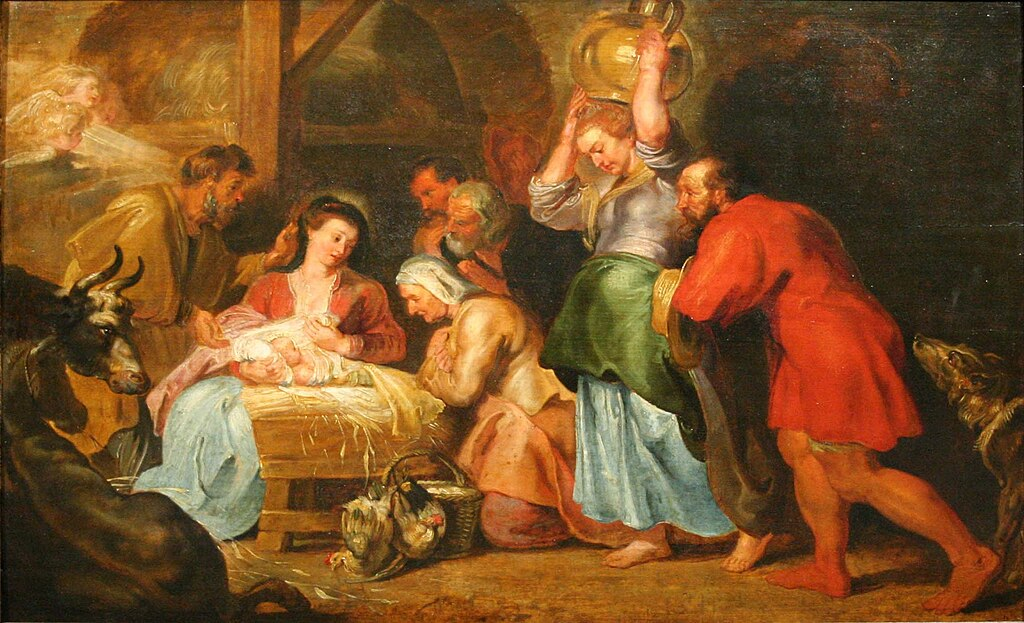
In Matthew, the angels always talk to Joseph in chapters one and two. But in Luke, Gabriel speaks to Mary, the mother of Jesus, directly without going through any man, either her father or her betrothed husband, Joseph. Luke tells us the about the shepherds at Jesus’ birth, but he does not mention any wise men at all. Shepherds had low status like doctors, because they dealt with sheep, and that meant dealing with manure and a lot of other ceremonially unclean things.
People of low status and outsiders are numerous in Luke’s gospel. As a physician, and especially as a Gentile and a Jewish, submerged in a lot of Jewish people in the culture, got to work on that, that he has concern, he wants to show Jesus, not as the Jewish Messiah so much, although he does authenticate that, he wants to show that Jesus is the Savior of all mankind, Jew and Gentile, those with high status as well as those with low status. And this makes his gospel very appealing to those who feel left out.
There’s much more that could be said about this gospel, but these few things are enough to give you a good start on understanding the story Luke wants to tell us.
- Luke makes no claim to divine calling, rather, he investigates carefully and writes an orderly account so readers may know the truth (Luke 1:1–4).
- As a gentile writing for gentiles, Luke emphasizes history, clarity, and universality.
- Himself an outsider, Luke highlights women, Gentiles, the poor, and the socially excluded.
- He portrays Jesus is the Savior for all humanity, not only Jews but everyone, regardless of status.
Next, we will turn to the most distinctive gospel, that of John.

No Comment