













Sabbath School Lesson for August 30-September 5, 2025
Introduction of Lesson 10, The Covenant and the Blueprint
Memory Text: “So Moses came and told the people all the words of the Lord and all the judgment. And all the people answered with one voice and said, ‘All the words which the Lord has said we will do’ ” Exodus 24:3 NKJV
A covenant, or contract, consists of promises given by two parties. God’s promises were to be with them and help them perform their duties for the best life going forward. The miracles He had so far shown them back in Egypt and on their wilderness journey were certainly evidence of His power and desire to be with them. The laws and judgments given them were designed to equip them to walk in a closer relationship.
It was only appropriate that the Israelites announce their willingness to follow God’s leading at every opportunity, which they did; even though it proved to be much harder to fulfill their promises than they thought.
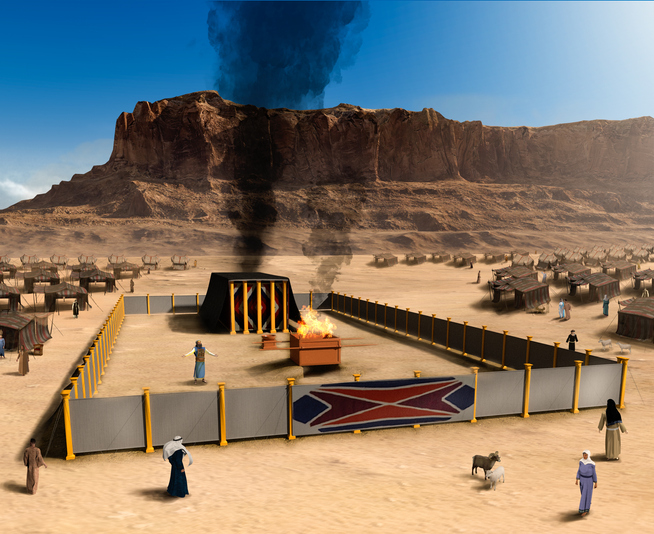
God knew about the difficulty they would have in understanding His plan for their salvation, so He mercifully gave them a blueprint for the building of a tangible place where they could learn about Him in the deepest way possible. The sanctuary, patterned after one in heaven, was an intricate teaching tool for their education about God. It would be a convenient way for Him to dwell with them, despite its limitations to contain His presence entirely.
- Sunday: The Book and the Blood
- Monday: Seeing God
- Tuesday: Power to Obey
- Wednesday: In the Midst of His People
- Thursday: Filled With the Spirit of God
Sunday: The Book and the Blood
The reason for the children of God to leave Egypt was for them to worship and sacrifice to their God. This was their repeated request to Pharaoh. They were therefore expecting and prepared to offer animal sacrifices as part of their worship experience, as practiced by their forefathers Abraham, Isaac, and Jacob.
Before sacrifices began, Moses read to them all the commandments and judgments God had given them so far. It’s also important for us to know about God’s law before we promise to obey it. Reading about His will for our lives in the Bible inspires us to commit our lives to serve Him, too.
God desires most of all to have a close, two-sided relationship with His created beings. The two institutions He gave us at creation–the Sabbath and then marriage, show this desire. Thus, our personal relationship with God has a vertical side (our relationship with Him–the Sabbath), but also a horizontal side (our relationship with each other–marriage). Moses demonstrated this by sprinkling half the blood from the animal sacrifices on the altar and then half of the blood on the people. Blood was needed to seal the covenant–symbolizing the blood of the Lamb of God.
Verses and questions:
Exodus 24:1-8
- Why was reading to them the words of God important before they made their sacrifices and Moses sprinkled the blood?
- Why was blood first sprinkled on the altar and then on the people?
Monday: Seeing God
There were a few men selected to go partway up the mountain with Moses to see and be with God: Aaron, his two sons, and seventy elders, including Joshua, Moses’ assistant. We are told they ate and drank, while they waited for Moses to return from going up higher in the mountain’s glowing, fiery light (Exodus 24:11).
Sharing a meal was, and still is, a very meaningful experience in the Middle East. It’s a way to draw closer to each other and, for them, it showed their desire to ratify the covenant they were making with God. As an example of this, Jesus gave the Last Supper ritual meal to His followers. This meal is meant to magnify, establish, and renew our relationship with Him.
It is sad, but sobering, for us to realize that these same privileged elders, including Moses’ own brother, would turn their back on God and later be found worshiping a golden calf. Possession of truth does not always indicate that a person has a converted heart. We must do all we can to see how God works in our lives and pray that He will change us to reflect more of His character.
Verses and questions:
Exodus 24:9-18
- How does the seemingly minor detail of them eating and drinking fit in with the experience of Aaron and the elders of Israel?
Luke 5:30
- Why was Jesus criticized so heavily for eating and drinking with sinners?
- How should we relate with sinners today?
Tuesday: Power to Obey
Exodus shared at least three times when the children of Israel promised to do everything God told them (Exodus 19:8, 24:3, 7). The desire was there, their choice had been made, but the power to actually carry out God’s will seemed to be lacking.
What they failed to learn at this point was that their desire and choice must be repeated every day, every moment, for God to give them the power needed to do His bidding. Obedience was a gift they must recognize and appreciate continually for it to be of lasting worth. Obedience wasn’t a success on their part; it was a blessed gift. Only with God as their partner could they be obedient.
When we surrender our weaknesses to God, He gives us the power to keep His Law. No matter how sincere our commitment, it’s only after God gives us a new heart that we can carry out His will (Ezekiel 36:26). By loving Him with all our hearts, our hearts will be changed, enabling us to follow through with our commitments to Him (Ezekiel 36:27).
Verses and questions:
Ezekiel 36:24-30
- What does God promise to do with our hearts when we give them to Him?
- Why is cleansing needed before the Spirit can dwell within us?
- What does it mean to be “cleansed” by God? How is it done?
Wednesday: In the Midst of His People
God knows that we humans learn best through object lessons: real life experiences and things we can feel and touch with our senses. Psalm 34:8 says to “taste and see that the Lord is good”. This is why Jesus often spoke in parables, giving us everyday lessons we can more easily understand.
The richly-adorned sanctuary that God told the Israelites to build was full of object lessons, too, that would allow them to see more of His character and His plan to save them (Psalm 77:13). It would be a place where He could dwell with them (Exodus 25:8), and yet be safely veiled from their direct sight, for which they were not prepared.
It could not, of course, contain His total presence. Solomon recognized this when he proclaimed in 1 Kings 8:27, “…Behold heaven and the heaven of heavens cannot contain You. How much less this temple which I have built!”
Verses and questions:
Exodus 25:1-9
- What can we learn from these verses about the sanctuary Moses was told to build?
Exodus 25:8 and John 1:14
- In what way was Jesus like the sanctuary?
- What can we see about God from the life of Jesus, even though He was veiled in humanity while on earth?
Matthew 27:51
- What did the tearing of the curtain before the Most Holy Place at Christ’s death tell us about the sanctuary services now?
Thursday: Filled With the Spirit of God
Chapters 25-30 of Exodus describe in great detail all the specifications of God’s tabernacle. Exodus 31, however, is the first time in Scripture where we read about God filling people with the Holy Spirit. Two spiritually-gifted artisans and craftsmen were mentioned by name: Bezalel and Aholiab.
The Sabbath had been preparing them for this holy work. The prescribed day of rest reminded them that God was their Creator and their Deliverer, but also the One who would make them holy, just as He had made the seventh day holy.
When we obey God’s words in the Decalogue, we, too, will be transformed by His Spirit to reflect God’s loving, forgiving, unselfish character. It was significant that the Ten Commandment tablets were to be placed in the Most Holy Place of the sanctuary, under the mercy seat of God. Our obedience is directly connected with mercy and forgiveness, which, in turn, leads to our sanctification (our being made holy) as we are filled with His Spirit.
Verses and questions:
Exodus 31:1-18
- Why was it important for these craftsmen to have God fill them with His Spirit before building the tabernacle?
- How is this like us, needing God’s Spirit to do things for God, even for being able to keep His Law?
- What happens when we fail to have God’s Spirit motivating our service for Him?
Friday: Final Thoughts
The blueprint Moses was given for the tabernacle was filled with object lessons to show the Hebrews the plan of salvation and the goodness of God. “Your way, O God, is in the sanctuary; who is so great a God as our God?” (Psalm 77:13)
The outer court of the sanctuary, where sacrifices were made and cleansing at the laver took place, illustrated our justification (forgiveness and cleansing). The table of shewbread, the lampstand, and the altar of incense represented study of the Scriptures, sharing the gospel, and our prayers–the means of our sanctification, or being made holy. And the ark of the covenant in the Most Holy Place, was where God’s presence was felt, just like it will be when we are glorified and taken up to be with Him to heaven.
The two tablets of God’s Law inside the ark beneath the mercy seat, was a highly symbolic placement. It is only with God’s mercy and forgiveness that obedience to the Law is possible. That’s why the psalmist said, “mercy and truth are met together; righteousness and peace have kissed each other” (Psalm 85:10). Mercy and justice will always be the signature character traits of God and of His people, offering us all a blueprint for salvation.
Next Week: Apostasy and Intercession
To read the Sabbath School Lesson Quarterly and see more resources for its study, go to

No Comment